News Headline
Future lies in direct-to-mobile broadcasting: Prasar Bharati CEO Shashi Shekhar Vempati

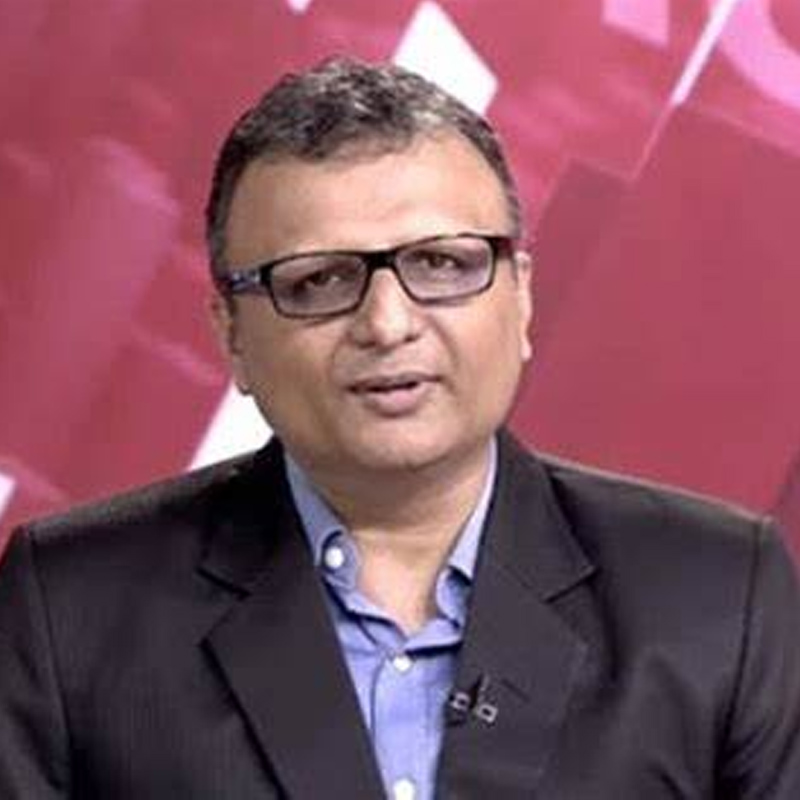
New Delhi: Prasar Bharati CEO Shashi Shekhar Vempati on Wednesday batted for common shared infrastructure for both Television and radio to directly deliver broadcast content to smartphones in future. The public broadcaster’s top executive said convergence across content as well as infrastructure is needed to meet the demands of the future.
Speaking the CII’s Big Picture Summit, Vempati said, the public broadcaster is already working on bringing convergence across TV and radio, so that a lot of content exclusively available on Radio can be made visually rich and available for TV audiences. “Prime Minister’s ‘Mann Ki Baat’ was the first such radio programme, that was made available for TV audiences. We followed the same format for another show Rangoli and even Vividh Bharti’s anniversary celebrations, where we put camera in the studio all-day long,” said Vempati.
The Prasar Bharati CEO also talked about the digital transformation that Doordarshan and All India Radio has undergone in the recent years. Every DD channel and AIR station now has a digital presence spanning multiple platforms, like YouTube or social media or app. “Traditionally, Radio has never been measurable. But, now we have people tuning into AIR from everywhere, and choosing content of their liking. Digital an integral part of our network,” he said.

Vempati said the public broadcaster is driving creativity and innovation on primarily several fronts. The most important being the conversion between TV and Radio. While the two have had a parallel journey of infrastructure and content creation, there was need to bring more convergence.
“We have also collaborated with IIT Kanpur, and if our efforts bear fruits, we should be able to see smartphones directly receiving broadcast signals,” he said. “In the event of a high-viewership event like an IPL, there is no reason why millions of users need to receive that content on a unicast mode through the internet. If this works, all of the content can be delivered directly on broadcast frequencies to people on their smartphones or smart TVs.”
Vempati also called for public private participation in developing critical algorithm, and sectors like AI, which will be needed to ensure content is available for multiple platforms, and made accessible to people across the country.
“We are looking for more collaboration with private sector to identify these technology problems and address them, to create an intellectual capital in India, not only for content, but also for technology to power this content,” he added.







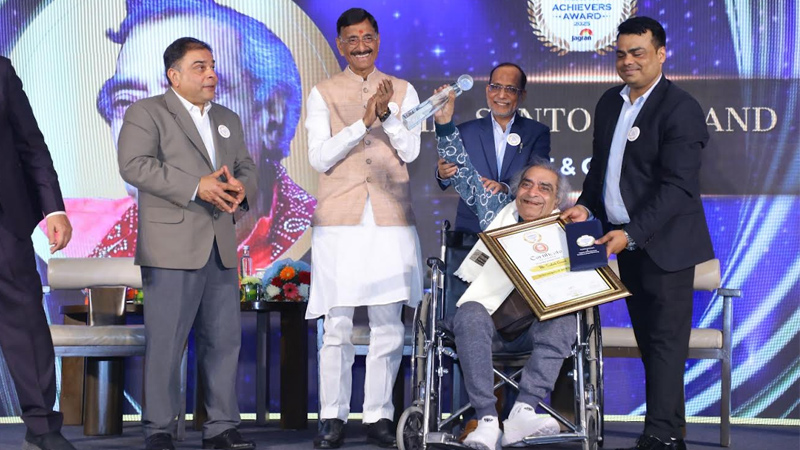
NEW DELHI: Hamdard Laboratories gathered a cross-section of India’s achievers in New Delhi on Friday, handing out the Hakeem Abdul Hameed Excellence Awards to figures who have left their mark across healthcare, education, sport, public service and the arts.
The ceremony, attended by minister of state for defence Sanjay Seth and senior officials from the ministry of Ayush, celebrated individuals whose work blends professional success with a sense of public purpose. It was as much a roll call of achievement as it was a reminder that influence is not measured only in profits or podiums, but in people reached and lives improved.
Among the headline awardees was Alakh Pandey, founder and chief executive of PhysicsWallah, recognised for turning affordable digital learning into a mass movement. On the sporting front, Arjuna Awardee and kabaddi player Sakshi Puniya was honoured for her contribution to the game and for pushing women’s participation onto bigger stages.
The cultural spotlight fell on veteran lyricist and poet Santosh Anand, whose songs have echoed across generations of Hindi cinema. At 97, Anand accepted the honour with characteristic humility, reflecting on a life shaped by perseverance and hope.
Healthcare honours spanned both modern and traditional systems. Manoj N. Nesari was recognised for strengthening Ayurveda’s place in national and global health frameworks. Padma shri Mohammed Abdul Waheed was honoured for his research-backed work in Unani medicine, while padma shri Mohsin Wali received recognition for his long-standing contribution to patient-centred care.
Education and social development also featured prominently. Padma shri Zahir Ishaq Kazi was honoured for decades of work in education, while former Meghalaya superintendent of Police T. C. Chacko was recognised for public service. Goonj founder Anshu Gupta received an award for his dignity-centred rural development initiatives, and the Hunar Shakti Foundation was honoured for empowering women and young girls through skill development.
The Lifetime Achievement Award went to former IAS officer Shailaja Chandra for her long career in public healthcare and governance, particularly in the traditional systems under Ayush.
Speaking at the event, Hamdard chairman Abdul Majeed said the awards were a tribute to those who combine excellence with empathy. “These awardees reflect Hakeem Sahib’s belief that healthcare, education and public service must ultimately serve humanity,” he said.
Minister Seth struck a forward-looking note, saying India’s young population gives the country a unique opportunity to become a global destination for learning, health and wellness by 2047.
The ceremony also featured the trailer launch of Unani Ki Kahaani, an upcoming documentary starring actor Jim Sarbh, set to premiere on Discovery on 11 February.
Instituted in memory of Unani scholar and educationist Hakeem Abdul Hameed, the awards have grown into a national platform that celebrates those building a more inclusive and resilient India. For one evening at least, the spotlight was not just on success, but on service with substance.