iWorld
From solitude to shared screens: How connected TVs Are changing SVOD in India

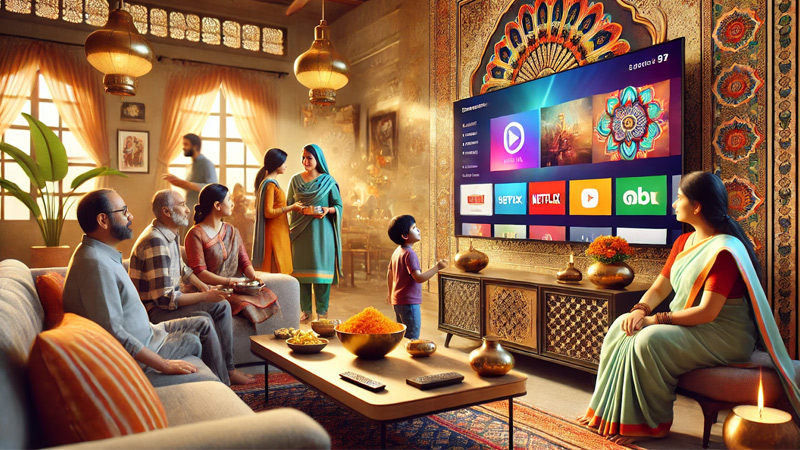
MUMBAI: Picture this: you’re slouched on the couch, watching the season finale of your favorite show, but the room feels hollow. No one to laugh with, no one to argue about the plot twist. Feels a little dull, doesn’t it?
You’re not alone—literally. A new wave of co-viewing, driven by Connected TVs, is revolutionising how India engages with subscription video on demand (SVOD) platforms.
Ormax Media’s latest SVOD audience report 2024 reveals a seismic shift in urban India’s viewing habits. With insights from 3,000 subscribers, the report paints a vibrant picture of a market where language diversity, shared experiences, and tech-savvy innovation drive customer loyalty and growth. From couch-bound solo binging to interactive group viewing, the way Indians consume content is evolving faster than ever—and it’s bringing a mixed bag of emotions along for the ride.

The question is: are you tuning in alone, or are you part of this co-watching revolution?
The report highlights a stagnation in the SVOD audience base, which declined by two per cent to 150.6 million in 2024, compared to 153 million in 2023. This represents 28 per cent of India’s digital video audience, a group dominated by ad-supported video on demand (AVOD) viewers who account for 72 per cent of the market. The slowdown in SVOD growth underscores the competitive challenges platforms face in subscriber acquisition and retention.
A major revelation of the report is the growing impact of Connected TVs, with 36 per cent of SVOD audiences in urban India regularly using such devices to stream content. This trend is expanding beyond metro cities into mini metros and smaller towns, altering how content is consumed.
The report also sheds light on the phenomenon of co-viewing, where 66 per cent of Connected TV users watch streaming content with family members. This shift calls for OTT platforms to prioritise inclusive content catering to diverse age groups and preferences, ensuring a broader family appeal.
Ormax Media, head of business development (streaming, TV & brands), Keerat Grewal underscored the importance of these insights in shaping OTT strategies.
“In a cluttered marketplace where subscribers typically pay for just 2-3 apps, pay OTT platforms must align their pricing, content, and marketing strategies with audience preferences,” Grewal said.
She added, “While platforms have data on their own subscribers, Ormax Media has consistently built industry-wide insights for the Indian OTT sector. Our latest report equips platforms to craft compelling value propositions, grounded in macro-level audience behaviours and tastes.”
Contrary to perceptions that Connected TVs are limited to metro audiences, the report reveals growing traction in smaller towns and mini metros. Grewal highlighted the potential for this shift to fundamentally reshape the type and style of content consumed on OTT platforms in India.
The Ormax SVOD Audience Report: 2024 is now available for subscription and provides valuable data for streaming platforms, brands, and content producers. Covering viewing behaviour, language preferences, genre trends, content sampling triggers, and media habits, the report is a comprehensive resource for industry stakeholders aiming to stay ahead in a dynamic market.







iWorld
Bill Ackman’s Pershing Square makes $64 billion bid to acquire Universal Music Group
Ackman pitches NYSE relisting plan as UMG board weighs unsolicited offer

The hedge fund has proposed a business combination that values UMG at €30.40 per share, representing a hefty 78 per cent premium to its current trading price. The offer includes €9.4 billion in cash alongside stock in a newly formed entity, with shareholders set to receive €5.05 per share in cash and 0.77 shares in the new company for each UMG share they hold.
Under the proposal, UMG would merge with Pershing Square SPARC Holdings Ltd and re-emerge as a Nevada-based entity listed on the New York Stock Exchange. The move is designed to boost investor visibility and potentially secure inclusion in major indices such as the S&P 500.
Pershing Square Capital Management ceo Bill Ackman argued that while UMG’s operational performance remains strong, its market valuation has lagged due to external factors. “UMG’s stock price has languished due to a combination of issues that are unrelated to the performance of its music business,” Ackman said, pointing to concerns ranging from shareholder overhang to delayed US listing plans.
Ackman also flagged what he sees as untapped potential in UMG’s balance sheet and a lack of clear capital allocation strategy. He added that the market has not fully recognised the value of UMG’s €2.7 billion stake in Spotify, alongside gaps in investor communication.
The proposed transaction would also result in the cancellation of around 17 per cent of UMG’s outstanding shares, while maintaining its investment-grade balance sheet. Pershing Square has said it will fully backstop the equity financing, with debt commitments secured at signing. The deal is targeted for completion by the end of the year.
UMG, however, has struck a measured tone. The company confirmed that its board has received the non-binding proposal and will review it with advisers. It reiterated confidence in its current strategy and leadership under Lucian Grainge, signalling no immediate shift in stance.
The proposal comes at a time when global music companies are navigating evolving investor expectations, streaming economics and capital allocation pressures. For Pershing Square, the bet is clear: sharpen the financial story, relist in the US, and let the music play louder in the markets.
Whether UMG’s board is ready to change the tune remains to be seen, but the spotlight on its valuation just got a lot brighter.






