Gaming
From ‘go play outside’ to gaming glory: India levels up

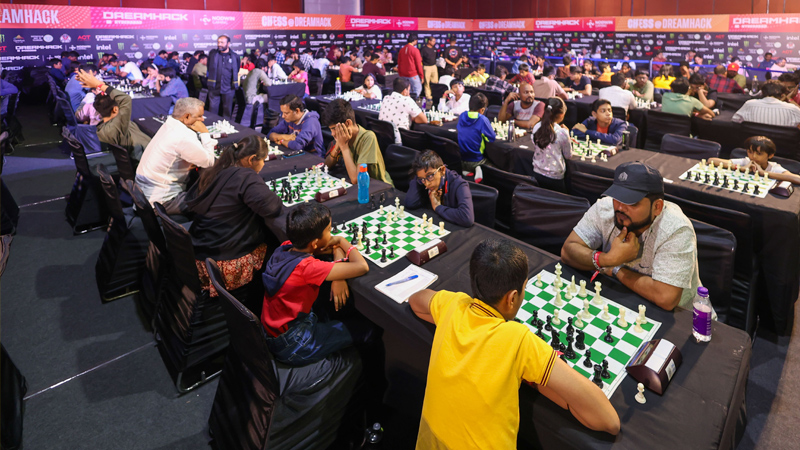
MUMBAI: Once dismissed as a frivolous pastime that couldn’t put food on the table, gaming in India has hit the ultimate power-up.
What was once the bane of parental lectures has become a billion-dollar behemoth.
The gaming and esports industry is set to score big in 2025, with global tournaments and homegrown innovations fueling a feverish growth spurt.

As per the India Market Model Report by Niko Partners, the country’s gaming market will hit the $1 billion jackpot in 2025, leveling up to $1.4 billion by 2028, riding on an 11.1 per cent five-year CAGR.
Gaming fever is here, and it’s contagious!
The spotlight will shine on the Olympic Esports Games in Saudi Arabia, marking a milestone in global recognition for esports. Following India’s stellar performance at the 2024 Paris Olympics, Indian gamers will aim to contribute to the country’s medal tally in this rapidly growing competitive arena.
The Esports World Cup, featuring chess as a title with a prize pool of $1.5 million, will provide another platform for Indian excellence. Chess prodigy Gukesh Dommaraju’s historic world championship win adds anticipation for India’s participation in this event, scheduled from 31 July to 3 August 2025 in Saudi Arabia.
Domestically, the Waves Esports Championships (WESC), supported by the Ministry of Information and Broadcasting, will kick off the year with finals for titles like Battlegrounds Mobile India (BGMI), World Cricket Championship (WCC), and eFootball at the inaugural Waves Summit in February 2025. Government-backed initiatives like these will further shape India’s esports landscape.
The convergence of cricket and esports continues to expand, with partnerships such as Mumbai Indians collaborating with BGMI, Gujarat Titans organising esports tournaments, and Kolkata Knight Riders teaming up with S8UL Esports. This growing synergy will solidify esports’ appeal in India’s sports ecosystem.
NODWIN Gaming co-founder & MD, Akshat Rathee predicts deeper ties between esports and entertainment in 2025, “Cricket will integrate more with esports through collaborations with IPL teams and cricket esports titles. Bollywood stars and musicians will also engage actively, merging gaming with music, anime, and youth-centric entertainment. This trend was evident in NODWIN Gaming’s hosting of DreamHack India alongside Hyderabad Comic Con, and it will only grow stronger.”
The rise of gamification across sectors will also redefine how users interact with platforms. Social media giants like Facebook and Netflix have integrated gaming features, with others like Amazon and LinkedIn following suit. This trend will intensify in 2025, reshaping user engagement.
The surge in brand collaborations highlights gaming’s mainstream appeal. 8Bit Creatives secured a landmark sponsorship with iQOO, reflecting non-endemic brands’ interest in the gaming sector.
8Bit Creatives founder & CEO, Animesh Agarwal emphasises the expanding scope of esports, “Esports will grow into new titles, attracting diverse players and audiences. South Asia and MENA regions will play vital roles in global esports, with content creators shaping fan engagement and brands leveraging gaming as a primary connection channel.”
Prime minister Narendra Modi’s call for India to lead in video game development has accelerated the launch of Made-in-India games. Companies like 88 Games plan to launch major titles in 2025, representing India’s capabilities on the global stage.
88 Games founder & CEO, Milind D. Shinde highlights technological advancements, “Generative AI and extended reality (XR) will redefine game development in 2025. For us, it will be pivotal as we launch our first PC and console game, contributing to gaming’s cultural and economic significance.”
PC gaming also continues to gain traction, with a 150 per cent increase in new Indian users on Steam since 2019. High-profile investments in gaming setups and content creation systems, led by companies like CyberPowerPC India, underline the industry’s bright future.
With major events, government support, and innovation shaping the landscape, 2025 promises to be a transformative year for India’s gaming and esports industry.





Gaming
Dream Sports sees 100 plus exits after gaming ban forces overhaul
Company splits into eight units as real money gaming law hits revenue.

MUMBAI: For a company built on fantasy leagues, reality has suddenly rewritten the rulebook. More than 100 employees have exited Dream Sports, the parent of Dream11, after the company reorganised its operations following India’s ban on real money online gaming. The shake up came after the Promotion and Regulation of Online Gaming Act, 2025 came into force in August 2025, prohibiting games where users deposit money expecting winnings. The regulation struck at the heart of the fantasy gaming industry and dramatically affected Dream Sports’ core business, wiping out about 95 percent of its revenue and all of its profits.
In response, the Mumbai based company shifted into what chief executive officer Harsh Jain described as “startup mode”, splitting its operations into eight independent business units in December.
Around 700 employees were reassigned across these newly formed ventures based on their experience and interests. However, roughly 15 percent opted to leave the company.
A spokesperson for Dream Sports said many of those who exited were experienced professionals accustomed to running scaled businesses rather than early stage ventures.
“Since some of these employees were experienced with running high scale businesses and not startups, around 15 percent chose to leave and join other scaled companies or start ventures of their own,” the spokesperson said.
Despite the departures, the company noted that the attrition rate is only slightly higher than its earlier level of around 10 percent before the ban. Dream Sports now has close to 950 employees and is not currently hiring, choosing instead to focus on stabilising its existing workforce.
The restructuring has transformed Dream Sports from a fantasy gaming company into a broader sports entertainment platform. The eight units now operate independently, each focusing on different segments of the sports and technology ecosystem.
These include Dream11, sports streaming platform Fancode, sports travel service DreamSetGo, mobile game Dream Cricket and artificial intelligence initiative Dream Sports AI, which includes sports analytics platform Dream Play.
Other ventures include fintech product Dream Money, open source initiative Dream Horizon and the philanthropic arm Dream Sports Foundation.
As part of cost saving efforts, Dream Sports also relocated its headquarters from Bandra Kurla Complex to Worli earlier this year. The new office, called Dream Sports Stadium, brings teams from its various brands together under one roof to improve collaboration and operational efficiency.
Jain had earlier said the company removed bonus lock in timelines for employees hired in recent years, allowing those who wished to leave to exit with pro rata payouts.
“We want people who are fully into the startup mode and willing to work for it, and we will share that reward if it comes,” he said.
Founded in 2008 by Harsh Jain and Bhavit Sheth, Dream Sports was last valued at 8 billion dollars after raising 840 million dollars in 2021 from investors including Falcon Edge Capital, DST Global, D1 Capital Partners, RedBird Capital Partners, Tiger Global Management, TPG and Footpath Ventures.
The new gaming law has forced several companies in the fantasy gaming sector to either shut down or pivot their business models, signalling a significant reset for one of India’s fastest growing digital entertainment industries.