News Broadcasting
Former SC judge Justice Vikramjit Sen appointed chairman of IBF’s new self-regulatory body

New Delhi: Former Supreme Court judge Justice Vikramjit Sen was on Monday appointed as the chairman of the newly formed self-regulatory body – Digital Media Content Regulatory Council (DMCRC) formed by the Indian Broadcasting Foundation (IBF), the apex body of broadcasters.
The industry-led self-regulatory body (SRB) for digital OTT platforms will work as a second-tier mechanism at the appellate level, quite similar to the Broadcast Content Complaint Council (BCCC), which IBF had implemented for the linear broadcasting sector in 2011. DMCRC was formed as per the mandate of the Information Technology (Intermediary Guidelines and Digital Media Ethics Code) Rules, 2021 that came into effect on 26 May, with active consultation amongst the creative industry fraternity.
The newly formed Council constitutes prominent personalities from the media & entertainment industry and Online Curated Content Providers (OCCPs), with experience in IPR, programming, and content creation. Meanwhile, IBF will also be renamed as the Indian Broadcasting and Digital Foundation (IBDF) as it expands its purview to cover digital platforms to bring all digital (OTT) players under one roof.

A former supreme court judge, Justice (retd) Sen has practiced in all the courts in Delhi, although primarily in the high court of Delhi. He was elevated to the apex court on 24 December 2012. He was also appointed chairman of the Broadcast Content Complaints Council (BCCC)- a self-regulatory body for the non-news and current affairs television channels in India in 2017, said IBF in a statement on Monday.
The other members of the council are national award-winning filmmaker Nikkhil Advani, Banijay Group CEO and founder Deepak Dhar, prominent artist, filmmaker, and writer Ashwiny Iyer Tiwari and creative writer and innovative director, Tigmanshu Dhulia. The other two members from the OCCPs include Sony Pictures Pvt. Ltd, general counsel Ashok Nambisan, and Star and Disney India, chief regional counsel Mihir Rale and Disney India.
Speaking on the appointment of the committee, IBF president, K. Madhavan said, “I am delighted that so many experts from the media and entertainment industry have come forward and accepted the invitation of IBDF to be part of the proposed self-regulatory body. I look forward to working with the Council whose mandate is to ensure freedom of expression of the Indian creative industry as well as help the discerning audience of the OTT platforms to have unhindered access to world-class and differentiated content. This is a historical and win-win moment for all the stakeholders i.e. the M&E industry, the policymakers, and the subscribers of the OTT platforms.”







News Broadcasting
CNN-News18 to host Fury in the Gulf conclave on West Asia crisis
Three-hour summit to unpack geopolitical fallout and impact on India
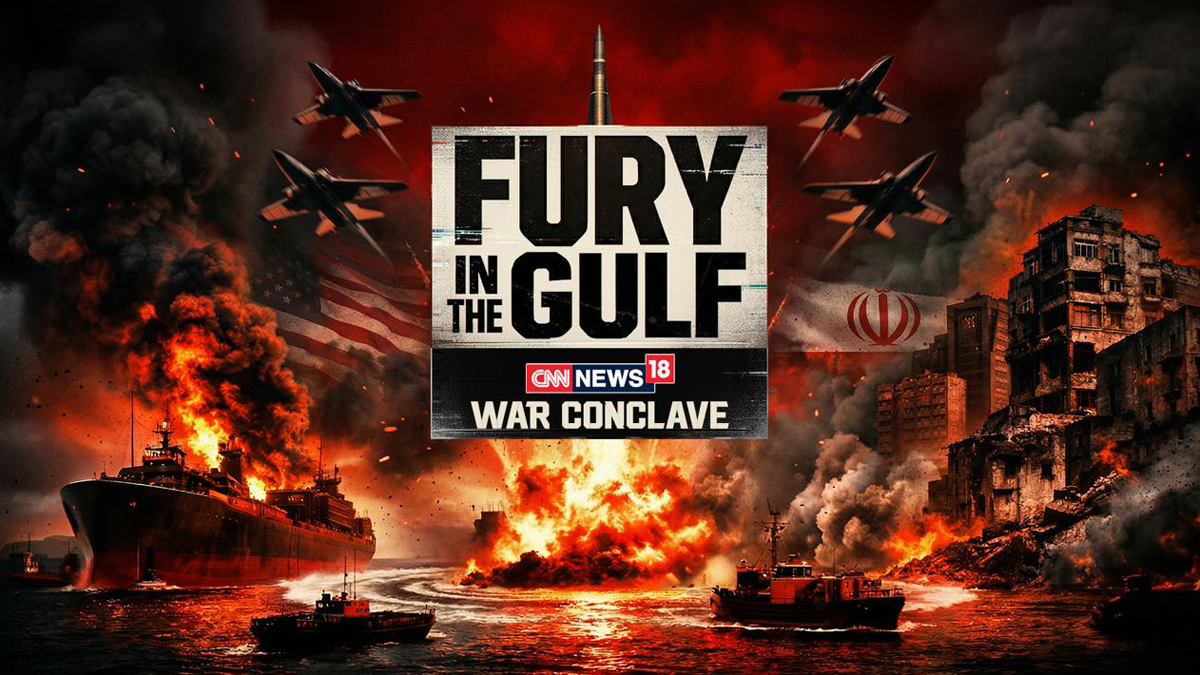
MUMBAI: CNN-News18 is set to host a special three-hour broadcast, Fury in the Gulf – War Conclave, on April 7, aiming to decode the escalating West Asia crisis and its far-reaching implications for India.
Scheduled from 4:00 PM to 7:00 PM, the conclave comes at a time when tensions between Iran and the United States are reshaping global geopolitics and triggering economic uncertainty. With India’s deep energy ties, trade links and large diaspora in the Gulf, the developments carry significant domestic relevance.
Built around the theme ‘Conflict, Consequences, and The Future,’ the programme will feature six curated sessions combining one-on-one interviews and panel discussions. The focus is to cut through the clutter and offer viewers a clearer understanding of the fast-evolving situation.
Key sessions include ‘Diplomacy in Times of War’ featuring Shashi Tharoor, and ‘World After the Iran Conflict’ with voices such as Ram Madhav, Reuven Azar, representatives from the European Union and the Iranian Deputy Envoy. Another session titled ‘Another Dunkirk?’ will bring together K. J. S. Dhillon and Jitin Prasada among others.
CNN-News18 editorial affairs director Rahul Shivshankar said, “In times of war, clarity becomes the most powerful tool. Fury in the Gulf – War Conclave brings together credible voices to address the questions and confusion that arise amid an overwhelming influx of information.”
He added that the initiative is aimed at delivering “facts, perspective, and insight” at a time when misinformation can easily cloud public understanding.
Echoing the sentiment, CNN-News18 CEO– English and business news Smriti Mehra said the conflict marks a defining global moment, with consequences that extend well beyond the region. She noted that the conclave seeks to present the crisis with “depth, nuance and responsibility” so audiences can better grasp its real-world impact.
As geopolitical tensions continue to dominate headlines, the conclave positions itself as an attempt to bring order to the noise, offering viewers a structured, insight-led look at a complex and rapidly shifting global situation.






