News Headline
For broadcasters, producers all about staying atop tech challenge


CANNES: Of all the sessions devoted to the challenges posed by the oncoming technology (seems to have arrived in many parts of the globe actually), one of the most lucid presentations of how broadcasters and producers could meet the challenges was presented by FremantleMedia Licensing Worldwide UK CEO Simon Spalding.
Said Spalding, “For producers and broadcasters to reap the rewards of these innovations, they must learn to master the new technologies and crucially the data that emerges.”
Spalding offered three visions of the future Napsterisation, always on demand and prime time rules.

Napsterisation referred to how consumers would decide what, where and when they wanted to watch TV for which linear programme scheduling as it exists today would be inadequate. The biggest fallout of this, of course, is that the pace of fragmentation of audiences will increase exponentially.
There are opportunities that flow out of this though. Because of multiple platforms emerging that require content, the ability to re-use, repurpose as well as extend existing content/ brand propositions would increase. And more platforms will mean more customers.
There are two types of business models that will co-exist in this environment. On the one hand, the traditional broadcasters will have to address increasingly fragmented and ever more complex viewing patterns. The high complexity would naturally mean low control of the provider over what is being watched. For big broadcasters trying to reach a widely spread out audience the values of scale and global reach will only become more emphasised.
However, there is a flip side to this as well. There will be a lowering of entry barriers into the broadcast space as “narrowcasting” gains increasing relevance due to the changing viewing patterns and scarcity of mass audiences. New and increasingly nimble players will have more opportunities to offer specialised content to increasingly more refined TGs. IPTV and mobile TV will have clear advantages here because communication to consumers is direct and has the advantage that the community experience that this naturally facilitates will allow for viral marketing opportunities.
Always on demand is all about consuming TV to the maximum efficiency (time shift viewing). What this, of course, means is that the 30-second ad spots relevance is in doubt at some point in the future. According to Spalding, when Tivo/PVR penetration reaches 30 per cent in any market, TV ad budgets will be cut. While there will be a decline in spot advertising, specialised content will get more opportunities as this allows for targeted advertising.
Content producers also benefit as there can be a premium attached to specialised content as the broadcaster has much connect to the end-user mindspace (read control) that advertisers crave for and which will become ever more critical.
So where is the prime time proposition in all this? Will it just fade away? Not likely. Potential strategies include game shows offering real-time competitions, awarding loyalty points for live viewing and cumulating data on viewer’s programming preferences to better target the most appropriate advertising. Participatory TV will be what it’s all about.
In summation, what does all this mean for broadcasters? Traditional models will go out of the window, that’s certain. Life will be a lot more complex no doubt but a lot more creatively challenging and one dare say more fun for those who have it in them to rise to the challenge.







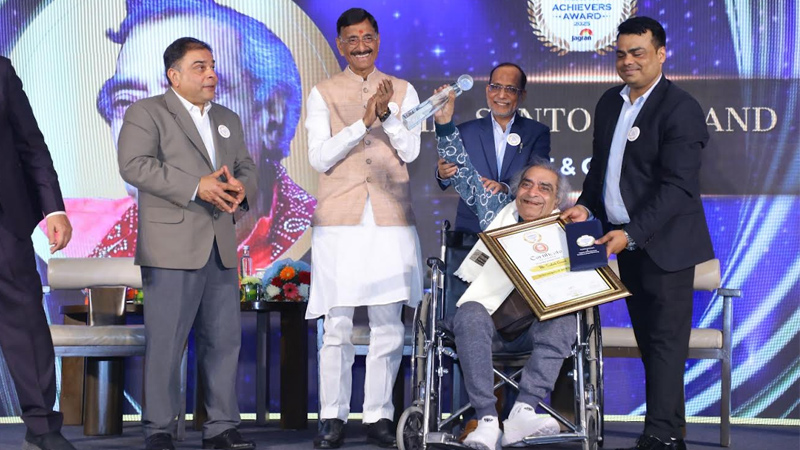
NEW DELHI: Hamdard Laboratories gathered a cross-section of India’s achievers in New Delhi on Friday, handing out the Hakeem Abdul Hameed Excellence Awards to figures who have left their mark across healthcare, education, sport, public service and the arts.
The ceremony, attended by minister of state for defence Sanjay Seth and senior officials from the ministry of Ayush, celebrated individuals whose work blends professional success with a sense of public purpose. It was as much a roll call of achievement as it was a reminder that influence is not measured only in profits or podiums, but in people reached and lives improved.
Among the headline awardees was Alakh Pandey, founder and chief executive of PhysicsWallah, recognised for turning affordable digital learning into a mass movement. On the sporting front, Arjuna Awardee and kabaddi player Sakshi Puniya was honoured for her contribution to the game and for pushing women’s participation onto bigger stages.
The cultural spotlight fell on veteran lyricist and poet Santosh Anand, whose songs have echoed across generations of Hindi cinema. At 97, Anand accepted the honour with characteristic humility, reflecting on a life shaped by perseverance and hope.
Healthcare honours spanned both modern and traditional systems. Manoj N. Nesari was recognised for strengthening Ayurveda’s place in national and global health frameworks. Padma shri Mohammed Abdul Waheed was honoured for his research-backed work in Unani medicine, while padma shri Mohsin Wali received recognition for his long-standing contribution to patient-centred care.
Education and social development also featured prominently. Padma shri Zahir Ishaq Kazi was honoured for decades of work in education, while former Meghalaya superintendent of Police T. C. Chacko was recognised for public service. Goonj founder Anshu Gupta received an award for his dignity-centred rural development initiatives, and the Hunar Shakti Foundation was honoured for empowering women and young girls through skill development.
The Lifetime Achievement Award went to former IAS officer Shailaja Chandra for her long career in public healthcare and governance, particularly in the traditional systems under Ayush.
Speaking at the event, Hamdard chairman Abdul Majeed said the awards were a tribute to those who combine excellence with empathy. “These awardees reflect Hakeem Sahib’s belief that healthcare, education and public service must ultimately serve humanity,” he said.
Minister Seth struck a forward-looking note, saying India’s young population gives the country a unique opportunity to become a global destination for learning, health and wellness by 2047.
The ceremony also featured the trailer launch of Unani Ki Kahaani, an upcoming documentary starring actor Jim Sarbh, set to premiere on Discovery on 11 February.
Instituted in memory of Unani scholar and educationist Hakeem Abdul Hameed, the awards have grown into a national platform that celebrates those building a more inclusive and resilient India. For one evening at least, the spotlight was not just on success, but on service with substance.








