News Headline
FM radio – Abuzz with activity

The floodgates opened in 2007.
The year gone by was a time when years of hard work and patience finally paid off for the radio industry in India. It was a year of intense competition, aggressive marketing and marginal creativity as private FM finally flowered in metros as well as tiny towns throughout the nation.
Even though advertising crept up only slowly, and the government continued to pussyfoot around the issue of allowing news and current affairs on private radio, the mood stayed upbeat throughout the radio industry.
With phase II of FM opening up the industry for private players, there was no holding back.

Consider these figures. In 2006, 26 private FM stations were operationalised. In contrast, AIR saw ten FM stations operationalised in 2004 and an equal number in 2005, with just two in 2006.
By October 2007, a total of 281 FM channels include 161 of All India Radio and 120 privately owned channels were operational.
By the year end, there was a scramble among operators to put up stations in the 91 cities for which licenses had been doled out – held up in many places by the government’s delay in activating the transmission towers. It was no mean task. Entities like Big FM and Sun’s SFM have a quota of 45 stations each to put up, Mirchi has 32 and Bhaskar, the late entrant hurried to put up 17 stations on air. Most have reached their targets, some like BAG Films’ Dhamaal is yet to launch in four cities, and India Today’s Meow has five more cities in its kitty.
But more than these numbers, it was programming and marketing of stations that were put up in a hurry that hogged the limelight. A trove of radio jockeys was unearthed from various corners of the country (some poached, a lot honed) to give that much needed edge to the programming, while contests and on ground events (particularly in the small towns) jostled for listener attention.
The core content, despite the operators’ insistence to the contrary, stayed what the listener apparently wanted the most – Bollywood music.
Music all the way
They gave it their own tags – superhit music, hot adult contemporary music, latest hits – but the fact remained that recent Bollywood music played on most stations throughout the day, with experiments like western music and ‘old’ tracks relegated to the very early mornings or the very late nights.
Very few, like Radio Indigo and Fever played differential western music and could attract only niche audiences, and fewer like Meow FM decided to take the ‘talk’ format and address the female audience directly. While Meow claimed that it had managed to hook the feminine ears in both Delhi and Kolkata, the other stations played safe and stuck to the ‘less talk, more music’ formula.
The innovations came in other forms – Big FM devised a 100 chartbuster formula, to keep playing the ‘most wanted’ music all the time, while Radio One went for the 20 20 format to keep the elusive listener hooked to a show. “The 20 minute format works on the principle that if a listener is listening to an average time of 20 minutes, the programming mix is designed to achieve that,” officials averred, when the format launched in June.
Radio City amplified its outlook with the Whatte Fun concept, that started with a music video and spun across programming to become a microsite of its own, which will probably have a larger life of its own in 2008. Big FM’s new digital division will be another entity to watch out for in 2008; launched in the last part of ’07, it began small with a podcast of its Bangalore station but promises a lot in the digital space.
It was the myriad contests that remained the nectar to attract the bees, however. In the absence of a regular audience tracking methodology till October end, when TAM’s Radio Audience Measurement came into being, contests and big prizes stayed the carrots with which stations enticed listeners, who in the absence of differential programming, exhibited no real station loyalty.
CSR also remained a strong buzz word on radio – from distributing raincoats to traffic police paying tribute to Kargil martyrs , aiding the flood hit in Rajkot to spreading AIDS awareness among truck drivers, the initiative also became a good on ground activity to popularise the stations.
‘Ad’ding up the revenues
Overall radio advertising revenue, that was at Rs 3180 million in 2005, was expected to touch around Rs 6800 million this year, a figure that would still be around six per cent of the total ad pie.
Advertisers are slowly but steadily beginning to view radio as a medium that can reach out to people, and need no more be a supporting medium. As industry veterans had predicted, the presence of more stations, drove listenership which fetched more ads too.
Players like Big FM introduced uniform rate cards for advertisers in all its stations across India, to bring in rate transparency. Elsewhere, companies like MBPL offer sales support to Gwalior’s ‘Suno Lemon’, while a Radio Mirchi managed Radio Ghupshup’s national ad sales.
Radio itself used other media aggressively to advertise itself, with radio stations’ advertising on TV tripling in one year.
A measure of success
After a long stint of the lone Indian Listenership Track of the MRUC that would release data in phases through the year, TAM finally brought out its data in the form of the Radio Audience Measurement by the end of October. While a majority of the stations contributed to the service, the initial findings released by RAM (operational only in Delhi, Mumbai and Bangalore with Kolkata on the cards) created a tizzy of sorts in the industry with stations staking claim to numero uno positions in either reach, listenership or in respective TGs. A few months down the line, the RAM data should help the industry find its feet, and tailor programming and marketing to suit the market it addresses.
All India Radio
The reign of the unchallenged state sponsored monarch was challenged in a big way in 2007, but some of the RAM figures indicate that AIR’s own FM, operational even in border areas where terrrestrial reach is a problem, continues to hold its own. AIR also continues to enjoy a monopoly on news and current affairs aes well as live cricket commentary, an area that gives it a huge edge over private FM competitors. The other player in the satellite space, Worldspace Radio, did not fare much better, despite innovations like a tie up with MSN India for streaming its content online.
Community radio, 26 stations of which became operational this year, should become a force to reckon with this year. The government is also considering the proposed 5,000 licenses it plans to issue to be divided into sectors, such as farming community, fishing community, women and children and others, and issue the licenses accordingly.
At present 26 stations, all by educational institutions are using community radio.
Code of conduct
While the I and B ministry said there would no separate regulatory authority for FM stations other than the Broadcast Regulatory Authority of India conceived in the proposed Broadcast Regulatory Services Bill, the Association of Radio Operators of India (AROI) formed an advisory committee for the creation of a self-regulatory Content Code for private FM radio broadcasting.
The year wasn’t without its share of controversy. Uninhibited chatter by radio jockeys turned into a crisis of sorts when the north east erupted over a wayward comment on the Indian Idol winner. The case still hangs fire.
Upward swing
Needless to say, the sudden spurt of FM brought with it a fresh wave of young listeners, a wave aided in no small measure by the increasing reach of the mobile phone, which came loaded with the FM features. Over 85 per cent of radio listenership in metros by the end of the year happened on the move. The figures will only go up this year. Whether the curve is matched by an increased burst of creativity now remains to be seen.






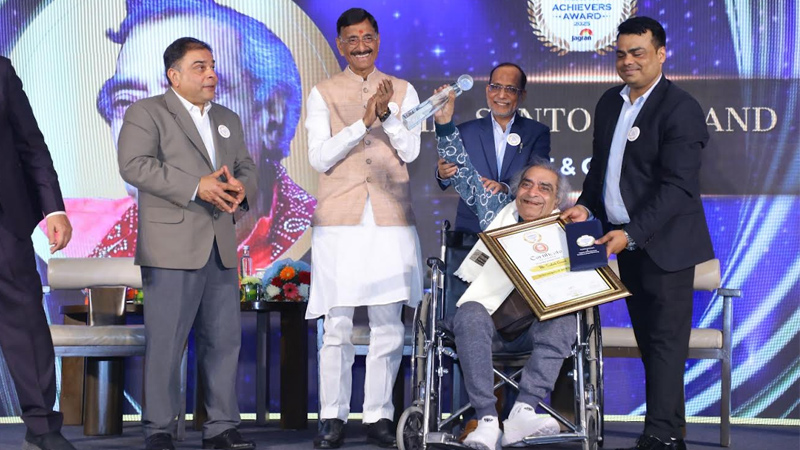
NEW DELHI: Hamdard Laboratories gathered a cross-section of India’s achievers in New Delhi on Friday, handing out the Hakeem Abdul Hameed Excellence Awards to figures who have left their mark across healthcare, education, sport, public service and the arts.
The ceremony, attended by minister of state for defence Sanjay Seth and senior officials from the ministry of Ayush, celebrated individuals whose work blends professional success with a sense of public purpose. It was as much a roll call of achievement as it was a reminder that influence is not measured only in profits or podiums, but in people reached and lives improved.
Among the headline awardees was Alakh Pandey, founder and chief executive of PhysicsWallah, recognised for turning affordable digital learning into a mass movement. On the sporting front, Arjuna Awardee and kabaddi player Sakshi Puniya was honoured for her contribution to the game and for pushing women’s participation onto bigger stages.
The cultural spotlight fell on veteran lyricist and poet Santosh Anand, whose songs have echoed across generations of Hindi cinema. At 97, Anand accepted the honour with characteristic humility, reflecting on a life shaped by perseverance and hope.
Healthcare honours spanned both modern and traditional systems. Manoj N. Nesari was recognised for strengthening Ayurveda’s place in national and global health frameworks. Padma shri Mohammed Abdul Waheed was honoured for his research-backed work in Unani medicine, while padma shri Mohsin Wali received recognition for his long-standing contribution to patient-centred care.
Education and social development also featured prominently. Padma shri Zahir Ishaq Kazi was honoured for decades of work in education, while former Meghalaya superintendent of Police T. C. Chacko was recognised for public service. Goonj founder Anshu Gupta received an award for his dignity-centred rural development initiatives, and the Hunar Shakti Foundation was honoured for empowering women and young girls through skill development.
The Lifetime Achievement Award went to former IAS officer Shailaja Chandra for her long career in public healthcare and governance, particularly in the traditional systems under Ayush.
Speaking at the event, Hamdard chairman Abdul Majeed said the awards were a tribute to those who combine excellence with empathy. “These awardees reflect Hakeem Sahib’s belief that healthcare, education and public service must ultimately serve humanity,” he said.
Minister Seth struck a forward-looking note, saying India’s young population gives the country a unique opportunity to become a global destination for learning, health and wellness by 2047.
The ceremony also featured the trailer launch of Unani Ki Kahaani, an upcoming documentary starring actor Jim Sarbh, set to premiere on Discovery on 11 February.
Instituted in memory of Unani scholar and educationist Hakeem Abdul Hameed, the awards have grown into a national platform that celebrates those building a more inclusive and resilient India. For one evening at least, the spotlight was not just on success, but on service with substance.






