iWorld
Flag Telecom founder to establish Indian Ocean subsea cable

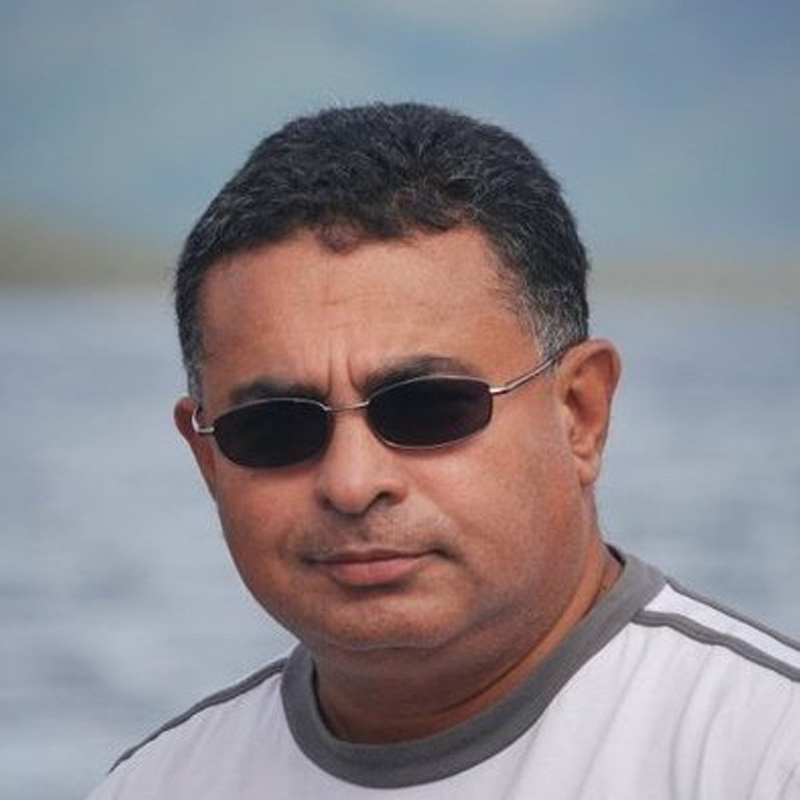
MUMBAI: A new subsea cable will connect Singapore to Mumbai on India’s west coast. Apart from this one, cable entrepreneur Sunil Tagare recently announced another new subsea cable project, designed to connect Marseille to New York directly.
Without giving funding details, Tagare, in LinkedIn posts, stated that his company Sing-India-Sing Cable would bypass India’s Reference Interconnection Offer (RIO) rules. It would land in an open cable station in Mumbai where the RIO charges would be zero and any carrier would be able to access the cable landing station, he added.
On the Mumbai-Singapore cable, Tagare said that he would sell only full fibre pairs, but on the Marseille-New York cable you could buy a full, half or a quarter fibre pair and have complete control over upgrades and your equipment.

And, Tagare, who has a record in cable projects, stated that Open India would also be an internet exchange where customers could freely choose the carriers and create real competition on the ground.
In 1989, Tagare began the privately financed Fiber Optic Link Around the Global (Flag), which Verizon sold to Reliance Communications; now called as Global Cloud Xchange. Tagare, who quit Flag Telecom in 1996, later founded Project Oxygen cable project unrelated to the current Google operation of a similar name. He later established BuySellBandwidth capacity trading business.
Tagare’s NY project will be called Brexit-1, he declared. It would connect over a dozen cables landing in Marseille from the Middle East, India and Asia to New York bypassing the United Kingdom, he added.
It would be the lowest latency cable between Marseille and New York, he professed, adding, with the chaos around Brexit, it was virtually impossible to know how it would shake out over the next few years. The best bet right now was to avoid the UK totally.
Brexit-1 cable has been designed to run through the Straits of Gibraltar, a decision that has set off a discussion online. Tagare said that route diversity was a critical element of network planning. Almost half a dozen cables already traversed the Straits of Gibraltar. Burying the cable would also enhance security.
In his blog, Tagare stated:
“The first cable will be a direct cable linking Mumbai, India to Tuas, Singapore called Sing-India-Sing. The second cable is called Brexit-1.
I believe that India represents the biggest opportunity for new submarine cable deployment. The only reason it has lagged behind the rest of the world is the arcane RIO (Reference Interconnection Offer) regulations that enabled carriers to charge atrocious access charges. This was reflected in IP Transit rates more than an order of magnitude higher than those in Europe and the US — thereby significantly hurting businesses in India.
So, recently, TRAI won a court case filed by Tata Communications and Bharti Airtel which now will force the carriers to drop their RIO charges by 90%. And TRAI is not done. It wants to pursue this further and get the carriers to drop the RIO charges by 98%.
But as anyone who has done business in India knows, RIO is just one problem faced by customers. Basically, it is almost impossible to move between carriers for lack of Internet Exchanges. So you end up with having no choice from a practical perspective.
It is quite possible you may not need a full fiber pair to India right now but if the price you are paying for a full fiber pair is equivalent to a handful of 100G circuits today, what difference does it make? The minimum speed per fiber pair will be 10 Tbps.”
Also read:





iWorld
Samay Raina returns with Still Alive, confronts 2025 controversy in bold comeback special
Comeback set tackles controversy, blending humour with raw storytelling
MUMBAI: Samay Raina is set to release his new stand-up comedy special, Still Alive, on YouTube on April 7, 2026, marking a high-profile return following a turbulent year.
The trailer for the special dropped on April 5, offering a glimpse into what Raina describes as a raw and unfiltered set that leans as much on honesty as it does on humour.
Positioned as a comeback of sorts, Still Alive draws heavily from the controversy surrounding his show India’s Got Latent in early 2025. The episode led to legal trouble, multiple FIRs, and a lengthy six-hour interrogation by the Maharashtra Cyber Cell, placing the comedian at the centre of intense public scrutiny.
Rather than sidestep the episode, Raina leans into it. The special reflects on the fallout and his personal journey through it, blending observational comedy with moments of emotional candour. Early audience feedback from live performances suggests the tone is less about rapid-fire punchlines and more about storytelling with bite.
The special was filmed during his global Still Alive & Unfiltered tour, which ran from August 2025 to early 2026. The tour saw Raina perform across major international venues, including the Madison Square Garden Theatre in New York, a milestone that places him among the youngest Indian comedians to take that stage.
The title itself signals resilience. “Still Alive” is a nod to navigating both legal and public backlash while choosing to remain unapologetically authentic, a theme that appears to anchor the set.
With the special set to premiere online, all eyes are now on how audiences respond to a performance that promises equal parts reflection and wit. For Raina, the message is clear. He is not just back, he is ready to be heard on his own terms.






