Hindi
Film on Tagore’s sister-in-law wins top award at Washington S. Asian Fillmfest

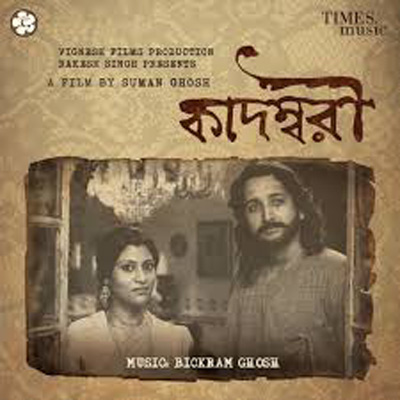
NEW DELHI: Bengali film Kadambari by Suman Ghosh about Kadambari Devi, sister-in-law of Rabindranath Tagore with whom he is supposed to have had a close personal relationship and who eventually committed suicide, won the Best Film award at the Fourth Washington South Asian Film Festival.
Chaitanya Tamhane won the Best Director award for Court, a Hindi and Marathi film, which is India’s official entry for the Academy Awards.

Aparna Sen received the Special Achievement Award, while Huma Beg from Pakistan (Veils and Walls) got the Special Appreciation Award Documentary. Sarmad Khoosat received the Special Award for Contribution to Pakistan TV and Films.
The Festival of independent alternate cinema on the theme of “Art and culture transcend boundaries” had 14 features, 10 shorts and one documentary from India, Pakistan, the United States and Canada.
Rough Book by Anant Mahadevan won the best story award, while the actor awards went to Kishor Kadam (Partu) and Konkona Sen Sharma (Kadambari). Bonjour ji by Satinder Kassona was adjudged the best short film.
The audience rated Partu by Indian-American Nitin Adsul as the Best Film and Billu’s Flight by India’s Mayank Tripathi as the Best Short Film.
Indian-American entrepreneur and philanthropist Frank Islam, who inaugurated the festival said the theme of the Festival reflected a reality. “This is so even though we live in a deeply divided world. These are unsettling times-wars, refugees, terrorism, hate crimes of all types, and boundary disputes. Events such as these dominate the headlines daily,” he said.
He said marketing was a big challenge for independent films, which had to compete with extravagant, studio-backed and star-studded films from Bollywood.
In order to succeed, independent films from India must overcome this stereotype and sea of noise, Islam said.
“This year there was more awareness about the film festival here in the US and in South Asian countries,” said DCSAFF executive director Manoj Singh.
Saari Raat, Aparna Sen’s film adaptation of Bengali playwright Badal Sircar’s drama, was the opening film. There were three films from South Asian Americans: Partu, Miss India America by Ravi Kapoor and For Here or To Go by Rucha Humnabadkar.
The festival also featured two Pakistani films, Manto by actor-director Sarmad Sultan Khoosat on the life of short-story writer Sadat Hassan Manto, and Shah by actor-director on Pakistani boxer Hussain Shah who won the bronze medal at 1988 Summer Olympics.






Hindi
MIFF 2026 to return to Mumbai; film entries open till April 12
19th edition to host WAVES Doc Bazaar, spotlighting global documentary talent
MUMBAI: The 19th edition of the Mumbai International Film Festival 2026 is set to take place from June 15 to 21 at the NFDC Complex, with film submissions currently open and the deadline fast approaching on April 12.
Organised by the National Film Development Corporation under the Ministry of Information and Broadcasting, the biennial festival remains one of South Asia’s most prominent platforms for documentary, short fiction and animation films.
Filmmakers, producers and content creators from across the globe have been invited to submit entries via the Film Freeway platform for the Competition Section. Offline submissions will not be accepted, reinforcing a fully digital entry process.
MIFF 2026 continues to sweeten the deal with a robust awards pool of Rs 55 lakh. The coveted Golden Conch for Best Documentary carries a top prize of Rs 10 lakh, alongside multiple awards across categories, making it one of the most lucrative non-feature film festivals in the region.
A key highlight this year will be the second edition of the WAVES Doc Bazaar, scheduled from June 16 to 18 alongside the festival. Designed as a hub for collaboration, the Doc Bazaar will feature a co-production market, viewing rooms and a work-in-progress lab, bringing together global buyers, sellers and creators under one roof.
Since its inception in 1990, MIFF has built a reputation as a serious showcase for non-feature cinema, drawing participation from filmmakers worldwide. The previous edition saw over 350 films from more than 30 countries, underlining its growing international footprint.
With submissions closing soon and preparations underway, MIFF 2026 is shaping up to be a vibrant meeting point for storytelling, collaboration and cinematic craft, offering filmmakers both a stage and a springboard.







