News Broadcasting
Fifa World Cup to kick in €1.1 billion in profits


MUMBAI: The Fifa World Cup, which kicks off in Germany next week, is on course for profits of €1.1 billion. The estimated €1billion cost of staging the event is far outweighed by revenues from the sale of media rights, sponsorship, merchandise and tickets.
This information is contained in Sportcal.com’s newly-published World Cup 2006: The Commercial Report. Fifa, soccer’s world governing body, told the authors of the report that the World Cup would generate €1.9 billion in marketing revenue, with the sale of television and new media rights raising €1.2 billion and the remaining €700 million deriving from other sources such as sponsorship and hospitality.
The sponsorship figure includes €60 million raised by the local organising committee. The ticketing operation, which is also being handled by the organising committee, should bring in a further €200 million.

The figures are a feather in the cap of Fifa Marketing, the governing body’s commercial arm responsible for marketing sponsorship of Fifa and the World Cup, and of Infront Sports and Media, the Switzerland-based sports agency that marketed the media rights for the competition. Infront stands to benefit directly from its success, with profits over and above a guaranteed figure to be shared equally with Fifa. The report estimates that the guarantee was exceeded by between €200 million and €300 million for the 2002 and 2006 competitions combined.
Fifa’s anticipated media rights revenues of €1.2 billion for the 2006 World Cup represent a 34-per-cent increase on the media rights revenues it realised at the 2002 World Cup, held in Japan and South Korea, a less favourable time zone than Germany’s for most of soccer’s top television markets.
The UK’s BBC and ITV are among the largest contributors to overall 2006 World Cup revenues, jointly paying £105 million for the rights for the event. The largest single contribution to 2006 World Cup revenues is coming from ARD and ZDF, the German public-service broadcasters, which jointly agreed to pay €170 million for the television rights to screen the event.
This figure Sportcal.com states was formerly eclipsed by a fee estimated at €360 million that TV Globo, the Brazilian broadcaster, undertook to pay for the rights for both the 2002 and 2006 tournaments. However, the deal was renegotiated in 2004, after a heavy recession in Latin America, with the result that TV Globo is estimated to be paying just €65 million for the rights for this year’s tournament. Fifa expects that television sales from the European market alone for the 2010 tournament would be worth €1 billion, more than double the fees paid by European broadcasters for this year’s World Cup.
For the first time, sales of new media rights this year are set to make a significant contribution to overall revenues for this year’s World Cup. Fifa estimates, new media to bring in revenues of €120 million for the 2006 World Cup.
Meanwhile, sponsorship revenues for this year’s competition include payments of between €25 million and €40 million each from 15 ‘official partners,’ 11 of which had also sponsored the 2002 tournament.
From the next World Cup onwards, Fifa is restructuring its sponsorship programme, reducing the number of official partners to just six (which will, however, each pay a considerably higher fee) in response to concerns over sponsorship ‘clutter.’
In Sportcal.com’s report Phillips, the Dutch electronics giant, cites sponsorship ‘clutter’ as one of its reasons for ending its sponsorship after this summer’s competition after a 20-year relationship with the World Cup.
In a conference address last month, Philips’ head of sponsorship Andy Knee had issued a warning to Fifa and soccer generally not to take sponsors for granted. He said, “Partnership is a word used regularly but we are looking for a two-way partnership and there remains a mentality in football just to take the money. I expect someone to understand my business and my products, and that would make me spend more money.”
Six local ‘suppliers,’ signed up by the organising committee, which are paying an average of €10 million each to be associated with the event.
Fifa points out that its profits from the World Cup go towards funding its many other activities over the four-year cycle between World Cups, including less lucrative competitions such as junior and women’s World Cups and the quadrennial Confederations Cup between continental national teams champions. Between 2007 and 2010, Fifa will stage 22 such competitions, including the 2010 World Cup in South Africa.






News Broadcasting
CNN-News18 to host Fury in the Gulf conclave on West Asia crisis
Three-hour summit to unpack geopolitical fallout and impact on India
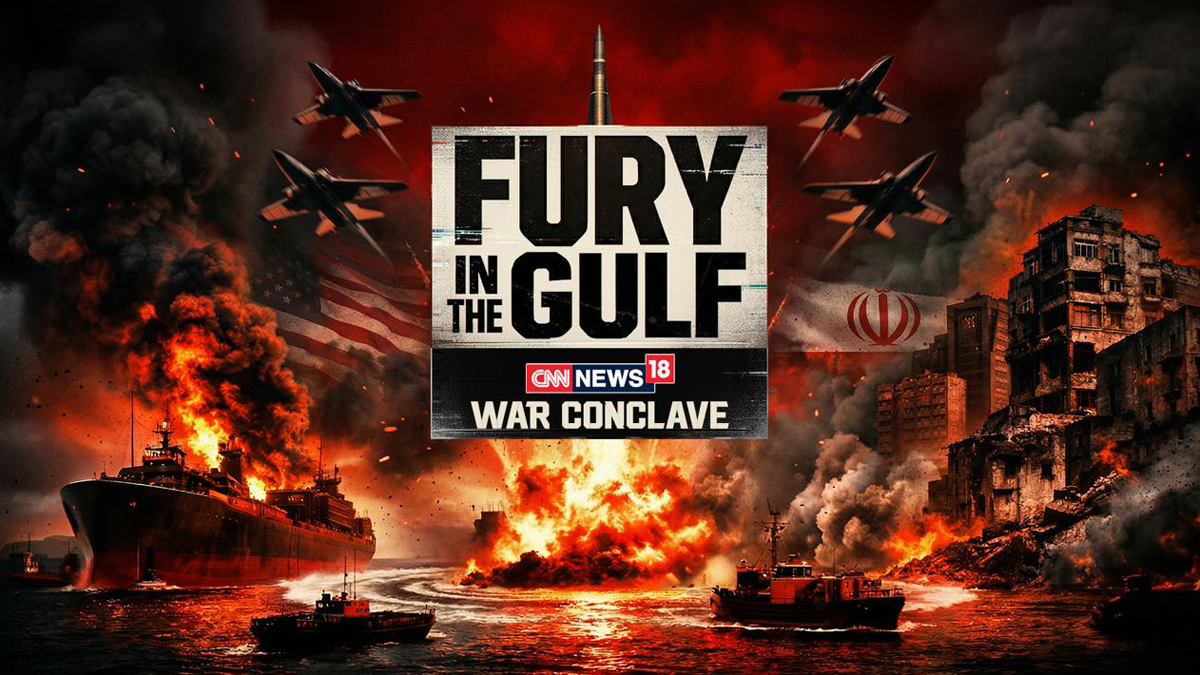
MUMBAI: CNN-News18 is set to host a special three-hour broadcast, Fury in the Gulf – War Conclave, on April 7, aiming to decode the escalating West Asia crisis and its far-reaching implications for India.
Scheduled from 4:00 PM to 7:00 PM, the conclave comes at a time when tensions between Iran and the United States are reshaping global geopolitics and triggering economic uncertainty. With India’s deep energy ties, trade links and large diaspora in the Gulf, the developments carry significant domestic relevance.
Built around the theme ‘Conflict, Consequences, and The Future,’ the programme will feature six curated sessions combining one-on-one interviews and panel discussions. The focus is to cut through the clutter and offer viewers a clearer understanding of the fast-evolving situation.
Key sessions include ‘Diplomacy in Times of War’ featuring Shashi Tharoor, and ‘World After the Iran Conflict’ with voices such as Ram Madhav, Reuven Azar, representatives from the European Union and the Iranian Deputy Envoy. Another session titled ‘Another Dunkirk?’ will bring together K. J. S. Dhillon and Jitin Prasada among others.
CNN-News18 editorial affairs director Rahul Shivshankar said, “In times of war, clarity becomes the most powerful tool. Fury in the Gulf – War Conclave brings together credible voices to address the questions and confusion that arise amid an overwhelming influx of information.”
He added that the initiative is aimed at delivering “facts, perspective, and insight” at a time when misinformation can easily cloud public understanding.
Echoing the sentiment, CNN-News18 CEO– English and business news Smriti Mehra said the conflict marks a defining global moment, with consequences that extend well beyond the region. She noted that the conclave seeks to present the crisis with “depth, nuance and responsibility” so audiences can better grasp its real-world impact.
As geopolitical tensions continue to dominate headlines, the conclave positions itself as an attempt to bring order to the noise, offering viewers a structured, insight-led look at a complex and rapidly shifting global situation.






