I&B Ministry
FICCI proposes a road map for M&E to Prakash Javadekar

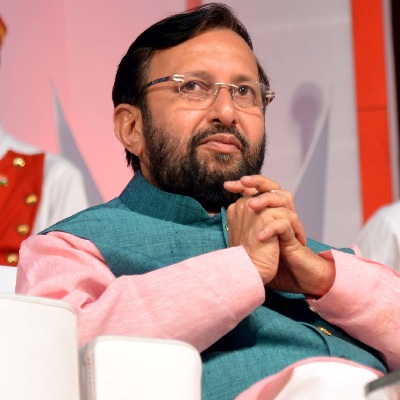
NEW DELHI: The Federation of Indian Chambers of Commerce and Industry (FICCI) has called for constitution of a task force for improving screen density in India. This is also to ensure that entertainment tax is fully subsumed in the GST without creating a window for its levy at the local level.
In a road map presented to Information and Broadcasting Minister Prakash Javadekar, FICCI expressed confidence that this would provide the much-needed boost to the Media and Entertainment (M&E) sector.

A delegation led by FICCI president Sidharth Birla stated that the M&E sector had tremendous potential for dynamic growth and multiplier effect on employment generation without much spending from the public exchequer.
The ‘Policy Roadmap for the Media and Entertainment Sector in India’ comprises key recommendations for the television, film, print, radio, Animation, Visual Effects, Gaming & Comics (AVGC) and live events sectors.
In a move that will cause a lot of consternation among working journalists, the industry body has called for abolition of the Wage Board Act for the print sector and for urgent announcement of fiscal relief measures for newspapers.
The roadmap calls for early enactment of the amended Cinematograph Bill so that the rights of all stakeholders can be protected.
In the television broadcast sector, FICCI wants relaxation in FDI limits in news broadcasting and infrastructure status to the cable sector, apart from smooth and orderly implementation of digitisation.
The body urged the government to ensure that the process of auctions under FM Radio Phase III rolls out smoothly without any further delays. The auctions should be completed by September or October this year and Phase II licenses which expire from April 2015 are extended well before the end-date.
Referring to reduction in channel separation, the government must immediately accept Telecom Regulatory Authority of India’s recommendations so that an FM revolution can be brought about. A larger number of radio stations will also mean more job creation and a much wider programming variety for the people of each city. The chamber has also called for allowing news in an unrestrained manner and increasing FDI in FM radio to 49 per cent.
For the AVGC Sector, it has recommended creation of an investment fund, incubation and market development fund, tax relief, skills and talent development, co-production treaties and focus on kids’ channel in terrestrial broadcasting space.
FICCI expressed its gratitude to the Minister on his announcement regarding the launch of a dedicated channel for kids and animation content on the national broadcaster Doordarshan.
Given the vast and intensive reach of Doordarshan across the country, this initiative will – by popularising kids and animation content – create a demand for original intellectual properties in the sector provide an enormous boost to its growth. Indian kids’ and animation content has long been battling the challenge of outpacing global competitors – and a dedicated forum for distribution such as an exclusive channel from the national public broadcaster will act as a boon for the sector.
FICCI expressed the hope that appropriate steps will be taken soon by Prasar Bharati and Doordarshan to make the vision of a kids and animation channel in the public broadcasting space a reality in the very near future.
It has been asking for creation of a dedicated kids and animation channel from Doordarshan for several years, and has been lobbying this initiative at various levels in the Ministry, as well as with Prasar Bharati and Doordarshan. FICCI had even taken a delegation of industry stakeholders to the Prasar Bharati CEO, a couple of years earlier and made a presentation for a dedicated kids channel by Doordarshan.
The benefits of a ‘DD Kids’ Channel’ would be manifold: not only would it be instrumental in catalysing original IP creation for animation and kids’ content in the country but also serve as a medium for the dissemination of content that is uniquely Indian in its cultural ethos.
While Indian myths and tales continue to be of interest to children in India today, broadcast content for children and animated shows continue to be largely dominated by foreign-made IPs.
Thus, the launch of a kids and animation channel by the national public broadcaster would ensure greater exposure for Indian-made content, which would in turn give a new lease of life to diverse value-based indigenous stories and allow for their packaging in attractive formats that appeal to today’s children.
The initiative will serve as a reinvigoration of our country’s rich cultural heritage and help inculcate quintessentially Indian mores and ethics in the young minds of India – compensating in some measure for the lost art of storytelling in today’s nuclear-family-dominant society.






I&B Ministry
CBFC speeds up film certification; average approval time cut to 22 days
Over 71,900 films cleared in five years as digital system shortens approval timelines

MUMBAI: The Central Board of Film Certification (CBFC) has significantly reduced the time taken to certify films, with the average approval timeline now down to 22 working days for feature films and just three days for short films.
Operating under the Ministry of Information and Broadcasting, the statutory body certifies films for public exhibition in line with the Cinematograph Act, 1952 and the Cinematograph (Certification) Rules, 2024. The rules prescribe a maximum certification period of 48 working days, though the adoption of the Online Certification System has sharply accelerated the process.
Over the past five years, from 2020-21 to 2024-25, the board certified a total of 71,963 films across formats. Of these, the majority fell under the U category with 41,817 titles, followed by UA with 28,268 films and A with 1,878 films. No films were certified under the S category during the period.
Film approvals have also steadily risen in recent years. The CBFC cleared 8,299 films in 2020-21, a figure that peaked at 18,070 in 2022-23 before settling at 15,444 films in 2024-25. During the same period, 11,064 films were certified with cuts or modifications.
Despite the high volume of certifications, outright refusals remain rare. Only three films were denied certification over the last five years, with one refusal recorded in 2022-23 and two in 2024-25.
The board may recommend cuts or modifications if a film violates statutory parameters relating to the sovereignty and integrity of India, security of the state, friendly relations with foreign states, public order, decency or morality, defamation, contempt of court or incitement to an offence.
Filmmakers can challenge CBFC decisions in court. Data shows that such disputes remain limited but have seen some fluctuation. Between 2021 and 2025, a total of 21 certification decisions were challenged before High Courts, with the number rising to 10 cases in 2025.
Responding to a question in the Rajya Sabha, minister of state for information and broadcasting L. Murugan shared the data. The question was raised by Mallikarjun Kharge.
With faster timelines and a largely digital workflow, the certification process appears to be moving at a far brisker pace, signalling a shift towards quicker clearances for India’s growing film output.