Event Coverage
FICCI Frames 2017: Stakeholders feel regulations cripple monetization

MUMBAI: In keeping with the tone set in the morning about the changing scenario as far the political climate and censorship were concerned, every participant was keen to hear what the Government had to say about this on day one of the FICCI FRAMES meet here.
Clearly not wanting to disappoint the M and E sector, Information and Broadcasting Ministry Secretary Ajay Mittal said the Ministry was conscious of these issues and was working on them.
He expressed optimism that the entertainment industry will soon get an effective solution to their complaints, though he said he was not liberty at present to give more details about this. But the Government appreciated that “Creativity is a great thing, is the soul of society and it should not be affected”.

Earlier in the same session, film producer Siddharth Roy Kapoor said, “I would strongly urge the government when it comes to the sub-titling and the litigation of the businesses, these issues must be left to the industry. The maximum support from the government should come from the tax regime, infrastructure sector and censorship.”
Even as everyone appreciates the growth of the sector over the year, the ‘Do the Lions still roar: a reality check for the M&E industry’ was largely devoted to exploring whether the players in the content ecosystem have done their part to address the industry’s shortcomings or has the plot got lost in translation.
The M&E industry has been a steady contributor to national revenues, employment growth and socio-economic development; it has shown a trajectory of growth over the past 15 years, been at the real cusp of ‘Make in India’ while promoting Indian culture and its soft power globally. And yet, it was largely dismissed as a glamour hub rather than a serious economic nerve centre.
Of late, the industry has seen a battle of wits between stakeholders and the Government, thus preventing the sector from realizing its full potential. But the question sought to be explored in the session was whether the industry had done enough to highlight its own story.
Moderated by The Times of India consulting editor and South Asian History and Culture senior fellow, IDF and editor Nalin Mehta, the session was attended by Union Department of Commerce joint secretary Sudhanshu Pandey, the Film and Television Producers Guild of India president Siddharth Roy Kapur, BAG Films & Media chairman and managing director Anurradha Prasad, Harvard Business School Professor of Business Administration Bharat Anand, Viacom 18 Colors CEO Raj Nayak, TataSky MD and CEO Harit Nagpal, and UFO Moviez India Ltd joint managing director Kapil Agarwal among the panelists.
Asked about the impact of digitization of content and on the business, Nayak said, “People say that the data is the new oil but my philosophy is that the content is the new water. Digitization is no longer a new word. It is just that the number of pipes delivering the content has multiplied in different platforms. If I look at digitization, what is happening is that people have the choice of watching content wherever they want to. But the television audience today is 180 million households and still expected to grow by 80 billion households.”
He added, “When we look at the monetization, 85 per cent is between Google and Facebook.Of the balance 15 per cent, the growth may be 30 to 35 per cent but it is so fragmented that everybody is losing money. Even when Netflix came, it came via television. If some breaking news is happening people will watch it, if there is some live speech going on or may be for sports, people will watch it on their television sets. As we evolved, we wanted bigger screens to watch television sets that show reality. For content creators, it is a great thing and it is not a golden but a diamond era for them. But the problem is when it comes to monetization because there is so much fragmentation I really doubt how most of these platforms will survive unless of course you are able to get subscription. If you are not able to make the right subscription revenue model, a lot of digital platforms will find it difficult to survive.”
Asked whether the DTH players were making money from the content, Nagpal said, “People consume content in different ways. Some will spend Rs 20 on the content and some might take different channels in a bundling. So there are different segments. But the purpose of television digitization is to create the infrastructure which is digital and the customer can make his choice. We created a box between the customer and the television, but is that addressable? Officially, DAS Phase 1 and 2 are digitized. We were also supposed to bring transparency. The Government is one stakeholder, the broadcaster is the other stakeholder and the platform that distributes is the third one and the money is divided between the three of us.”
Nagpal said, “DTH took 33 per cent of phase1 and phase 2 market and two-thirds is sitting with cable. On the service and entertainment tax, this 33 per cent component of digitization would be paying 80 to 90 per cent entertainment tax and 66 per cent of the digital cable sector is paying 10 to 20 per cent of the taxes. Is that addressability? So let not the government waste its time in deciding how I should be pricing myself. They should be making sure whether the digital transparent addressable platform that has been created rightfully.”
Prasad asked, “Do we still roar? Sorry to say we don’t roar, we don’t have a voice. We have so many issues and for every issue we are going to the court. The stakeholders and the policy makers have divested their power and authority in the organization called TRAI and they vote themselves as they do not know how to move forward. Content needs to be curated, you have to be innovative and for that you need to spend money. You don’t have money flowing back to the system. So the money is getting divested. We don’t get the money back.”
Sudhanshu Pandey said the service sector in India largely remained unorganized and had to find its own way to develop and grow. Fair market practices have to come in, and the finances should be there for that industry to grow. Some sectors regulators have come but there are many sectors without regulators.
Agarwal asked: “How do you monetize the film content? The first window of monetization of the film content is theatre, then it goes to the satellite channel and then to other platforms. As a country we need more than 20,000 screens. The capital is there, the facilitation is there but it is restricted by regulations because at least 40 approvals are required. Today the screens are growing only by 2 per cent per annum. When we move from regulation to facilitation, the growth will start and the growth will just not come from the multiplexes but has to happen all over the country. The multiplex sector is very expensive.”




Event Coverage
Anime India announces Amazon MX Player as co-presenting partner for Anime India Kolkata 2026
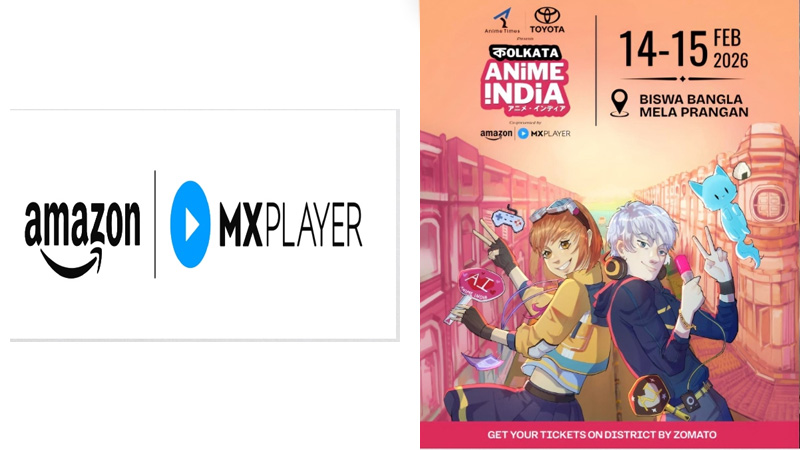
MUMBAI: Riding high on the success of its blockbuster Mumbai debut, Anime India is accelerating its nationwide expansion with the announcement of Amazon MX Player as the co-presenting partner for Anime India Kolkata. The partnership marks a significant step forward in the festival’s mission to deliver large-scale, accessible, and fan-first anime experiences across the country.
Scheduled for 14 and 15 February 2026 at the iconic Biswa Bangla Mela Prangan, Anime India Kolkata will launch the first regional chapter of what is set to be a year-long, multi-city tour. As the curtain-raiser for the 2026 circuit, the Kolkata edition aims to fuse the energy of global Japanese pop culture with India’s fast-growing community of anime, manga, and pop-culture fans.
A household name in digital entertainment, Amazon MX Player brings unmatched reach and cultural relevance to the Anime India platform. With its expanding focus on anime and youth-driven content, Amazon MX Player’s involvement as co-presenting partner reinforces Anime India’s vision of making anime culture more inclusive breaking barriers of language, geography, and accessibility to connect with fans nationwide.
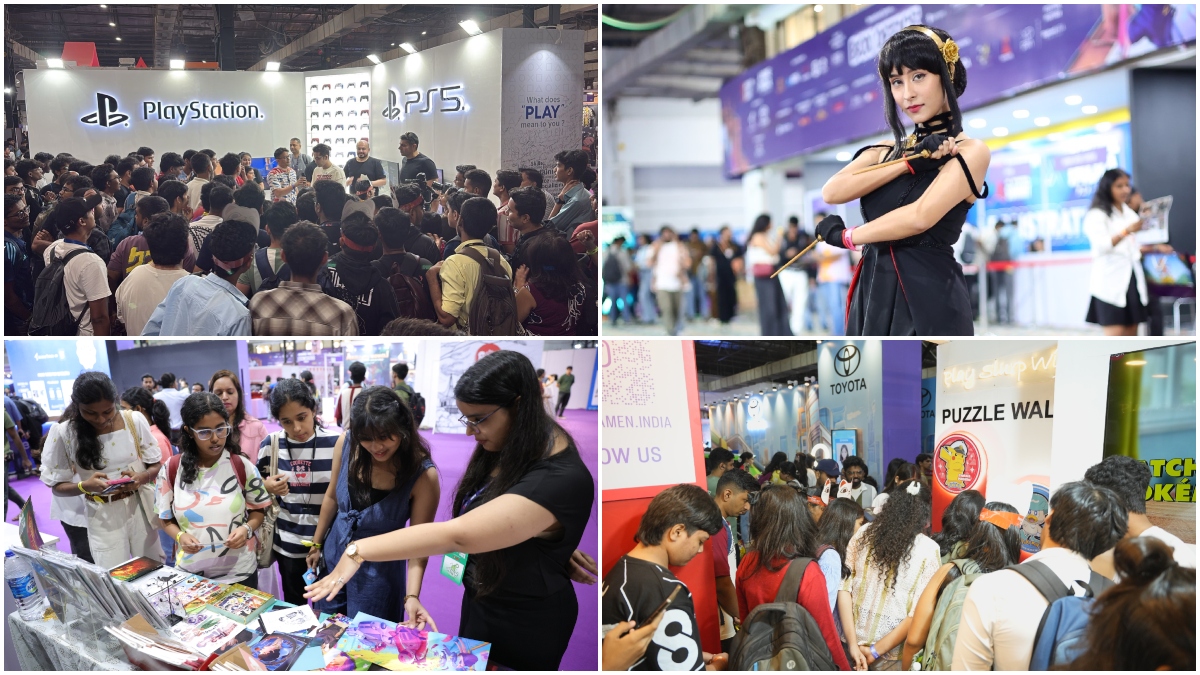
Anime India Kolkata 2026 will showcase cosplay competitions, interactive zones led by the Indian Gunpla Community, India-39 Vocaloid Community, The Japan Curry, and Adda-o-Otaku by The Otaku Guild. Fans can join tournaments across fighting games, Pokémon VGC, and more. Acclaimed Japanese director Susumu Mitsunaka (Haikyu!!) will attend as guest of honour, appearing in panels and live sessions. Positioned as an immersive celebration of fan culture and industry collaboration, the Kolkata edition marks the beginning of Anime India’s nationwide expansion.
Sharing their perspective on the partnership, Amazon MX Player director Aruna Daryanani expressed, “Anime in India has evolved from a niche interest into a mainstream cultural movement, driven by an increasingly engaged and passionate fanbase. At Amazon MX Player, our focus is on expanding access by bringing anime to audiences across the country for free and in multiple local languages. Our association with Anime India reflects our commitment to supporting the growth of anime in India and deepening connections with fans, while continuing to build Amazon MX Player as a trusted destination for free, high-quality entertainment.”
“Anime India Kolkata is a celebration of how anime has grown beyond entertainment into a powerful cultural and creative force. By bringing fans, creators, and industry leaders onto one shared platform, the festival is helping define the future of pop culture in India,” said Anime India co-founder and director Neha Mehta.
The debut edition of Anime India 2025 in Mumbai attracted over 29,000 fans, quickly cementing its status as a landmark celebration of anime and Japanese pop culture. Riding on this overwhelming response, the Kolkata chapter is projected to draw more than 40,000 visitors across two days, positioning it as one of the biggest anime conventions ever held in eastern India.
Anime India is focused on bringing together fans from across the country to create a truly pan-India celebration of anime, manga, cosplay, gaming, and Japanese culture. With plans to expand into four key metropolitan hubs in 2026—east (Kolkata), north (Delhi), west (Mumbai), and south (Hyderabad)—the festival seeks to deliver globally benchmarked experiences while supporting and uplifting creators, artists, and fan communities throughout India.