e-commerce
FHRAI raises concerns over Zomato & Swiggy’s private label business

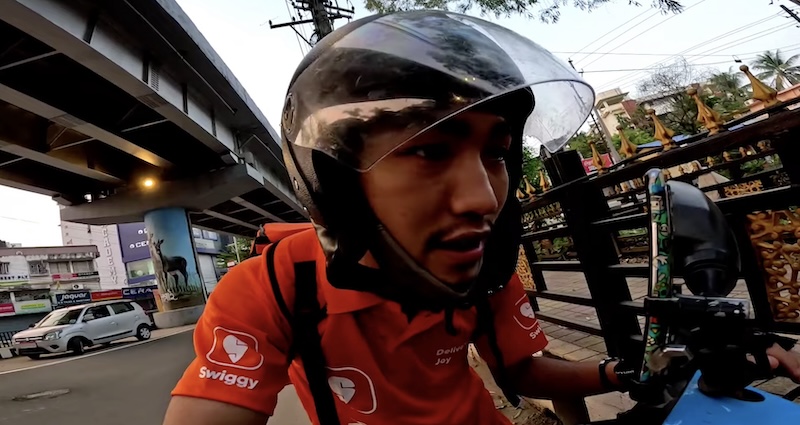
MUMBAI: This was bound to happen. Especially with the quick commerce guys evolving from delivery to making their own food products (call them private labels) and delivering them. This is ruining the appetite of hoteliers and restaurant owners.
And they are voicing their irritation through their representative body – The Federation of Hotel & Restaurant Associations of India (FHRAI), the world’s third-largest hospitality association which has voiced strong objections to Zomato and Swiggy’s entry into the private label food delivery business.
The association has alleged unfair competition, misuse of restaurant data, and potential food safety risks, citing the platforms’ market dominance as detrimental to the businesses they were initially designed to support.
FHRAI has announced its intention to meet with the ministry of commerce to push for regulatory action to ensure fair practices in the food service sector.

The association’s concerns center on the alleged misuse of proprietary restaurant data by Zomato and Swiggy. This data, encompassing customer preferences, sales trends, and order histories, is reportedly being used to create personalised deals and develop private label products.
FHRAI vice-president Pradeep Shetty highlighted the ethical and legal implications of these practices. “These platforms were originally designed as neutral marketplaces to connect consumers with restaurants. However, by introducing and promoting their own food products, they are exploiting sensitive data to compete directly with the restaurants they serve. This creates an uneven playing field and jeopardises the livelihoods of small and medium-sized businesses,” said Shetty.
He further emphasised that restaurants lack access to the same data, making it even harder for them to compete in an already challenging market.
Another significant issue raised by the FHRAI is the lack of transparency surrounding food safety standards for these private label products. While restaurants are subject to stringent safety regulations, the same standards may not be enforced for products sold by the platforms. This lack of accountability, FHRAI argues, could undermine consumer trust and damage the reputation of the restaurant industry.
Originally established to connect restaurants with customers, Zomato and Swiggy have expanded their operations into the quick commerce space by creating private label food products. This move has raised fears of monopolistic practices, as the platforms now control not just the distribution but also the creation and sale of food.
The association warned that without clear regulations, these developments could harm competition and consumer choice in the food service market.
FHRAI is advocating for enforceable guidelines to:
* Protect restaurant data from misuse.
* Ensure private label food products meet the same safety and quality standards as restaurant food.
* Maintain transparency and fairness in the food service industry.
“We urge regulators to take swift action to address these issues. A transparent and competitive environment is essential for the survival and growth of all stakeholders, including restaurants, delivery platforms, and consumers,” Shetty stated.
Will the regulators do something to restore the FHRAI’s appetite?






e-commerce
Flipkart rolls out 105 per cent bonus for 20,000 employees
Strong FY25 performance drives payouts even as layoffs and shifts unfold.

MUMBAI: In a year where belts were tightened and rewards loosened, Flipkart seems to be playing both offence and defence trimming roles on one hand while handing out a generous 105 per cent bonus on the other. The Walmart owned e commerce major has rolled out a 105 per cent bonus payout for 2025, covering nearly 20,000 employees, signalling a year of steady operational momentum even as the company navigates restructuring pressures. The payout, communicated internally by chief human resources officer Seema Nair, is tied to performance across key metrics including growth, operational efficiency, financial outcomes and people indicators, a combination that suggests the company is inching closer to its long stated goal of sustainable profitability.
Employees at SD level and below are set to receive their bonuses in March, while payouts for senior leadership, including vice presidents and senior vice presidents, will follow after the close of the performance cycle. The elevated 105 per cent multiplier stands out in a sector where cautious payouts have increasingly become the norm, pointing to what appears to be a relatively strong internal scorecard for FY25.
Yet, the announcement arrives with a noticeable contrast. Earlier this year, Flipkart reduced its workforce by around 300 roles as part of its annual performance review process. While officially framed as performance driven, the juxtaposition of layoffs alongside above target bonuses reflects a more nuanced balancing act, one that prioritises cost discipline while continuing to reward and retain high performing talent.
This dual approach is becoming increasingly common across the technology and e commerce landscape, where companies are navigating an uneven hiring environment while under pressure to deliver profitability. Rewarding top contributors, even amid selective workforce reductions, allows firms to maintain morale and retain critical talent without losing sight of financial prudence.
At the same time, Flipkart is also undergoing leadership shifts that hint at a broader strategic recalibration. Nishant Verman has been appointed senior vice president for corporate development and partnerships, while group chief financial officer Sriram Venkataraman is set to step down. Ravi Iyer will take on expanded responsibilities within the finance function, marking a reshuffle at the top as the company gears up for its next phase.
These changes come amid reports that Flipkart is planning to shift its holding structure back to India, a move widely interpreted as groundwork for a potential public listing. While timelines remain fluid, the combination of stronger financial discipline, leadership restructuring and employee incentivisation suggests a company preparing itself for greater scrutiny and scale.
For employees, the 105 per cent payout offers a welcome boost in what has otherwise been a period of adjustment. For Flipkart, it is a signal that even as it cuts where necessary, it is willing to spend where it counts. In the high stakes game of growth versus profitability, the company appears to be hedging its bets carefully, rewarding performance while reshaping itself for what could be its most defining chapter yet.






