News Headline
FCC outvotes 2015 net neutrality rules

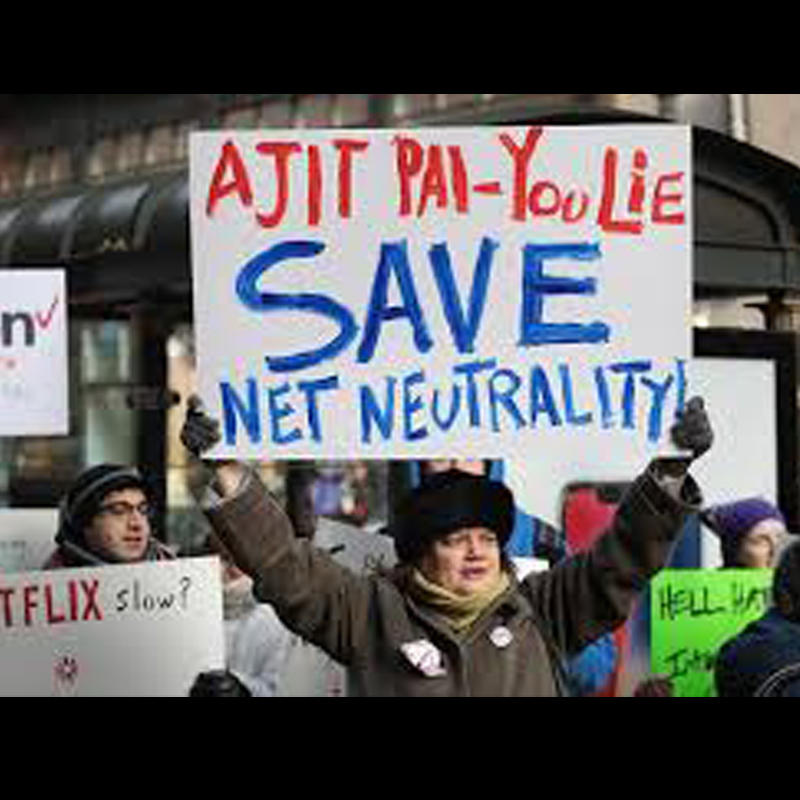
NEW DELHI: American telecoms and broadcast regulator FCC on Thursday voted out the 2015 Obama government’s regulations relating to net neutrality, which, some critics said, put too much power in the hands of broadband companies to influence consumers’ online experiences.
According to the FCC, it voted to restore the “longstanding, bipartisan light-touch regulatory framework” that had fostered rapid internet growth, openness, and “freedom for nearly 20 years”.
Following detailed legal and economic analysis, as well as extensive examination of comments from consumers and stakeholders, the commission reversed the FCC’s 2015 “heavy-handed utility-style regulation” of broadband internet access service, which imposed substantial costs on the entire internet ecosystem.

“In place of that heavy-handed framework, the FCC is returning to the traditional light-touch framework that was in place until 2015. Moreover, the FCC today also adopted robust transparency requirements that will empower consumers as well as facilitate effective government oversight of broadband providers’ conduct,” the commission said in a statement, adding, “In particular, the FCC’s action today has restored the jurisdiction of the federal trade commission to act when broadband providers engage in anticompetitive, unfair, or deceptive acts or practices.
“The framework adopted by the commission today will protect consumers at far less cost to investment than the prior rigid and wide-ranging utility rules. And restoring a favourable climate for network investment is key to closing the digital divide, spurring competition and innovation that benefits consumers.”
New York Times, which has often criticised FCC chief Ajit Pai’s stand on some issues, including net neutrality, reported Mignon Clyburn, one of the Democratic commissioners who voted against the action, accused the three Republican commissioners of defying the wishes of millions of Americans. She was quoted by the newspaper as saying, “I dissent because I am among the millions outraged. Outraged because the FCC pulls its own teeth, abdicating responsibility to protect the nation’s broadband consumers.”
Brendan Carr, a Republican commissioner, was quoted as having said it was a “great day” and dismissed “apocalyptic” warnings.
Before the voting on net neutrality took place, Pai said, “We are helping consumers and promoting competition. Broadband providers will have more incentive to build networks, especially to underserved areas.”
What do the FCC’s new rules mean, as and when they come into effect? In simple terms: it would allow walled garden of content and also help broadband companies and telcos to prioritise services and have different price structures for services.
Tech magazine Wired observed that broadband providers say the public has nothing to worry about and that AT&T, Comcast and Verizon, among others, have promised not to block or throttle content. But those promises leave internet providers with quite a bit of room to prioritise their own content, or from their partners, the magazine commented.
“AT&T, for example, already allows its DirecTV Now video-streaming service to bypass mobile subscribers’ data limits. Verizon does much the same with its Go90 video service. Sling TV and Netflix, on the other hand, still count towards customers’ data caps. The end of the FCC’s current rules will allow companies to expand the ways they prioritise certain services over others,” Wired said.
However, some observers in the US, including the NYT, also were categorical that in the new year the FCC regulation most likely will be challenged in courts.
The full text of the FCC statement could be accessed at https://www.fcc.gov/document/fcc-takes-action-restore-internet-freedom.
ALSO READ:
TRAI releases recommendations on Net Neutrality
TRAI & FCC sign agreement on accelerating broadband deployment
Restoring Net freedom: FCC seeks public participation







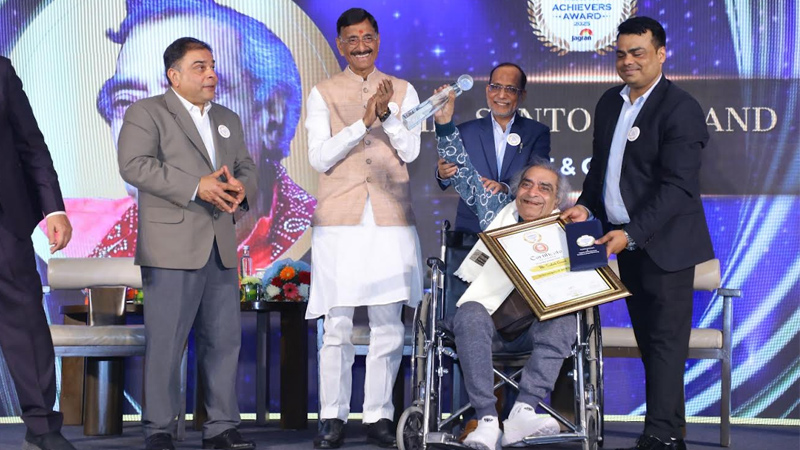
NEW DELHI: Hamdard Laboratories gathered a cross-section of India’s achievers in New Delhi on Friday, handing out the Hakeem Abdul Hameed Excellence Awards to figures who have left their mark across healthcare, education, sport, public service and the arts.
The ceremony, attended by minister of state for defence Sanjay Seth and senior officials from the ministry of Ayush, celebrated individuals whose work blends professional success with a sense of public purpose. It was as much a roll call of achievement as it was a reminder that influence is not measured only in profits or podiums, but in people reached and lives improved.
Among the headline awardees was Alakh Pandey, founder and chief executive of PhysicsWallah, recognised for turning affordable digital learning into a mass movement. On the sporting front, Arjuna Awardee and kabaddi player Sakshi Puniya was honoured for her contribution to the game and for pushing women’s participation onto bigger stages.
The cultural spotlight fell on veteran lyricist and poet Santosh Anand, whose songs have echoed across generations of Hindi cinema. At 97, Anand accepted the honour with characteristic humility, reflecting on a life shaped by perseverance and hope.
Healthcare honours spanned both modern and traditional systems. Manoj N. Nesari was recognised for strengthening Ayurveda’s place in national and global health frameworks. Padma shri Mohammed Abdul Waheed was honoured for his research-backed work in Unani medicine, while padma shri Mohsin Wali received recognition for his long-standing contribution to patient-centred care.
Education and social development also featured prominently. Padma shri Zahir Ishaq Kazi was honoured for decades of work in education, while former Meghalaya superintendent of Police T. C. Chacko was recognised for public service. Goonj founder Anshu Gupta received an award for his dignity-centred rural development initiatives, and the Hunar Shakti Foundation was honoured for empowering women and young girls through skill development.
The Lifetime Achievement Award went to former IAS officer Shailaja Chandra for her long career in public healthcare and governance, particularly in the traditional systems under Ayush.
Speaking at the event, Hamdard chairman Abdul Majeed said the awards were a tribute to those who combine excellence with empathy. “These awardees reflect Hakeem Sahib’s belief that healthcare, education and public service must ultimately serve humanity,” he said.
Minister Seth struck a forward-looking note, saying India’s young population gives the country a unique opportunity to become a global destination for learning, health and wellness by 2047.
The ceremony also featured the trailer launch of Unani Ki Kahaani, an upcoming documentary starring actor Jim Sarbh, set to premiere on Discovery on 11 February.
Instituted in memory of Unani scholar and educationist Hakeem Abdul Hameed, the awards have grown into a national platform that celebrates those building a more inclusive and resilient India. For one evening at least, the spotlight was not just on success, but on service with substance.






