I&B Ministry
FCC commissioner Tom Wheeler proposes universal TV set-top-box

MUMBAI: In an attempt to overhaul the rules for television, tear down anti-competitive barriers and pave the way for software, devices and other innovative solutions to compete with set-top boxes (STBs), the Federal Communications Commission (FCC) has proposed universal STBs for television, which would allow consumers to view traditional cable and streaming video content on television.
Wheeler is targeting a vote on 18 February by the five-member FCC on a proposal to overhaul the rules for STBs, which connect to cable, satellite and fiberoptic video systems.

The proposed regulation would let customers get video services from providers instead of cable, satellite and other television providers.
“Ninety-nine per cent of pay-TV subscribers are chained to their set-top boxes because cable and satellite operators have locked up the market,” the FCC said.
According to the FCC, Americans spent $20 billion a year to lease pay-TV boxes, or an average of $231 a year. STB rental fees have jumped 185 per cent since 1994, while the cost of TVs, computers and mobile phones have dropped by 90 per cent.
Recognising the importance of a competitive marketplace, the Congress directed the Commission to adopt rules that will ensure consumers will be able to use the device they prefer for accessing programming they’ve paid for.
The FCC said that the only change it was proposing was to allow consumers alternative means of accessing the content they pay for.
Wheeler’s proposal will create a framework for providing innovators, device manufacturers and app developers the information they need to develop new technologies. Consumers should be able to choose how they access the Multichannel Video Programming Distributor’s (MVPDs) – cable, satellite or telco companies – video services to which they subscribe.
“A competitive marketplace is required by a 1996 law. Set-top boxes should be open to pay-TV rivals using formats that conform to specifications set by an independent, open standards body,” the FCC said.
The proposal will help promote interoperability and remove barriers to innovation, prevent theft and misuse, lift up independent and minority programming content, honour the sanctity of contracts by providing copyright protection, provide consumer protection by offering emergency alerts, privacy and advertising restrictions.
It will also offer consumers more choice, greater flexibility, increased innovation, more competition and better prices.
While the proposal has been welcomed by some, others have pooh-poohed it.
“The promising slate of reforms proposed by (the chairman) could potentially allow consumers greater access to the content that they pay for, granting greater control over when, where, and how they want to access it, on the device they choose, without being locked into constant, unnecessary fees and excruciating installation and repair appointments,” said National Hispanic Media Coalition vice president of policy Michael Scurato.
RLJ Entertainment chairman and Black Entertainment Television chairman Robert L. Johnson also came out in support of FCC’s proposal.
Johnson said, “In my opinion, this is the best decision that the FCC has made to increase minority diversity in media content distribution since the Commission championed the tax certificate, which allowed for the increase in minority ownership of media properties. I am also very pleased that after speaking with several Members of the Congressional Black Caucus, the Caucus has agreed to a meeting to hear my position on this matter.”
“If you have a good program idea, some financing and access to the Internet, you can find your audience. But your audience can only find you if they have a modem or a set-top box or software that lets them know you are there and gives them access to your programs unconstrained by the network gatekeeper,” he added.
However, a coalition of pay-TV provider called Future of TV Coalition comprising the National Cable & Telecommunications Association, American Cable Association, Motion Picture Association of America and others, which has been formed to oppose the ‘AllVid’ proposal, said the proposed regulation will not provide new programming to customers or lower their television bills.
In a statement, the Future of TV Coalition said, “The FCC proposal, as best anyone can understand it, still strips out all the tools that are used to honour license agreements, would increase consumer costs by mandating yet a second box inside the home and thus ignores the trends away from in-home boxes and devices, eliminates security protections and provides no reassurance on privacy rights.”
TV One CEO Alfred Liggins and Future of TV Coalition co-chair added, “The ‘AllVid’ proposal is a brazen money grab by the Big Tech companies that would do severe damage to the programming ecosystem, and in particular, niche and minority-focused networks.”






I&B Ministry
India tightens anti-piracy law, blocks sites and Telegram channels
New rules bring jail terms, fines and faster takedowns of illegal content
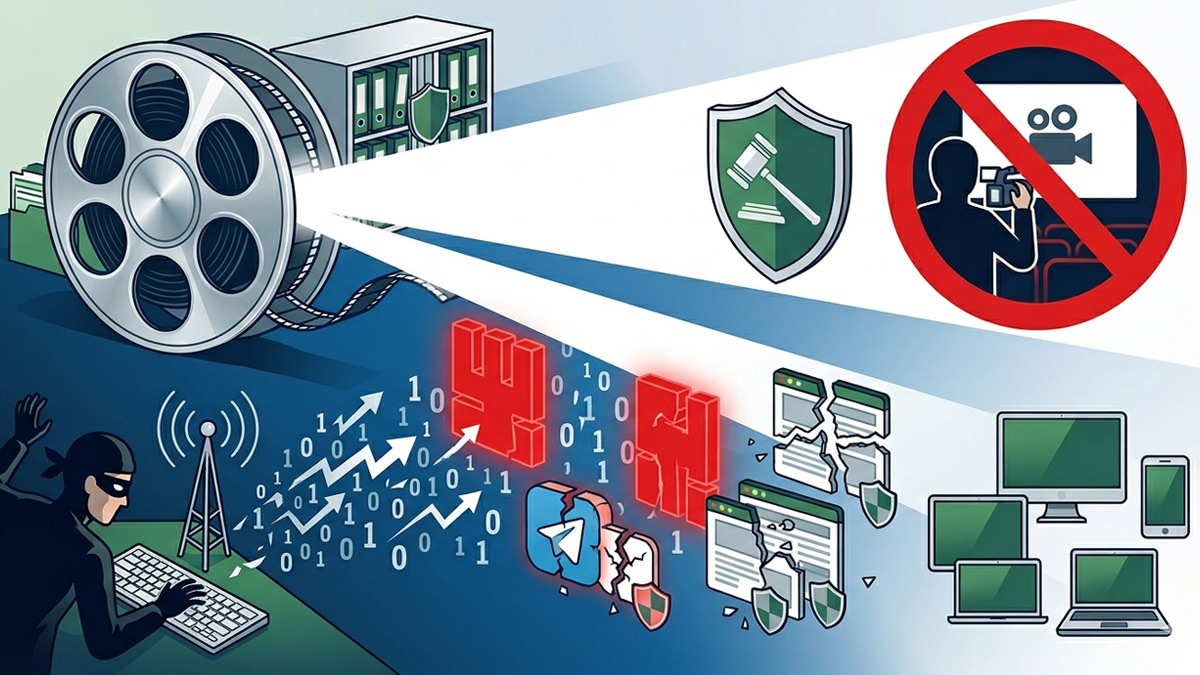
NEW DELHI: The Government of India has stepped up its fight against film piracy, invoking stricter provisions under the Cinematograph Amendment Act 2023 to crack down on unauthorised recording and distribution.
The law now imposes tougher penalties, including jail terms ranging from three months to three years and fines starting at Rs. 3 lakh, which can go up to 5 per cent of a film’s production cost. The provisions target both illegal recording in cinemas and unauthorised online transmission.
In a fresh enforcement push, authorities have notified the Telegram platform to act against piracy, leading to the identification of 3,142 channels allegedly distributing copyrighted content without permission. In parallel, access to around 800 piracy websites has been blocked through internet service providers.
The action has been taken under the Information Technology Act 2000, which empowers the government to direct intermediaries to remove unlawful content. The framework is further reinforced by the Information Technology Rules 2021, requiring platforms to act swiftly when notified of violations.
An institutional mechanism is also in place, allowing copyright holders and authorised representatives to file complaints through designated nodal officers. Once verified, these complaints trigger takedown notices to intermediaries for disabling access to infringing content.
The update was shared in Parliament by Government of India minister of state information and broadcasting l murugan in response to a query from Parimal Nathwani.
The government’s latest move signals a sharper, more coordinated approach to tackling piracy across both physical and digital channels. For the film industry, it is a step towards protecting revenues, while for viewers, it reinforces the shift towards legitimate content consumption.









