Hindi
Farhan Akhtar and Myntra.com partner to promote MARD campaign

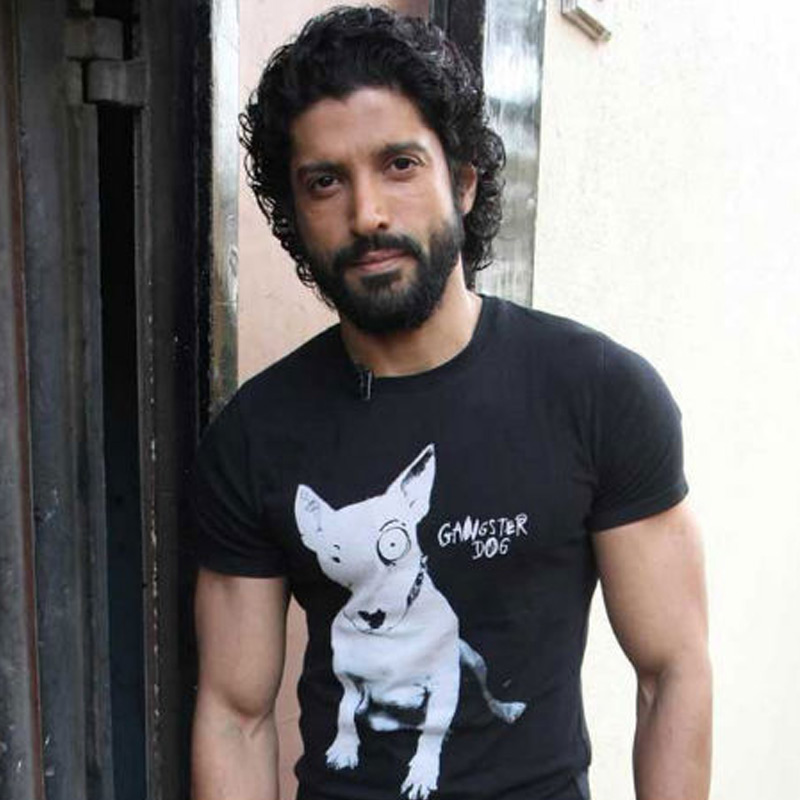
MUMBAI: Farhan Akhtar has signed a deal with Myntra.com in order to strengthen his social cause MARD (Men Against Rape and Discrimination).
As per the deal, Myntra.com has exclusively launched MARD T-shirts. This being a non-profit campaign, the t-shirts are priced at a manufacturing cost of Rs 199 and are available for both men and women.
Post the Delhi rape incident, Akhtar channeled his anger in the form of a poem called ‘What is this country that I live in‘ which attracted a lot of attention. Amongst the sea of calls Akhtar received, an idea was born with JWT creative director Tarun Chauhan and Bling‘s Atul Kasbekar. The trio came together and created a platform called MARD.

Myntra co-founder and CEO Mukesh Bansal said, "We believe that the India of tomorrow lies with the youth of today. Social awareness campaigns such as MARD are extremely impactful to educate and change the attitudes of people. We are really excited to be the chosen partner to support such an important cause with Farhan. With the launch of MARD T-shirts on Myntra.com, we want to help spread awareness to a wider audience and encourage our shoppers to stand up for the cause."
"What is lacking in our society today is basic respect for women which leads to crimes such as rape and gender discrimination. With this campaign, we want to spread awareness across people of all age groups, socio-economic status and educational institutions. Our partnership with Myntra.com to market MARD t-shirts online will help connect with a larger audience and drive home the message that a MARD is he who stands for equality, respect and compassion," said Akhtar.
Taking the MARD initiative one notch higher, Akhtar attended the IPL Match between Kolkata Knight Riders and King‘s XI Punjab on 26 April. Post the toss, he recited the ‘MARD‘ poem (composed by Javed Akhtar). The poem was also recited in Bengali, by playback singer, Shaan.







Hindi
Remembering Gyan Sahay, the lens behind film, television and advertising
From a puppet rabbit selling poppadums to Hindi cinema, he framed it all.
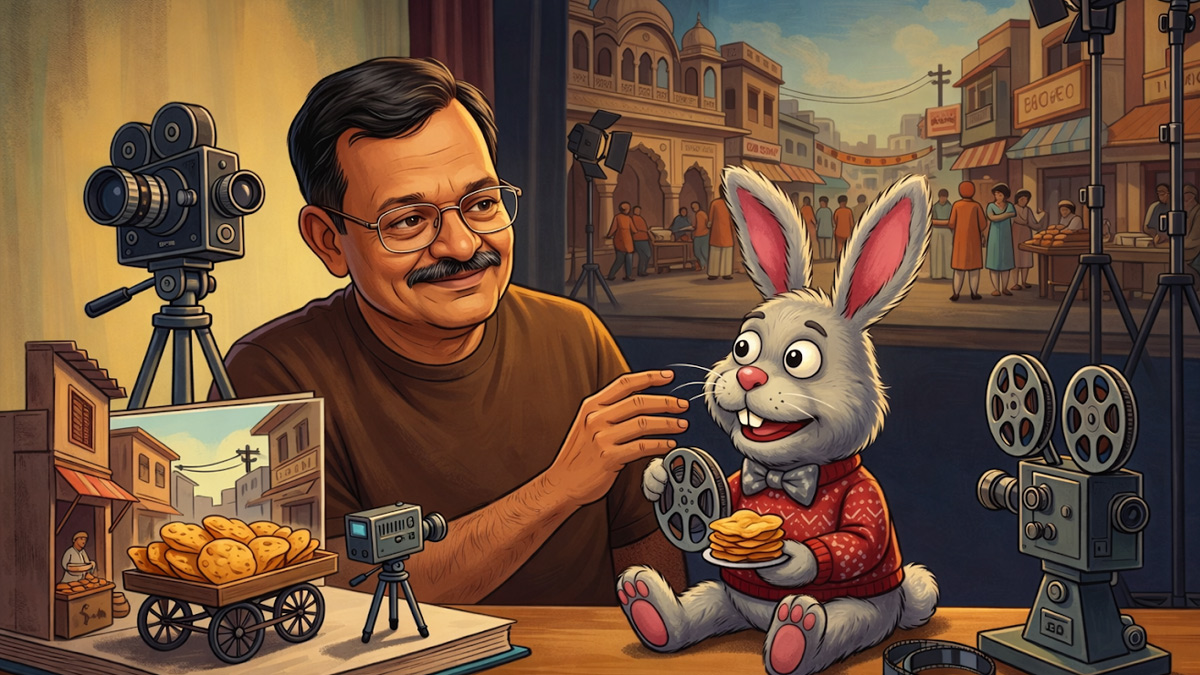
MUMBAI: There are careers, and then there are canvases. Gyan Sahay, the veteran cinematographer, director, and producer who passed away on 10 March 2026 in Mumbai, had one of the latter. Over several decades in the Indian film and television industry, he turned lenses, lights, and the occasional puppet rabbit into something approaching art.
A graduate of the Film and Television Institute of India (FTII) in Pune, Sahay built his reputation as a director of photography across a career that stretched from the early 1970s all the way to the digital age. He was the kind of craftsman who understood that a well-composed shot is not merely a technical achievement but a quiet act of storytelling.
For most Indians of a certain age, however, Sahay will forever be the man behind the rabbit. His direction of the iconic long-running television commercial for Lijjat Papad, featuring its now-legendary puppet bunny, gave the country one of its most cheerfully persistent advertising images. It was the sort of work that sneaks into the national subconscious and takes up permanent residence.
His big-screen credits as cinematographer include Anokhi Pehchan (1972), Pagli (1974), Pas de Deux (1981), and Hum Farishte Nahin (1988). In 1999, he stepped behind a different kind of camera altogether, making his directorial debut with Sar Ankhon Par, a drama that featured Vikas Bhalla and Shruti Ulfat, with a cameo by Shah Rukh Khan for good measure.
On television, Sahay was particularly prized for his command of multi-camera production setups, a skill that made him a go-to technician for large-scale shows and reality programmes. In an industry that has never been especially patient with complexity, he was the calm hand on the rig.
In later life, Sahay turned teacher. He participated regularly in masterclasses and Digi-Talks, often hosted by organisations such as Bharatiya Chitra Sadhna, sharing hard-won wisdom on cinematography, the comedy of timing in a shot, and the sweeping changes brought by the shift from celluloid to digital. He was also said to have been involved in a project concerning a biographical film on Infosys co-founder N.R. Narayana Murthy.
Tributes from the film industry poured in following the news of his passing, with colleagues remembering him as a senior cameraman who served as a rare bridge between two entirely different eras of Indian cinema. That is, perhaps, the finest thing one can say of any craftsman: he kept up, and he brought others along with him.







