Cable TV
Faced with deadline, MIB says all provisional MSOs will be deemed regular

NEW DELHI: Faced with just less than one month to go before total switch-off of analogue signals, the Government today decided that all provisional multi-system operators will be deemed as having regular licence for ten years.
Stressing that the period of ten years commences from the date they got registered as provisisional MSOs, the Government said that this will not apply to MSOs which stand cancelled or cancelled.
However, if the continuation of registration of any MSO is at any time found to be or considered detrimental to the security of the State then the registration so granted is liable to be cancelled/suspended, the order placed on the Ministry website mib.nic.in specified.

All other terms and conditions depicted in the provisional registration letter(s) Wlll continue to apply.
Earlier on 27 January.2017, it had been decided that all registered MSOs are free to operate in any part of the country, irrespective of registration for specified DAS notified areas granted by this Ministry.
However, they have to submit the details of Headend, SMS, subscribers list and a self-certificate that they are carrying all the mandatory TV Channels, within six months from date of issuance of MSO registration, to the Ministry, failing which the MSO registration is liable to cancelled/suspended.
Hence, all deemed regular registered MSOs also are required to submit the details to the M/o within six months.
The Government had itself extended the last date of the last phase of digital addressable system for cable television covering rural India on 31 March 2017.
According to the Ministry, it had given registration to 1182 MSOs by the end of February 2017, which included 230 which had valid ten-year licences.




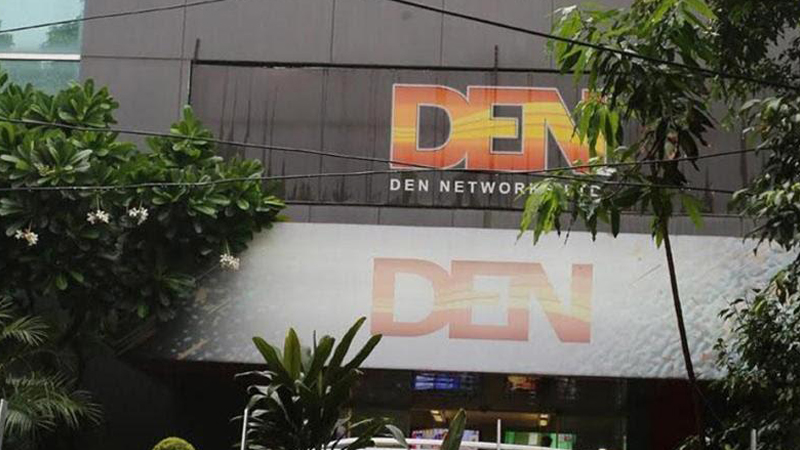
MUMBAI: When margins wobble, liquidity talks and in Q3 FY25-26, cash did most of the talking. Den Networks Limited closed the December quarter with consolidated revenue of Rs.251 crore, marginally higher than the previous quarter but down 4 per cent year-on-year, even as profitability stayed resilient on the back of strong cash reserves and disciplined cost control.
Subscription income softened to Rs.98 crore, slipping 3 per cent sequentially and 14 per cent from last year, while placement and marketing income offered some cheer, rising 15 per cent quarter-on-quarter to Rs.148 crore. Total costs climbed faster than revenue, up 7 per cent QoQ to Rs.238 crore, driven largely by higher content costs and operating expenses. As a result, EBITDA dropped sharply to Rs.13 crore from Rs.19 crore in Q2 and Rs.28 crore a year ago, pulling margins down to 5 per cent.
Yet, the bottom line refused to blink. Profit after tax stood at Rs.40 crore, up 15 per cent sequentially and only marginally lower than last year’s Rs.42 crore. A healthy Rs.57 crore in other income helped cushion operating pressure, keeping profit before tax at Rs.48 crore, broadly stable quarter-on-quarter despite the tougher cost environment.
The real headline-grabber, however, sits on the balance sheet. The company remains debt-free, with cash and cash equivalents swelling to Rs.3,279 crore as of December 31, 2025. Net worth rose to Rs.3,748 crore, while online collections accounted for 97 per cent of total receipts, underscoring strong cash discipline across operations, including subsidiaries.
In short, while Q3 showed signs of operating strain, the financial backbone remains solid. With zero gross debt, steady profits and a formidable cash war chest, the company enters the next quarter with flexibility firmly on its side proving that in uncertain markets, balance sheet strength can be the best growth strategy.








