iWorld
Facebook is working extensively in rural India to enhance connectivity, says Mark Zuckerberg

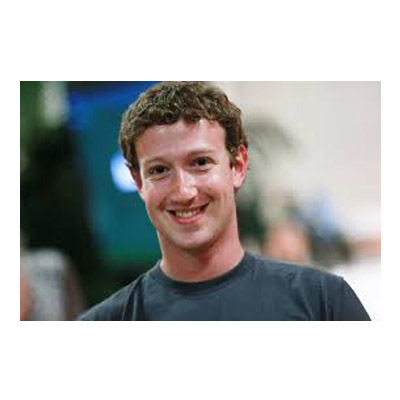
MUMBAI: Stressing on the importance of enhancing internet connectivity in India, Facebook founder and CEO Mark Zuckerberg today said, “Connectivity can’t be restricted to just the rich and powerful. Cost of internet access has to be made affordable.”
The Facebook CEO is in India on a two-day visit and was speaking at the first summit for Internet.org, an organisation led by Facebook.

Mark Zuckerberg has said that he would meet PM Narendra Modi on 10 October to discuss connecting Indian villages to the internet, and Facebook’s role in doing so.
Pitching for free ‘basic net access’, Zuckerberg reckoned that it should be like dialing 911 in the US or 100 here in India. “There needs to be a 911 for the internet. We’ve been working with operators to offer free basic Internet for everyone, to break down the social barriers. With this model, we’ve already helped people connect 3 million people.”
“Connectivity is a human right. We want to build an internet that works for all,” he added.
The 30-year old also announced that Facebook will fund apps and services in local Indian languages for women, students and farmers.
He pointed out that only about a third of people in the world had access to the Internet – 243 million in India and a recent survey showed that 69 percent of people in India said they didn’t know why it would be useful for them.
The biggest barrier, he said, was that “lots of people who have never experienced the internet don’t know why they need it.”
He also added that lack of relevant local language content is why most Indians don’t use internet and Facebook is working extensively in rural India to enhance connectivity.
“Facebook is focusing on content in local languages. It is crucial to internet penetration in Asia, especially India,” said the 30-year-old billionaire. “80 per cent of content on the internet is just in 10 languages, while there are 22 official languages in India; 65 per cent of people use Facebook in a language other than English, including 10 Indian languages.”
Zuckerberg stated that the next generation has the opportunity to bring the world to India and India to the world. The whole world being robbed of creativity and ideas because so many people in India are not online yet, he further said.
He further revealed that Facebook has launched a new contest to develop local apps for farmers and social services in local languages with a $1 million fund dedicated for it.
“We’re also going to extend a program called FB Start,” he added, “which provides $40,000 (Rs 25 lakh approximately) to developers who build and develop apps in these categories,” he added.
Praising India, Zuckerberg credited it for ‘making leaps in revolutions that changed the world’. “Inventions have changed the world throughout history. ’Mangalyaan’ is a huge achievement for India,” he said.
The CEO is of the opinion that lowering data costs by operators is not a sustainable solution. “Mobile operators invest a lot of money, lowering costs is not easy,” he said. “Infrastructure is the biggest barrier to internet, then technical issues. Language barriers are huge impediments to the internet,” he added.
“Connected people have better access to technology, education and jobs. When people are connected, accomplishments are easy,” Zuckerberg said.
Internet.org aims to make internet access affordable for people acrossthe globe. Focused on enabling the next five billion people without internet access to come online, the founding members of the project include Facebook, Ericsson, MediaTek, Nokia, Opera, Qualcomm and Samsung.
The partners are collaborating on developing lower-cost, higher-quality smartphones and deploying internet access in under-served communities.
Zuckerberg’s visit comes three months after Sheryl Sandberg, COO of the social networking giant, visited India which is Facebook’s second biggest market. She also met Modi, who has effectively used social networking during his election campaign and later even in governance.
Zuckerberg is the third high profile CEO of a US-based corporation, after Amazon’s Jeff Bezos and Microsoft’s Satya Nadella, to visit India in last few days.





iWorld
Subedaar puts Indian original cinema on the global map with record-breaking Prime Video debut

MUMBAI: Prime Video has a runaway hit on its hands. Subedaar, the gritty action drama starring Anil Kapoor, has stormed to become the most-watched Indian original movie on the platform in its opening weekend, cracking the Top 10 across 31 countries and landing in 91 per cent of India’s pin codes within days of its March 5 premiere.
The film, a visceral, emotionally-charged story of a retired soldier, Subedaar Arjun Maurya, wrestling with civilian life amid crime and corruption, has struck a nerve. Directed by Suresh Triveni and co-starring Radhikka Madan, Mona Singh, Saurabh Shukla, Aditya Rawal, Faisal Malik, and Khushboo Sundar, the film is already being hailed as a showcase for what Indian original storytelling can achieve on the world stage.
“Subedaar’s success is a reflection of the growing scale and global resonance of Indian storytelling,” said Nikhil Madhok, director and head of originals at Prime Video India. “The film’s emotional narrative, its rooted portrayal of a soldier confronting his toughest battles beyond the battlefield, has struck a chord. Anil Kapoor delivers an acting masterclass, while Suresh Triveni’s solid direction and great performances from the ensemble cast have resulted in love and appreciation from customers across the world.”
Kapoor, 62, has been here before, but rarely at this altitude. Written by Triveni and Prajwal Chandrashekar, with dialogues by Triveni, Saurabh Dwivedi, and Chandrashekar, the film is a production by Opening Image Films in association with Anil Kapoor Film & Communication Network (AKFCN), produced by Vikram Malhotra, Kapoor, and Triveni.
Subedaar streams exclusively on Prime Video in Hindi, Tamil, and Telugu across India, and in over 240 countries and territories worldwide.
For Prime Video, the numbers tell the real story: one weekend, one film, a global footprint, and a very loud signal that Indian original cinema is no longer just travelling well. It’s arriving.