e-commerce
Eternal’s COO jumps ship as new passions call, seven-year itch hits hard

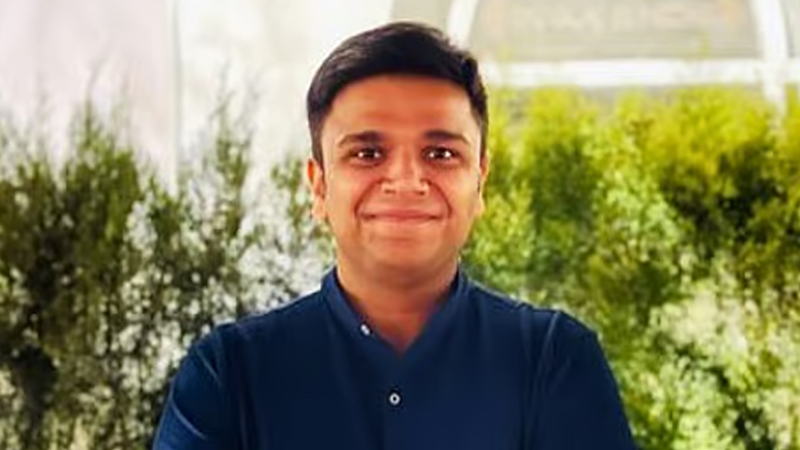
MUMBAI: For a company that prides itself on timely deliveries, Eternal Limited (née Zomato) just had one dropped at its own doorstep — and this one didn’t come in a red bag. Rinshul Chandra, the company’s COO for the food ordering & delivery business, has called it quits after a seven-year-long run, submitting his resignation on 5 April 2025, with his last working day marked for 7 April.
In true millennial fashion, he’s leaving to follow his “passions”. Maybe it’s yoga, maybe it’s a startup, maybe it’s sourdough — no one knows for sure. But what we do know is this: Eternal’s kitchen just lost one of its top chefs.
“I am writing to resign… to pursue new opportunities and passions that align with my evolving personal and professional goals… It has been an incredibly fulfilling journey over the past seven years,” Chandra wrote in his parting note to the company’s founder and foodie-in-chief Deepinder Goyal. Short, sweet, and with a sprinkling of “new beginnings” jargon — a resignation letter that pairs nicely with a kombucha.

The company, ever dutiful in ticking SEBI boxes, wasted no time in informing BSE and NSE through the standard (and terribly uninspiring) Regulation 30 filings. The update: Chandra has resigned voluntarily. Reason cited? “To pursue new opportunities and passions.” Translation? Possibly tired of 30-minute delivery targets and pings at midnight.
The resignation comes into effect on 7 April, which gives him exactly two days to clear the desk, return the ID card, and possibly finish the last office buffet.
The board hasn’t announced a successor yet. In the meantime, speculation is likely to swirl faster than masala in a curry.
The end of an era or just a new menu?
Chandra’s exit marks a notable shift in Eternal’s post-Zomato evolution. Since the rebrand, the company has been reinventing itself — and now, one of its most visible faces from the food-tech chapter is bowing out. Whether this signals more shake-ups in the C-suite or just a strategic calorie cut, remains to be seen.
The departure also comes at a time when the food delivery industry is facing heat — tighter margins, tech churn, and the occasional PR indigestion. But in Eternal’s case, the tone remains cheery, polite, and as crisp as their garlic bread.
As the company’s company secretary Sandhya Sethia confirmed in the filing, all the formalities have been wrapped up and the paperwork is public, as per SEBI’s menu of disclosures.
No drama. No fireworks. Just a neatly plated career exit with a side of gratitude and a drizzle of dignity.
So, what’s next for Eternal? Will they whip up a new leadership recipe? Will they double down on AI-driven kitchen ops? Or maybe bring in a Tiktok-savvy Gen Z exec who moonlights as a food critic? Your guess is as good as ours.

e-commerce
Flipkart rolls out 105 per cent bonus for 20,000 employees
Strong FY25 performance drives payouts even as layoffs and shifts unfold.

MUMBAI: In a year where belts were tightened and rewards loosened, Flipkart seems to be playing both offence and defence trimming roles on one hand while handing out a generous 105 per cent bonus on the other. The Walmart owned e commerce major has rolled out a 105 per cent bonus payout for 2025, covering nearly 20,000 employees, signalling a year of steady operational momentum even as the company navigates restructuring pressures. The payout, communicated internally by chief human resources officer Seema Nair, is tied to performance across key metrics including growth, operational efficiency, financial outcomes and people indicators, a combination that suggests the company is inching closer to its long stated goal of sustainable profitability.
Employees at SD level and below are set to receive their bonuses in March, while payouts for senior leadership, including vice presidents and senior vice presidents, will follow after the close of the performance cycle. The elevated 105 per cent multiplier stands out in a sector where cautious payouts have increasingly become the norm, pointing to what appears to be a relatively strong internal scorecard for FY25.
Yet, the announcement arrives with a noticeable contrast. Earlier this year, Flipkart reduced its workforce by around 300 roles as part of its annual performance review process. While officially framed as performance driven, the juxtaposition of layoffs alongside above target bonuses reflects a more nuanced balancing act, one that prioritises cost discipline while continuing to reward and retain high performing talent.
This dual approach is becoming increasingly common across the technology and e commerce landscape, where companies are navigating an uneven hiring environment while under pressure to deliver profitability. Rewarding top contributors, even amid selective workforce reductions, allows firms to maintain morale and retain critical talent without losing sight of financial prudence.
At the same time, Flipkart is also undergoing leadership shifts that hint at a broader strategic recalibration. Nishant Verman has been appointed senior vice president for corporate development and partnerships, while group chief financial officer Sriram Venkataraman is set to step down. Ravi Iyer will take on expanded responsibilities within the finance function, marking a reshuffle at the top as the company gears up for its next phase.
These changes come amid reports that Flipkart is planning to shift its holding structure back to India, a move widely interpreted as groundwork for a potential public listing. While timelines remain fluid, the combination of stronger financial discipline, leadership restructuring and employee incentivisation suggests a company preparing itself for greater scrutiny and scale.
For employees, the 105 per cent payout offers a welcome boost in what has otherwise been a period of adjustment. For Flipkart, it is a signal that even as it cuts where necessary, it is willing to spend where it counts. In the high stakes game of growth versus profitability, the company appears to be hedging its bets carefully, rewarding performance while reshaping itself for what could be its most defining chapter yet.






