News Broadcasting
ET Now concludes the 9th season of Leaders of Tomorrow Awards and Conclave

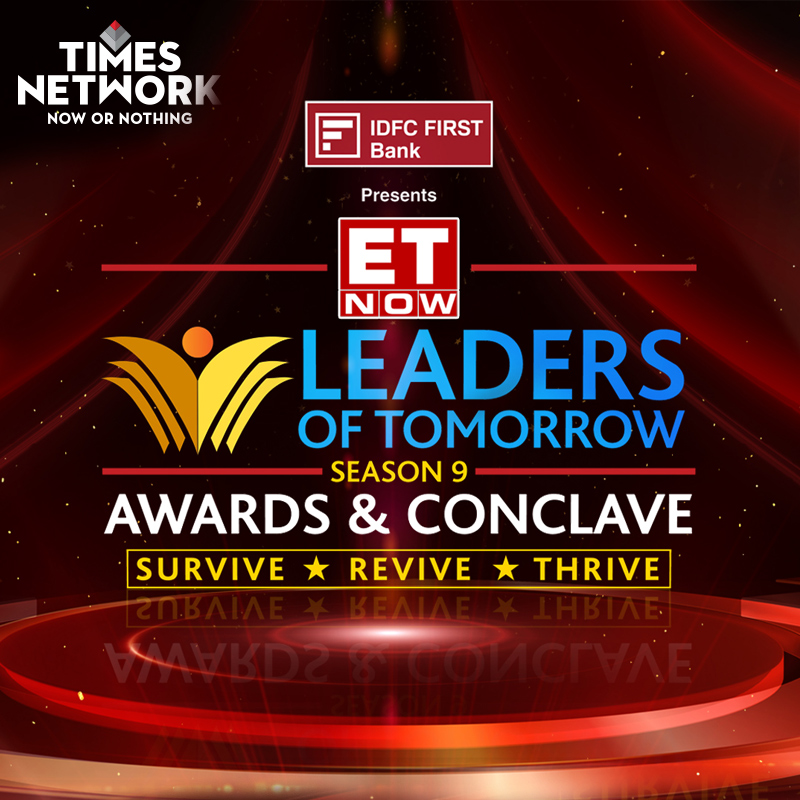
Mumbai: ET Now has recently concluded the ninth season of ‘Leaders of Tomorrow Awards and Conclave’ which celebrates the success stories of India’s most innovative and resilient MSMEs and start-ups. This year’s event was driven by the theme ’Survive. Revive. Thrive’.
The event witnessed a distinguished line-up of speakers including principal economic advisor to GoI, Sanjeev Sanyal; IDFC First Bank MD and CEO V Vaidyanathan; BSE MD and CEO Ashish Chauhan, and HSBC India former country head Naina Lal Kidwai amongst others, who discussed the challenges faced by the small businesses and the way forward for India’s small enterprises and start-ups.
The distinguished jury of industry luminaries included Naina Lal Kidwai; Mahindra & Mahindra former MD Pawan Goenka; BSE head of SME Ajay Thakur; True Beacon & Zerodha co-founder and CIO Nikhil Kamath; Vinati Organics MD Vinati Saraf Mutreja; Growthstory investor partner and serial entrepreneur K Ganesh; Persistent Systems chairman Anand Deshpande; ASSOCHAM president and TCI MD Vineet Agarwal, and JBM Group vice-chairman Nishant Arya.

The event culminated in an exciting finale wherein the best MSMEs and startups were awarded. EF Polymer was named ‘Start-Up Entrepreneur of the Year’ and Keetronics India clinched ‘MSME Entrepreneur of the Year’.
“ET Now has been championing India’s growth story with a focused purpose of helping Indians rise with India. This mission reflects in our flagship property, Leaders of Tomorrow that empowers, enables and celebrates the spirit of small businesses and start-ups that are together powering the rise of a strong new India,” said Times Network MD and CEO MK Anand. “It is heartening to witness stories of several enterprising small businesses who not only showed resilience but rose through the adversities to innovate, reimagine and reinvent during the turbulent past two years. I firmly believe that Leaders of Tomorrow will continue to inspire more and more Indians to take the plunge and create new stories of entrepreneurial success.”
“The Indian economy has bounced back after the first and second wave because the underlying human consumption is very strong in India,” said IDFC First Bank’s V Vaidyanathan. “All the major indicators of the economy – GDP, house sales, car and two-wheeler sales, and FMCG products’ consumption have been marking an upward trend. The power of an economy lies in its credit. The Indian banking industry’s current outstanding total credit is over 120 lakh crores, out of which about 50 lakh crore is for entrepreneurs. After 75 years, small entrepreneur credit is growing by 25-30 per cent per year. SMEs are being benefited tremendously by the power of leverage, which was earlier reserved for large corporations.”
Highlighting the need for entrepreneurs to shift to an organised environment from an unorganised one, he said, “Migration from unorganised to organised is the need of the hour. The Indian retail industry or kirana market is a trillion-dollar market, out of which 80-84 per cent is unorganised and only four per cent is online. Every industry is now becoming organised, offline to online. For entrepreneurs, this is an opportunity to ride the new bandwagon and not just be spectators. The leaders of tomorrow need to have a digital play.”
Sanjeev Sanyal stated, “As the Indian economy revives post-pandemic, we observed that the impact in the second wave was much lesser as compared to the first wave. Things are stabilising and industries are opening up now and we realise that demand is not a constraint in India. Globally, this is a serious issue, but India has been able to overcome this as our fiscal resources are strong. Our supply sector reforms are unparalleled. During the first wave, we focused on framework reforms like GST, Aadhar, labour reforms, and farm laws, however, the second wave reforms are more sectoral in nature like deregulation, monetisation, and privatisation of industries.”
Talking about the third wave reforms which are currently in the pipeline, Sanyal further said, “Our thrust during the third wave reforms would be to get the Indian state to do what it should be doing which includes, delivery of justice, enforcement of contract, and upgradation of municipal services. We plan to give access to world-class infrastructure to poorer sections of the society to foster innovations. I do not believe in rigid planning, rather focus on growth strategy that is based on flexibility and resilience. One big example of this is ‘Atmanirbhar Bharat’ which focuses on leveraging our inner strengths. We as a nation need to give ourselves enough credit. Today, we delivered over 20 million Covid-19 jabs and I feel this is incredible, we have the capacity to deliver at this high level.”





News Broadcasting
CNN-News18 to host Fury in the Gulf conclave on West Asia crisis
Three-hour summit to unpack geopolitical fallout and impact on India
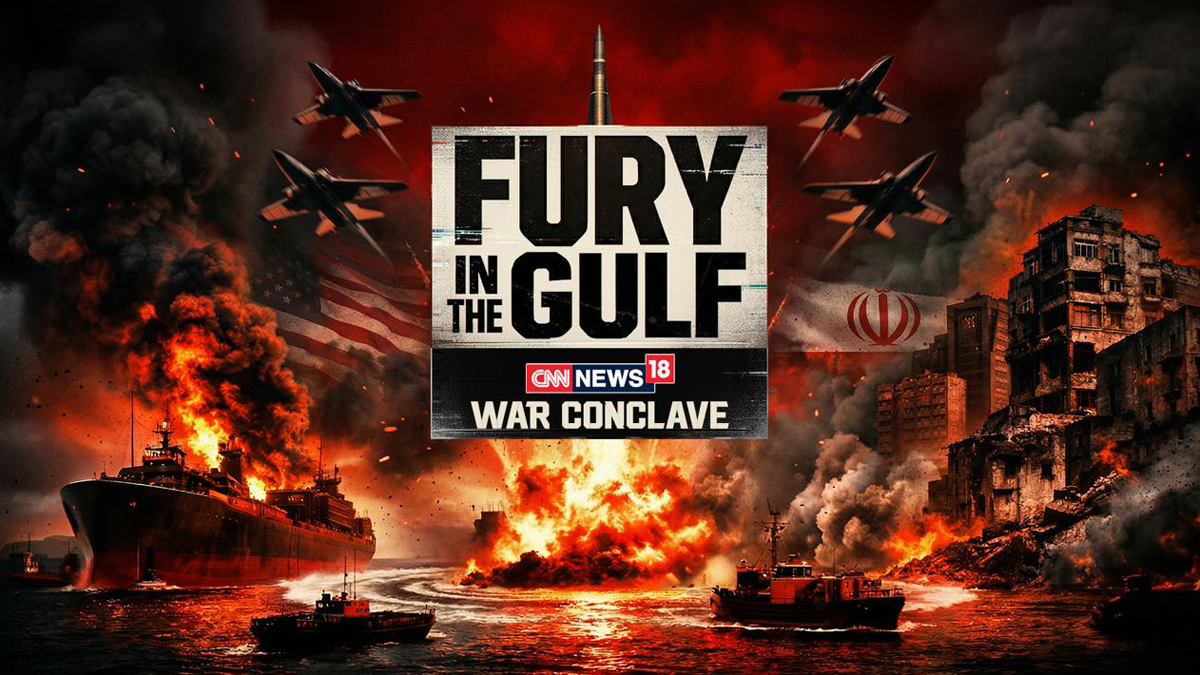
MUMBAI: CNN-News18 is set to host a special three-hour broadcast, Fury in the Gulf – War Conclave, on April 7, aiming to decode the escalating West Asia crisis and its far-reaching implications for India.
Scheduled from 4:00 PM to 7:00 PM, the conclave comes at a time when tensions between Iran and the United States are reshaping global geopolitics and triggering economic uncertainty. With India’s deep energy ties, trade links and large diaspora in the Gulf, the developments carry significant domestic relevance.
Built around the theme ‘Conflict, Consequences, and The Future,’ the programme will feature six curated sessions combining one-on-one interviews and panel discussions. The focus is to cut through the clutter and offer viewers a clearer understanding of the fast-evolving situation.
Key sessions include ‘Diplomacy in Times of War’ featuring Shashi Tharoor, and ‘World After the Iran Conflict’ with voices such as Ram Madhav, Reuven Azar, representatives from the European Union and the Iranian Deputy Envoy. Another session titled ‘Another Dunkirk?’ will bring together K. J. S. Dhillon and Jitin Prasada among others.
CNN-News18 editorial affairs director Rahul Shivshankar said, “In times of war, clarity becomes the most powerful tool. Fury in the Gulf – War Conclave brings together credible voices to address the questions and confusion that arise amid an overwhelming influx of information.”
He added that the initiative is aimed at delivering “facts, perspective, and insight” at a time when misinformation can easily cloud public understanding.
Echoing the sentiment, CNN-News18 CEO– English and business news Smriti Mehra said the conflict marks a defining global moment, with consequences that extend well beyond the region. She noted that the conclave seeks to present the crisis with “depth, nuance and responsibility” so audiences can better grasp its real-world impact.
As geopolitical tensions continue to dominate headlines, the conclave positions itself as an attempt to bring order to the noise, offering viewers a structured, insight-led look at a complex and rapidly shifting global situation.






