News Broadcasting
ESS’ hockey initiative PHL kicks off on 2 January 2007


MUMBAI: The third edition of Premier Hockey League (PHL) the grassroots competition to give Indian hockey a push will kick off on 2 January 2007.
The initiative is being organised by ESPN Star Sports (ESS) and the Indian Hockey Federation (IHF).
This time around the league moves to a single tier firmat. The top seven teams of last year will fight for the title in a two month long event which will be co-hosted by Chennai and Chandigarh.
In the first two editions there were two tiers with five teams each. This time these seven teams are Sher-e- Jalandhar, Maratha Warriors, Chandigarh Dynamos, Bangalore Lions, Hyderabad Sultans as well as the top two teams from tier II Orissa Steelers and Chennai Veerans.

The seven teams play each other twice in a total of 42 matches. There will be a best of three playoff in the final. IHF president KPS Gill says, “The PHL has set new benchmarks as the world took notice of a completely new revolutionary league with the third umpire being introduced for the first time in Indian hockey. Keeping in accordance with our innovations to make the league more interesting we have raised the competitiveness in the league. We envisage more cutthroat competition this year that will be good for Indian hockey.”
ESS India MD R.C. Venkateish says, “We have redefined hockey broadcvast with PHL. The tournament has been a viewing spectacle with comoprehensive match analysis, pre match and post match shows, bi-lingual commentary in English and in Hindi. Hockey lovers acros the country have loved and followed PHL for the first two years of the tournaments novel concepts and innovations.
“Innovations like coloured jerseys, foreign players in the domestic league the use of a third umpire and now the top seven teams in the Premier Division will revolutionise hockey viewing and make PHL the most viewer friendly league in the country. Maurits Hendricks the incumbent coach of the Spanish Team has been reappointed as the consultant for the PHL.
“He will provide his valuable inputs to all the participating teams during PHL. He will also be responsible for shortlisting foreign players for the league. We are confident that more foreign players will be seen this year as compared to last year. The initial feedback from the European players has been very heartening.”
Like last year each game has four quarters of 17 minutes and 30 seconds each. The winner gets three points. If a match goes into extra time the winner gets two points while the loser gets one. Leisure Sports chairman and MD SS Dasgupta, said, “LSM with its in-depth knowledge of and involvement with Indian hockey is very confident that the proposed tournament will be a grand success. We are currently working on a detailed blue-print to ensure that PHL dons the look of a grand carnival. We are committed to offering an international quality experience to hockey fans – they will get the best of hockey, as well a s spectator facilities inside the stadium.”

News Broadcasting
CNN-News18 to host Fury in the Gulf conclave on West Asia crisis
Three-hour summit to unpack geopolitical fallout and impact on India
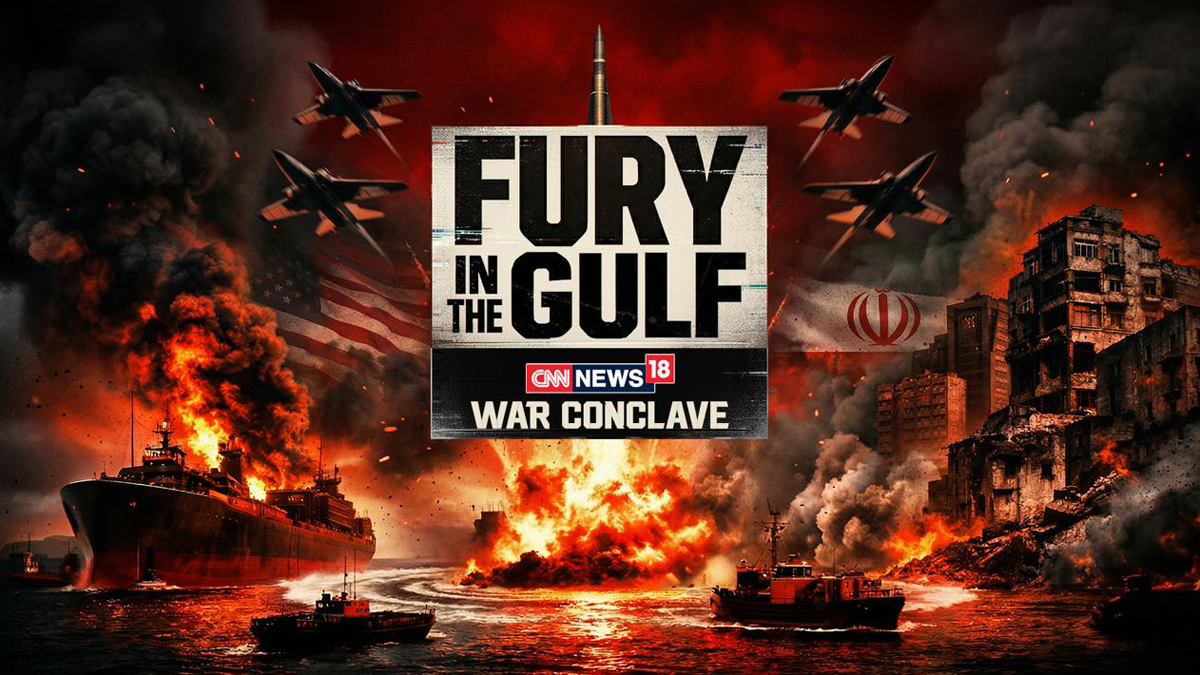
MUMBAI: CNN-News18 is set to host a special three-hour broadcast, Fury in the Gulf – War Conclave, on April 7, aiming to decode the escalating West Asia crisis and its far-reaching implications for India.
Scheduled from 4:00 PM to 7:00 PM, the conclave comes at a time when tensions between Iran and the United States are reshaping global geopolitics and triggering economic uncertainty. With India’s deep energy ties, trade links and large diaspora in the Gulf, the developments carry significant domestic relevance.
Built around the theme ‘Conflict, Consequences, and The Future,’ the programme will feature six curated sessions combining one-on-one interviews and panel discussions. The focus is to cut through the clutter and offer viewers a clearer understanding of the fast-evolving situation.
Key sessions include ‘Diplomacy in Times of War’ featuring Shashi Tharoor, and ‘World After the Iran Conflict’ with voices such as Ram Madhav, Reuven Azar, representatives from the European Union and the Iranian Deputy Envoy. Another session titled ‘Another Dunkirk?’ will bring together K. J. S. Dhillon and Jitin Prasada among others.
CNN-News18 editorial affairs director Rahul Shivshankar said, “In times of war, clarity becomes the most powerful tool. Fury in the Gulf – War Conclave brings together credible voices to address the questions and confusion that arise amid an overwhelming influx of information.”
He added that the initiative is aimed at delivering “facts, perspective, and insight” at a time when misinformation can easily cloud public understanding.
Echoing the sentiment, CNN-News18 CEO– English and business news Smriti Mehra said the conflict marks a defining global moment, with consequences that extend well beyond the region. She noted that the conclave seeks to present the crisis with “depth, nuance and responsibility” so audiences can better grasp its real-world impact.
As geopolitical tensions continue to dominate headlines, the conclave positions itself as an attempt to bring order to the noise, offering viewers a structured, insight-led look at a complex and rapidly shifting global situation.






