Gaming
eSports startup FanClash raises $40 million to expand globally


Mumbai: FanClash has raised $40 million Series B funding to fuel its mission to build a global esports fantasy, data and fan engagement platform. This succeeds a Series A round of $10 million from Sequoia Capital India, Falcon Edge (Alpha Wave Ventures) and Info Edge India in August 2021.
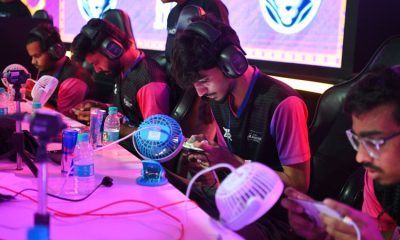
There are five hundred million core esports viewers globally, growing at 20 percent CAGR. In India, this number stands at 100 million and is expected to grow threefold by 2025. FanClash provides a forum for the fans to not just enjoy the game as a viewer, but also empowers them to monetize their knowledge of esports.
Users can create their fantasy teams from every tournament and earn rewards based on the real-life performance of the teams. This is like monetizing the knowledge of cricket or football via other fantasy platforms. While fantasy gaming has seen tremendous success in traditional sports such as cricket, electronic sports had no such channel available until FanCLash. The platform enables users to play fantasy on all leading global tournaments across top esports such as FreeFire, PUBG Mobile, COD Mobile, COD PC, Valorant, CS:GO, League of Legends, DOTA 2, etc.

FanClash spokesperson said, “The company plans to use the funds raised for global expansion, building the team and user acquisition. FanClash released its product in India in 2021 and in the Philippines in June 2022 and aims to launch in Vietnam and the USA by early 2023.”
Speaking of these milestones, FanClash co-founder Rishabh Bhansali said,“Esports fans around the world spend about 8-10 hours a week watching tournaments and gameplay, yet there are not enough avenues for players and viewers to monetize their knowledge in any way. Our customers love FanClash not only because it gives them the opportunity to compete in fantasy games, but also for making them financially independent and hence taken seriously as esports fans. The industry has corroborated this by the stellar adoption of FanClash in the last 12 months.”
FanClash co-founder Richa Singh added, “We aspire to be a household name in the global gaming community. This is possible in esports, unlike traditional sports, because the underlying game titles have a global audience. At a broader level, our vision is to make the Indian startup ecosystem proud by creating ‘a global digital product from India, for the world’ and we believe we have the right ingredients to become world leaders.”
Sharing his thoughts on this association, Sequoia MD Rajan Anandan said, “Online gaming has over 300 million users in India and esports has hit an inflection point with over 100 million Indian viewers. The online gaming market is also monetising well and is on track to surpass $5 billion in revenues by 2025. Going after this opportunity, FanClash is building an exciting new destination for esports fans with an incredible product that is loved by its users. We are inspired by their mission to revolutionise the esports industry, and Sequoia Capital India is excited to partner with the FanClash team.”
Alpha Wave Global MD Anirudh Singh added, “Esports have proven to be the next step in the evolution of the gaming industry. This is a global market which still has massive unsolved problems around fantasy as well as fan engagement. Using data as a moat, we were very impressed with the way FanClash has built out its gaming platform for global markets. The company has also shown its execution strength across all international markets, while maintaining high capital efficiency – reflected in the industry leading metrics like LTV/CAC. We are privileged to partner with the team and are looking forward to helping build out a global Esports platform.”
“We are fortunate to be partners with the Fanclash team since their ideation days. The team is even more special for us since Richa is a returning founder whom we backed for a second time. The execution since Day 1 has been phenomenal with Fanclash becoming a category leader within two years of inception. They have been extremely capital efficient and are seeing strong user love which reflects in the superior engagement and retention of users on the platform. Esports is a large and growing market globally and Fanclash with its global ambitions is well positioned to become the global leader in esports fantasy,” said Info Edge Venture Fund partner Kitty Agarwal.



Gaming
India’s broadcasters say no to Fifa World Cup 2026
Fifa has slashed its asking price by 65 per cent but India’s broadcasters are still not buying
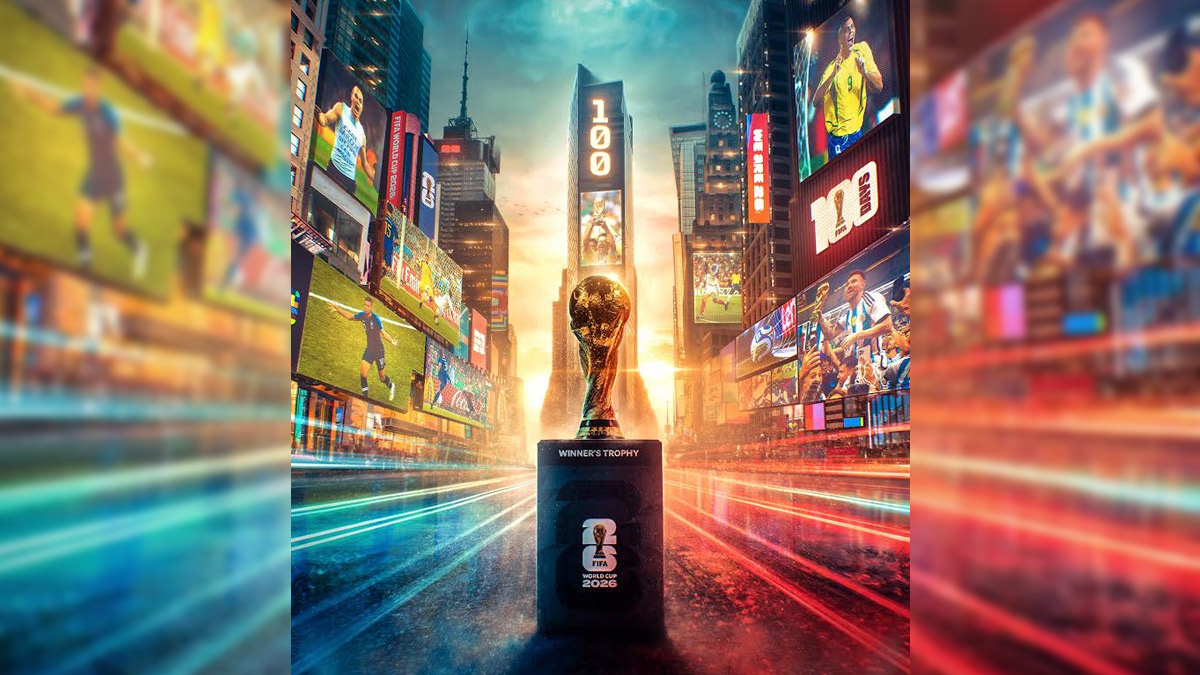
MUMBAI: The world’s biggest sporting event cannot find a single taker in the world’s most sports-mad nation. Fifa’s television rights for the 2026 World Cup remain unsold in India, and the clock is ticking loudly.
To shift the property, world football’s governing body has already swallowed hard and cut its asking price from $100m to $35m, bundling in the 2030 edition as a sweetener. It has not worked. Indian broadcasters have looked at the offer, done the sums and quietly walked away.
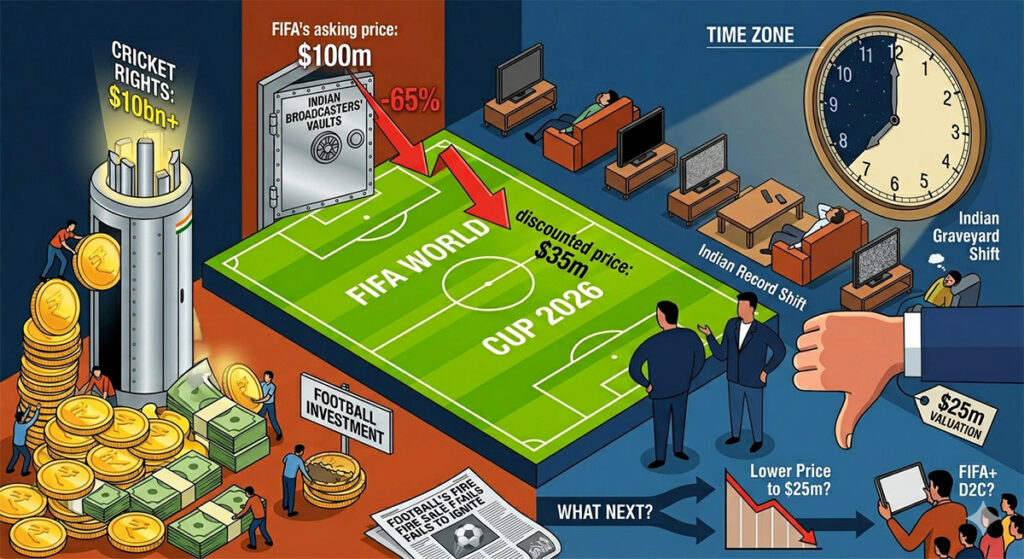
The reasons are brutally simple. The 2026 tournament, co-hosted by the United States, Canada and Mexico, kicks off in a time zone that turns India’s primetime into a graveyard shift. Most matches will air between midnight and 7am IST, a scheduling catastrophe for advertisers chasing mass reach. The 2022 Qatar edition was a gift by comparison, with matches dropping neatly into Indian evenings. North America offers no such luxury.
The market itself has also changed beyond recognition. The merger of Star India and Viacom18 into JioStar has gutted the competitive tension that once sent sports rights prices soaring. Where rival bidders once slugged it out, there is now a single dominant buyer, and it is in no hurry. JioStar has valued the rights at roughly $25m, a full $10m below Fifa’s already-discounted floor price. That gap has so far proved unbridgeable.
Broadcasters are also nursing a ferocious cricket hangover. Between 2022 and 2023, Indian media houses committed well over $10bn to cricket rights alone, covering IPL, ICC events and BCCI domestic fixtures combined. After a binge of that scale, appetite for a football package that delivers a fraction of the ratings, in the dead of night, is close to zero.
The economics of football broadcasting make the maths even harder. Cricket, with its natural breaks every few overs, is an advertiser’s paradise. Football offers a 15-minute halftime and precious little else. Recovering a nine-figure rights fee from a single half-hour ad window is a stretch at the best of times. These are not the best of times: the Indian government’s tightening grip on real-money gaming and gambling advertising has vaporised a category that once underwrote the economics of big sporting events.
Nor is the World Cup an anomaly. Indian Super League valuations have cratered. English Premier League rights have softened across successive cycles. The cooling of football as a broadcast commodity in India is structural, not cyclical.
With the tournament opening on 11th June, Fifa is running out of road. It may yet blink and meet JioStar at $25m. Or it may go direct, streaming the entire tournament on its own platform, Fifa+, or cutting a digital deal with YouTube, and hoping that a generation of Indian football fans finds its way there without a broadcaster to guide them.
Either way, the beautiful game’s Indian chapter is looking decidedly ugly.







