Gaming
Esports enthusiasts will grow to 318 million in 2025: Newzoo Report


Mumbai: The number of esports enthusiasts will grow to 318 million in 2025, with a CAGR of plus 8.1 per cent during the period 2020-2025. In 2025, the total audience will surpass 640 million, according to Newzoo’s annual report titled ‘Global Esports & Live Streaming Market Report.’ The report presents key trends, market sizing and forecasts of esports across the globe, with a special focus on mobile esports, blockchain and co-streaming.
Esports is growing enormously across the world! It is an industry that combines two of gaming’s most important aspects: playing and watching. Newzoo’s report aims to give a reliable and realistic overview of the current status and future of the live-streaming audience and esports market.
The esport industry operates at the intersection of competitive gaming and game-related live streaming. According to the report, the companies involved in esports and the creators are driving engagement across esports and live streaming alike. However, the report analyses that esports organisations still rely on sponsorship as the primary source of revenue for their business. By the end of 2022, Newzoo expects sponsorship to account for $837.3 million—nearly 60 per cent of global esports revenues.

It reveals that in 2022, the global esports audience will grow by 8.7 per cent year on year to reach 532 million. Esports enthusiasts—those who watch esports content more than once a month—will account for just over 261 million.
The game’s live-streaming audience reached almost 810 million in 2021 and is expected to reach 1.41 billion by 2025, with a CAGR of plus 16.3 per cent from 2020 to 2025. At the same time, non-gaming content is one of the drivers of massive growth, accounting for up to 21 per cent of the content watched in 2021.
More than 84 percent of users active in non-gaming categories are also active on gaming channels, which means that non-gaming content does not necessarily cannibalise gaming content on these platforms. This is an opportunity for brands that are more familiar with non-gaming content to engage with live-streaming gaming audiences.
Digital and streaming are the two fastest-growing revenue streams for esports, with 2020-2025 CAGRs of 27.2 percent and 24.8 percent, respectively. Growing awareness around digital assets and NFTs will likely boost investment and fan interest in acquiring in-game items of esports IP.
China leads the worldwide esport market
Esports is set to generate nearly $1.38 billion in revenues by the end of 2022. China will generate nearly a third of worldwide esports revenues. Southeast Asia, Central Southern Asia, and Latin America are the fastest-growing regions, with 2020-2025 CAGRs above 27.6 percent, 23.4 percent, and 19 percent, respectively. Global esports revenues will exceed $1.86 billion by 2025, representing a healthy CAGR of above 13.4 percent.
At the same time, PC esports titles dominate developed markets such as North America, Europe, China, South Korea, and Japan. Mobile esports titles dominate emerging markets like Latin America, the Middle East and Africa, Southeast Asia, and India
Twitch leads the esport live-streaming
According to the report, Twitch was the most popular games live-streaming platform in the West in 2021, seeing a 26 percent year-on-year increase with nearly 20 billion live gaming hours watched. YouTube Gaming was the second largest, with 4.7 billion live gaming hours watched.
Brands are moving towards co-streaming
The report also reveals that co-streaming is increasingly becoming part of brands’ strategy to provide non-gaming content to the gaming community. Recently, Netflix, the NBA, and Formula 1 have partnered with streamers to expand their distribution channels for content among gamers.





Gaming
Konami concludes successful eFootball India campaign
Campaign featuring Rinku Singh, Varun Chakravarthy and other stars boosts engagement ahead of FIFA World Cup 2026.
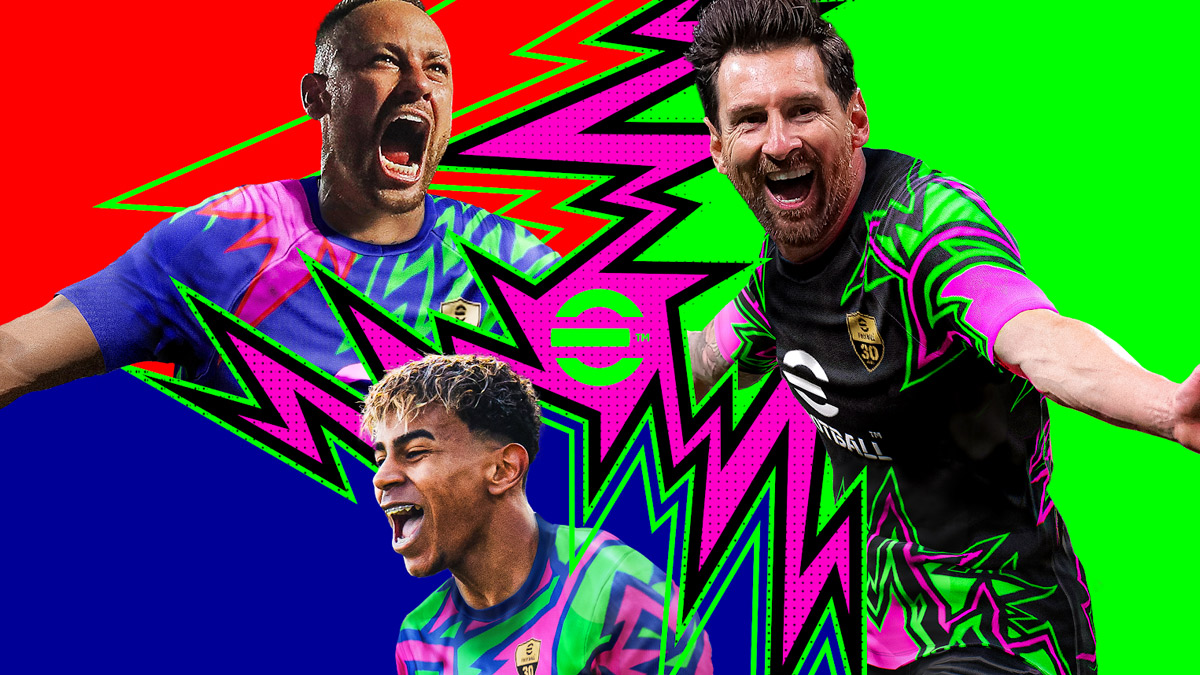
MUMBAI: When cricket meets football in the virtual world, even the biggest fans can’t help but score and Konami’s latest eFootball campaign in India has clearly hit the back of the net. Konami Digital Entertainment has successfully wrapped up its India campaign for eFootball, which brought together cricketers Rinku Singh and Varun Chakravarthy, actors Naslen Gafoor and Chandu Salim Kumar, and footballers Sahal Abdul Samad and Shubhasish Bose. The multi-star campaign generated strong excitement across gaming, football, and creator communities through social content, fan participation, and in-game engagement.
Building on the initial launch that featured a limited-time Lionel Messi card, the campaign united fan communities, lifestyle creators, football creators, and competitive eFootball influencers. It significantly expanded the game’s visibility and deepened engagement with fans across the country.
The campaign also saw thousands of entries submitted as part of its social media engagement challenge, reflecting high levels of community enthusiasm and active creator involvement.
Looking ahead, Konami plans to build on this momentum with more eFootball experiences for Indian fans as the FIFA World Cup 2026 approaches. With global attention on the tournament set to rise, India will remain a key market for deepening community engagement and bringing fans closer to the action.
In a country that lives and breathes sport, Konami has shown that mixing real-world stars with virtual thrills is a winning formula leaving fans eagerly waiting for the next goal.






