iWorld
Eros International raises $30 million for Eros Now

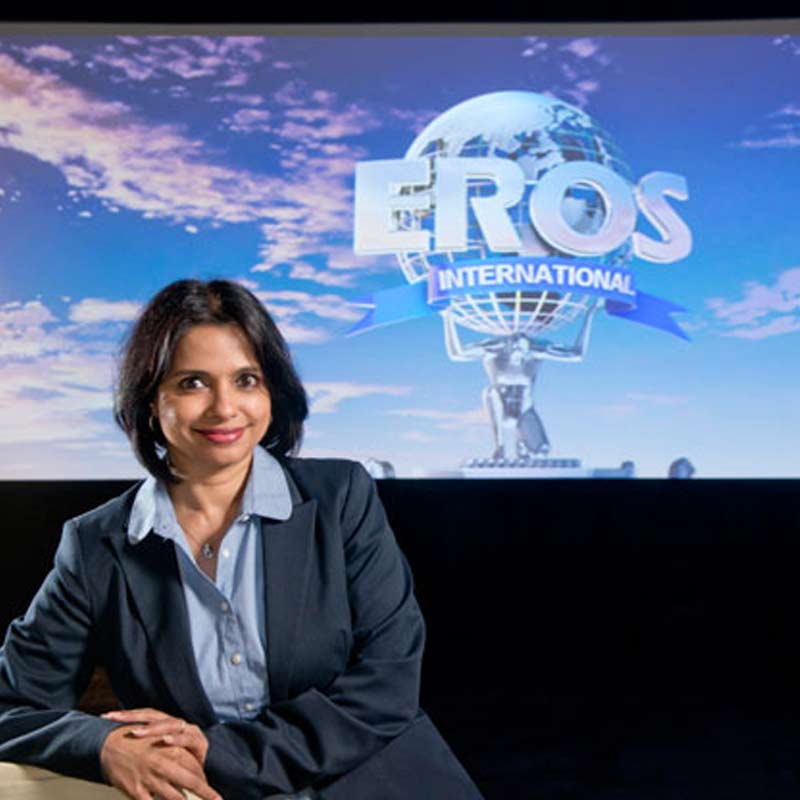
MUMBAI: Indian Bollywood major Eros International is getting hotter on OTT. It announced this morning that two of its existing top 10 institutional shareholders have increased their holdings in the company through a private placement and are pumping in approximately $30 million. The proceeds of the allotment will be primarily used to fund the further expansion of Eros Now, its OTT platform.
Eros International group CEO & MD Jyoti Deshpande commented: “Our vision to transform Eros from a leading film studio to a leading digital company with a global footprint is well underway with Eros Now, our OTT platform crossing one million paid subscribers as of 30 June 2016. Our ownership of content and our strong balance sheet should provide tailwinds to grow the Eros Now subscriber base from one million to ten million and eventually hundred million within the next decade.”
Eros Now is Eros International Plc’s leading on-demand Bollywood entertainment network accessible anytime, anywhere, on nearly any Internet-connected screen. Eros Now offers users across 135 countries a large library of films (Eros Now has rights to over 5,000 films), as well as premium television shows, music videos and audio tracks.

Eros Now is also working on launching compelling original drama series for its viewers. It also has compelling product features such as offline viewing where premium subscribers can download the content and view it when not connected to the Internet make Eros Now a unique offering with focus on user experience.
Available on Apple and Android platforms, Eros Now has integration deals with Airtel, Idea and Reliance Jio and several other operators internationally. A crucial deal was struck with Reliance Jio, the 4G player that has rolled out the most aggressive plan for digital India. In its platform-agnostic strategy, Eros has struck deals with OEMs and telecom operators such as Micromax, Airtel, Idea, LeEco, and Maxis.
Through the Eros-Jio partnership, new and old movies including Bajirao Mastaani, Bajrangi Bhaijaan, Prem Ratan Dhan Payo and Tanu Weds Manu Returns, will be available on the JioOnDemand app. With 30 HD channels, Jio is offering live streaming of over 300 TV channels 10 genres and 15 languages.
Available on Amazon Fire TV, Apple TV, and pre-installed in Android TV, Eros Now crossed over 50 million registered users worldwide across WAP, APP, and Web, as of 30 June 2016. It has already crossed over 1.1 million active unique paying subscribers who have paid for at least one month.
Eros released 14 films in Q1 FY17 of which three were high, two were medium and nine were low-budget films. Sardaar Gabbar Singh (Telugu),Housefull 3 (Hindi), 24 (Tamil), Marudhu (Tamil) and Ki and Ka (Hindi) were the main revenue earning films during the quarter. Eros Now is planning to acquire 10,000 additional films to add to its strong library.
Eros Now, in October 2015, partnered with Ortel, an MSO (multi system operator) and ISP, to offer a subscription-based movie streaming service. Eros had, in August last year, also negotiated a partnership with Airtel to offer video and movie content on Wynk. Eros Now tied up with WeChat in June 2015 so as to allow users to watch videos, listen to music, and get Bollywood gossip and news. Eros Now, in the same month, inked a content acquisition deal with Hum TV of Pakistan.
Eros Now has a five-year worldwide target of at least 15-20 million subscribers with a blended annual ARPU of $30 internationally and $5 from India. Trinity Pictures, owned by Eros International is building its franchises with two Sino-Indian co-productions, with a scheduled FY 2018 release.
Eros Now hopes to achieve at least two million paying subscribers by the end of FY 2017 and five million paying subscribers by the end of FY-18.





Gaming
India’s broadcasters say no to Fifa World Cup 2026
Fifa has slashed its asking price by 65 per cent but India’s broadcasters are still not buying

MUMBAI: The world’s biggest sporting event cannot find a single taker in the world’s most sports-mad nation. Fifa’s television rights for the 2026 World Cup remain unsold in India, and the clock is ticking loudly.
To shift the property, world football’s governing body has already swallowed hard and cut its asking price from $100m to $35m, bundling in the 2030 edition as a sweetener. It has not worked. Indian broadcasters have looked at the offer, done the sums and quietly walked away.
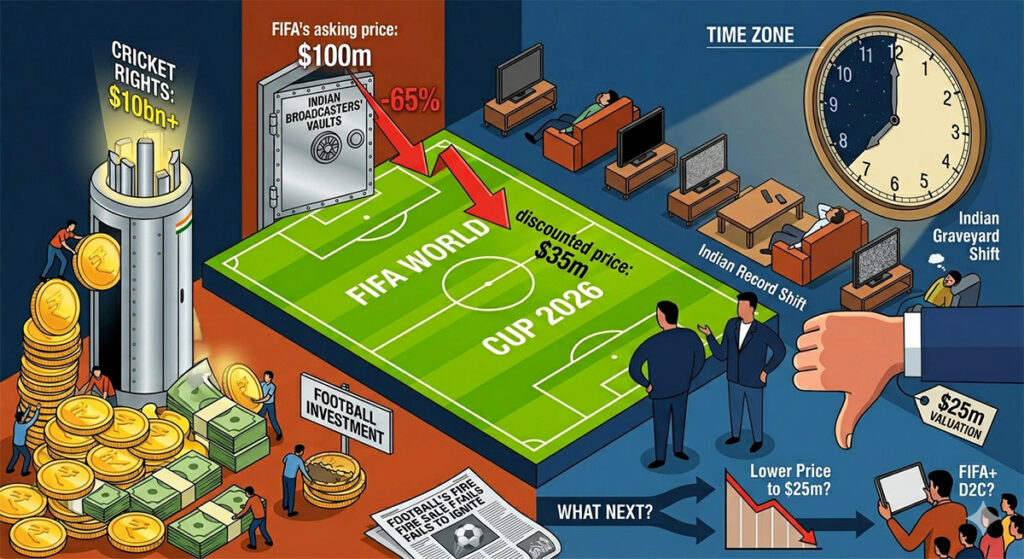
The reasons are brutally simple. The 2026 tournament, co-hosted by the United States, Canada and Mexico, kicks off in a time zone that turns India’s primetime into a graveyard shift. Most matches will air between midnight and 7am IST, a scheduling catastrophe for advertisers chasing mass reach. The 2022 Qatar edition was a gift by comparison, with matches dropping neatly into Indian evenings. North America offers no such luxury.
The market itself has also changed beyond recognition. The merger of Star India and Viacom18 into JioStar has gutted the competitive tension that once sent sports rights prices soaring. Where rival bidders once slugged it out, there is now a single dominant buyer, and it is in no hurry. JioStar has valued the rights at roughly $25m, a full $10m below Fifa’s already-discounted floor price. That gap has so far proved unbridgeable.
Broadcasters are also nursing a ferocious cricket hangover. Between 2022 and 2023, Indian media houses committed well over $10bn to cricket rights alone, covering IPL, ICC events and BCCI domestic fixtures combined. After a binge of that scale, appetite for a football package that delivers a fraction of the ratings, in the dead of night, is close to zero.
The economics of football broadcasting make the maths even harder. Cricket, with its natural breaks every few overs, is an advertiser’s paradise. Football offers a 15-minute halftime and precious little else. Recovering a nine-figure rights fee from a single half-hour ad window is a stretch at the best of times. These are not the best of times: the Indian government’s tightening grip on real-money gaming and gambling advertising has vaporised a category that once underwrote the economics of big sporting events.
Nor is the World Cup an anomaly. Indian Super League valuations have cratered. English Premier League rights have softened across successive cycles. The cooling of football as a broadcast commodity in India is structural, not cyclical.
With the tournament opening on 11th June, Fifa is running out of road. It may yet blink and meet JioStar at $25m. Or it may go direct, streaming the entire tournament on its own platform, Fifa+, or cutting a digital deal with YouTube, and hoping that a generation of Indian football fans finds its way there without a broadcaster to guide them.
Either way, the beautiful game’s Indian chapter is looking decidedly ugly.






