I&B Ministry
Enhanced reach & instant dissemination on social media impacts content quality

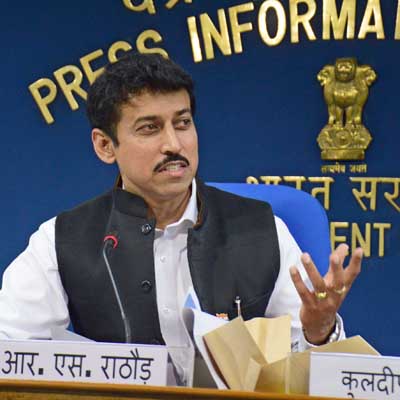
NEW DELHI: Minister of State for Information and Broadcasting Rajyavardhan Rathore said on 19 March that the enhanced reach and instant dissemination on social media had impacted the content style and precision of both photography and videography.
This had led to instant communication across different social media platforms, he said while inaugurating the first National Photography and Videography Workshop organized at the National Media Centre here.

Rathore said that the Ministry would explore the possibility of organizing similar workshops in other parts of the country including the North East wherein the potential was tremendous as the initiative was innovative in approach involving the professionals associated from the concerned domains.
The workshop would also act as a facilitating tool in carrying forward the messages of the Government across platforms accessed by different cross sections of the population. As technology was the principal driver of innovation, it had become a critical determinant and catalyst in enhancing the skills of the individual and organization.
The impact of the dynamic growth of technology was self- evident as there was a proliferation of changes across formats. The enhanced reach, instant dissemination on social media had impacted the content style and precision of both, photography and videography. This had led to instant communication across different social media platforms.
The government is keen to fulfil the aspirations of Prime Minister Narendra Modi, whose emphasis has been on upgradation of skills through appropriate training methods and tools. The workshop was designed keeping in mind the basic parameters of the ‘Skill India’ initiative. Relying on the basic principles and outline of the ‘Skill India’ initiative, the workshop was an attempt to hone the skills of Government personnel associated with photography and videography.
Speaking on the craft and art of photography, Rathore said that like any other art photography and videography could be mastered through right inputs. The workshop was an appropriate tool in this direction.
Recounting the history of photography, Rathore mentioned that pictures had a long lasting impact. Today historic occasions were remembered on several instances only through pictographic description. This was perhaps the reason for the immense popularity of ‘Coffee Table Books’ on different subjects.
Earlier, I&B secretary Bimal Julka said the workshop had been designed to address the immense skill opportunities that had emerged in the media and entertainment sector. As ‘Skill Development’ was a comprehensive approach involving critical stakeholders in the Government, the endeavor of the Ministry was to incorporate the ‘Skill India’ initiative across its training programmes. The workshop also provided a platform for the Government to converge its expertise and skills, keeping in mind the challenges of assignments, events in the media space dominated by social media, emerging technologies and competitive environment.
Julka mentioned that as key programmes and initiatives of the Ministry involved technological prowess and a thorough understanding of contemporary changes, the Workshop was certainly a step in the right direction.
He specifically highlighted the role and relevance of the workshop in the context of the archival heritage of the Ministry across platforms. It was for this purpose that an attempt had been made to bring together different aspects of technology for both, the photography and video segment. For this purpose, professional agencies specializing in digital technology, animation and graphics had been invited to provide value addition to the personnel associated from Photo Division and Doordarshan.
The key highlight of the workshop was the Joint Session on the History of Art and Appreciation of Photography addressed by eminent photographer Rajesh Bedi and renowned cinematographer Santosh Sivan. Both shared their experiences involving the critical themes with regard to content presentation, layout, use of technology etc.
The one-day workshop had been organised with two parallel sessions being held concurrently on Photography and Videography. The parallel sessions have been organised keeping in mind the common themes and integration between platforms and the need of skills / tools and contemporary development in both the sectors. Approximately 25 organisations / Ministries are attending the workshop. Over 135 officers participated in the Workshop.




I&B Ministry
IT Rules tweaks are clarificatory, not expansion of powers: MeitY
Govt signals flexibility as platforms push for clarity on user content rules
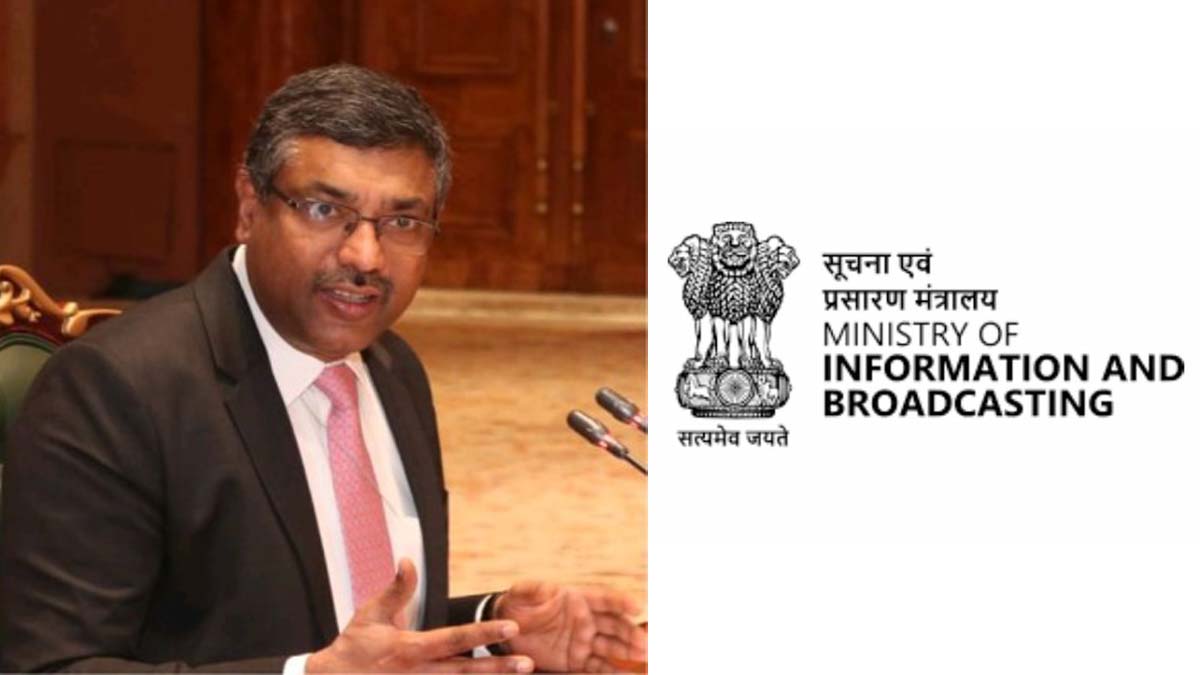
NEW DELHI: The Centre has sought to dial down concerns over its proposed amendments to the IT Rules, with Ministry of Electronics and Information Technology secretary S Krishnan asserting that the changes are intended as clarifications rather than an expansion of regulatory powers.
Pushing back against criticism from platforms and civil society, S Krishnan said the amendments “do not in any way actually give us wider powers” and are meant to remove ambiguity in how existing provisions are applied. He added that the trigger came largely from within the ecosystem, with intermediaries themselves seeking clearer guidance on compliance, takedowns and record preservation.
At the heart of the debate is the growing friction between platforms and policymakers over responsibility for user-generated content. Intermediaries have argued that they should not be treated on par with publishers, particularly when content is created and uploaded by users. Krishnan acknowledged this concern, noting that “a sharper distinction” between user content and publisher content is needed and is currently under examination.
The issue becomes more complex in enforcement scenarios. While registered publishers can be directly asked to modify or remove content, intermediaries often lack control over the original creator. “In such cases, the intermediary cannot direct those changes,” Krishnan explained, underlining the need for procedural nuance.
Another key proposal under discussion is to bring user-generated news and current affairs content within a more unified regulatory ambit, potentially under the Ministry of Information and Broadcasting. The move follows suggestions that a single authority should handle such content, regardless of whether it originates from a publisher or an individual user.
Even as the government frames the amendments as a tidy-up exercise, fault lines remain. Industry players have flagged concerns over compliance burdens, especially for smaller businesses, and questioned whether advisories could effectively become binding without explicit legislative backing. Krishnan said the government is mindful of these risks and is exploring ways to ease obligations, including possible relaxations under certain provisions.
The ministry is also considering consolidating multiple advisories and guidelines into a more structured framework, a step widely seen as addressing long-standing confusion over what platforms are expected to follow.
On takedowns, the government has reiterated that due process will remain unchanged. Krishnan stressed that actions will continue to be governed by established procedures, with reasons recorded and review mechanisms in place. He also pointed to the surge in deepfakes and synthetic media as a factor behind rising content disputes, calling it a “scale challenge” for regulators.
Interestingly, Krishnan also framed social media platforms as commercial entities rather than pure vehicles of free expression, hinting at a broader shift in regulatory thinking as platform economics come into sharper focus.
With stakeholders seeking more time and, in some cases, a rollback of the proposals, the government has kept the consultation process open-ended. Krishnan said further revisions remain on the table, signalling a willingness to adapt the draft based on feedback.
For now, the message from MeitY is clear: the rules may not be tightening in intent, but the effort to define them more clearly is well underway.






