I&B Ministry
EEMA & NCT Government to simplify licensing events in Delhi; talks on with Maharashtra

NEW DELHI: The Delhi Government has appointed a nodal officer for creation of a single-window licensing process for entertainment programmes.
This has come after prolonged negotiations between the Event and Entertainment Management Association (EEMA) with the Delhi Government.

The aim was to create a conducive process for license acquisition for events in the nation’s capital.
The State Government has also agreed that EEMA member companies can do ticketed events in Delhi without paying entertainment tax in advance.
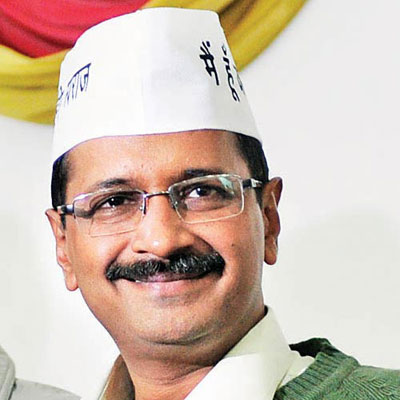
The decision was preceded by a series of meetings between the National Executive Committee of EEMA and the Delhi government led by Chief Minister Arvind Kejriwal, Deputy Chief Minister Manish Sisodia and Tourism Minister Kapil Mishra.
Following a detailed EEMA representation, the Chief Minister appointed a nodal officer to engage with EEMA and find solutions in the shortest possible time.
Commenting on the achievement, EEMA president Sabbas Joseph said, “Through the proactive approach of the Delhi government and EEMA, positive results with regards to licensing have started to show yielding a win – win situation for the entire events and experiential marketing industry. This is a big step towards making Delhi an event-friendly city.”
EEMA treasurer Rajeev Jain added, “This is indeed a big bold step by the Delhi Govt. & Dept. of Entertainment Tax. Change in the Entertainment Tax depositing framework for EEMA members is certainly a big gift to the industry and number of ticketed & corporate events in the city will see an increase. This directive is a first step to make Delhi an event-friendly city and reinforces the role of the Event Industry as a major stakeholder in the city’s growth.”
Through regular interactions with the Delhi Government and Commissioner – Excise, Entertainment & Luxury Tax, the following directives have been issued:
Ticketed Events in Delhi
? EEMA members will now be able to organize their ticketed events in Delhi without submitting any entertainment tax before the event.
? Tax as per the ticket sale can be deposited after the completion of the event. Earlier this was to be done prior to ticket selling permissions being given.
? To facilitate this arrangement, EEMA shall enter into an MOU with the Department of Entertainment Tax.
? EEMA similarly would formulate guidelines for its members availing of this facility.
? EEMA will also be submitting a Bank Guarantee of a stipulated amount as a surety on behalf of its members.
Licensed Auditoriums under single window clearance
? 23 auditoriums in the city have been issued a permanent license for holding an event. More such venues are under consideration.
Single Window Clearance: Reducing Licensing Hurdles
? The government is in the process of bringing Entertainment Tax, Fire, Municipal authorities and Electricity under the purview of a single-window clearance.
EEMA seeks to bring together the country’s leading event, sports management and brand activation companies, MICE and wedding planners, experiential marketers, entertainment professionals, artist management companies and international counterparts on the same platform.
EEMA along with its key constituents is also engaged in similar discussions with the Maharashtra government and several other states with a view on easing the business processes and thereby generating growth in events featuring culture, music, dance, cinema and art.

I&B Ministry
AIDCF moves TDSAT over Waves plan to stream linear TV channels
Industry body flags regulatory gap as OTT push sparks broadcast turf war
NEW DELHI: The battle between traditional television distributors and digital platforms has found its way to the courts, with the All India Digital Cable Federation (AIDCF) moving the Telecom Disputes Settlement and Appellate Tribunal (TDSAT) against Prasar Bharati’s latest OTT play.
At the heart of the dispute is Waves, Prasar Bharati’s OTT platform, which has invited applications to onboard linear satellite TV channels. Aidcf, which represents multi-system operators (msos), argues that this move sidesteps existing broadcasting rules and risks tilting the playing field in favour of digital platforms.
The federation’s petition hinges on a key provision in the Uplinking and Downlinking Guidelines, 2022. Clause 11(3)(f) allows broadcasters to downlink channels only if they provide signal decoders to recognised distribution platforms such as MSOS, DTH operators, hits operators and iptv platforms. OTT platforms, aidcf points out, do not feature on that list.
In simple terms, AIDCF’s argument is this: if OTT platforms are not officially recognised distributors, they should not be receiving broadcast signals in the first place. By inviting channels onto Waves, the federation claims, Prasar Bharati is opening a backdoor that lets broadcasters bypass long-standing rules.
The concern goes beyond legal interpretation. Aidcf says OTT platforms currently operate without a clear regulatory framework, allowing them to expand into traditional broadcasting territory without the compliance burden that cable and satellite operators must carry. That, it argues, creates an uneven contest.
There is also a warning for broadcasters. If they provide signal decoders to an OTT platform like Waves, they could risk breaching the very conditions under which their downlinking permissions were granted.
For its part, Prasar Bharati’s Waves initiative is positioned as a step towards wider access and digital reach, bringing linear television into the streaming era. But critics say the move blurs the line between regulated broadcasting and largely unregulated streaming.
The matter is expected to come up before tdsat next week. The outcome could do more than settle a single dispute. It may help define how India regulates the fast-merging worlds of television and OTT, where the lines are getting fuzzier by the day and the stakes, sharper than ever.