I&B Ministry
Downlink policy with cabinet; no debate yet

NEW DELHI: Finally the information and broadcasting ministry has taken the downlinking policy to the Cabinet that aims at having all TV channels beaming into India register with a designated authority here, apart from completing some other formalities.
The ministry, according to sources there, is playing it down as the issue could not be listed for at least the last meeting of the Cabinet, which was to meet today also. However, due to the demise of former Prime Minister Narasimha Rao yesterday, today’s meeting has got truncated.
The downlink policy will willy-nilly give the government more control over TV channels pay or free to air.

Over a month back, information and broadcasting ministry Jaipal Reddy had said that the government was in the process of finalising a downlinking policy that is expected to look into issues such as allowing FII investment in news channels and making registration mandatory for foreign channels beaming into India.
At present only 26 per cent foreign direct investment (FDI) is allowed in TV news ventures and FIIs are out of the picture altogether. In order to have an effective control over channels beaming into India, but uplinking from abroad, the government will ask them to register themselves in India and set up an India office. This is expected to help it tackle issues such as adult content, especially on some fashion channels.
Though the government is keeping very quiet on the exact nature of the downlink policy that it’s seeking a nod from the Cabinet, sources in the ministry indicated that all channels beaming into India may soon have to open their profit and loss accounts and ownership patterns to the government or a regulatory body irrespective of the fact whether they are part of a private held company or a listed entity.
This, amongst others, is one of the major points of the downlink policy, which has been in the making for quite some time now.
With the cricket telecast rights issue almost making a habit of landing in the court — ESPN Star Sports is at present embroiled in one such controversy over Indian cricket team’s tour of Bangladesh — the Indian government would also make it mandatory for feeds of events of national importance to be given to pubcaster Doordarshan.
The list of events would be notified and will certainly include sports like cricket that has cult status in the country.
Needless to state that as and when this law is put into force, certain amendments would have to be made in existing rules like the Cable TV (Network) Regulation Act, 1995 and the DTH guidelines to accommodate the `must-provide’ clause, which is mainly aimed at benefiting DD.






I&B Ministry
India tightens anti-piracy law, blocks sites and Telegram channels
New rules bring jail terms, fines and faster takedowns of illegal content
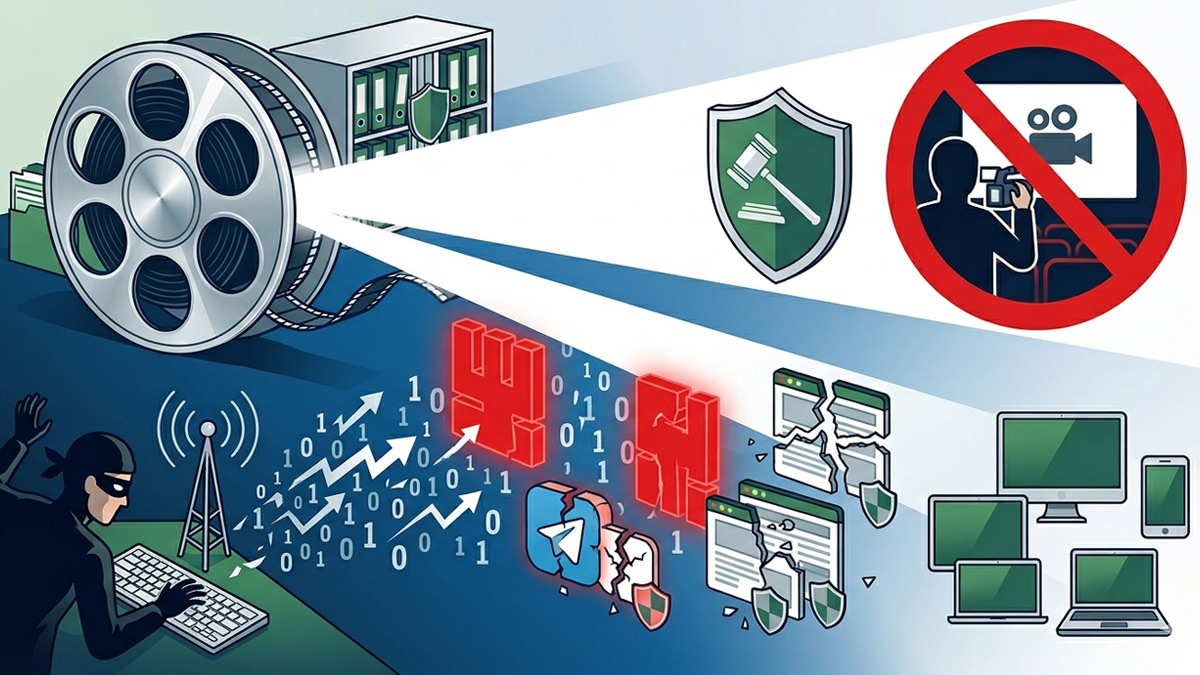
NEW DELHI: The Government of India has stepped up its fight against film piracy, invoking stricter provisions under the Cinematograph Amendment Act 2023 to crack down on unauthorised recording and distribution.
The law now imposes tougher penalties, including jail terms ranging from three months to three years and fines starting at Rs. 3 lakh, which can go up to 5 per cent of a film’s production cost. The provisions target both illegal recording in cinemas and unauthorised online transmission.
In a fresh enforcement push, authorities have notified the Telegram platform to act against piracy, leading to the identification of 3,142 channels allegedly distributing copyrighted content without permission. In parallel, access to around 800 piracy websites has been blocked through internet service providers.
The action has been taken under the Information Technology Act 2000, which empowers the government to direct intermediaries to remove unlawful content. The framework is further reinforced by the Information Technology Rules 2021, requiring platforms to act swiftly when notified of violations.
An institutional mechanism is also in place, allowing copyright holders and authorised representatives to file complaints through designated nodal officers. Once verified, these complaints trigger takedown notices to intermediaries for disabling access to infringing content.
The update was shared in Parliament by Government of India minister of state information and broadcasting l murugan in response to a query from Parimal Nathwani.
The government’s latest move signals a sharper, more coordinated approach to tackling piracy across both physical and digital channels. For the film industry, it is a step towards protecting revenues, while for viewers, it reinforces the shift towards legitimate content consumption.








