News Headline
Doordarshan launches Mobile TV in India, needs no internet


NEW DELHI: Doordarshan has commenced digital terrestrial television (DTT) services in 16 cities, thereby providing mobile TV to the users.
The sixteen cities being covered from 25 February are- Delhi, Mumbai, Kolkata, Chennai, Guwahati, Patna, Ranchi, Cuttack, Lucknow, Jallandhar, Raipur, Indore, Aurangabad, Bhopal, Bangalore and Ahmadabad.
Mobile TV can be received in and around these cities using DVB-T2 Dongles in OTG enabled smart phones and tablets, Wi-Fi dongles for moving vehicles, besides the TV sets having built in DVB-T2 Tuner which are called as integrated digital TV (iDTV).

While Sony, LG, Panasonic, Samsung etc., are providing iDTV, the dongles are also available in online shopping sites like Flipkart, Ebay, Snapdeal etc. It requires the user to download the software and plug these dongles in the smartphones and tablets to receive DD Signals.
There will be no charges for watching the DD Channels. No internet connection is required after installation of the software. The public and private transportation vehicles and public places are potential environments for Mobile Television.
Currently, DD National, DD News, DD Bharati, DD Sports, DD Regional/DD Kisan are being relayed. Only one time investment of a dongle will be required by viewers and no extra expenditure unlike streaming with internet. The TV pictures are free from “ghosting” and “snowing”.
DTT secures greater plurality in platform ownership, ensuring that no single platform owner is so powerful that it can exert undue influence on public opinion or political agendas. The digital transition offers an opportunity to increase the production of local content.
This in turn creates job opportunity and increases creativity and entrepreneurship. A strong DTT platform is critical for healthy competition in the TV market and to the realisation of a wide range of social benefits and most essentially an all weather reliable platform. There is no risk of catastrophic failure of total network. It provides alternative distribution platform.
DD channels can be received on smart phones, tablets and in moving vehicles. The new audience on move are the key beneficiary of this technology. Currently, mobile TV can be received using a dongle for mobile and tablets. But the day is not far when it will be embedded inside the devices. Watching TV from a phone is interested in many situations. Public and private transportation vehicle in public places are potential environment for mobile TV services. In the DTT Transmission everybody watches the same content at the same time and it guarantees everybody the same high level of service, since they are all bathed in the same signal. So tablets and smartphones and moving vehicles find new way of watching DD Channels in India in 16 cities, which are going to increase in near future.






NEW DELHI: Hamdard Laboratories gathered a cross-section of India’s achievers in New Delhi on Friday, handing out the Hakeem Abdul Hameed Excellence Awards to figures who have left their mark across healthcare, education, sport, public service and the arts.
The ceremony, attended by minister of state for defence Sanjay Seth and senior officials from the ministry of Ayush, celebrated individuals whose work blends professional success with a sense of public purpose. It was as much a roll call of achievement as it was a reminder that influence is not measured only in profits or podiums, but in people reached and lives improved.
Among the headline awardees was Alakh Pandey, founder and chief executive of PhysicsWallah, recognised for turning affordable digital learning into a mass movement. On the sporting front, Arjuna Awardee and kabaddi player Sakshi Puniya was honoured for her contribution to the game and for pushing women’s participation onto bigger stages.
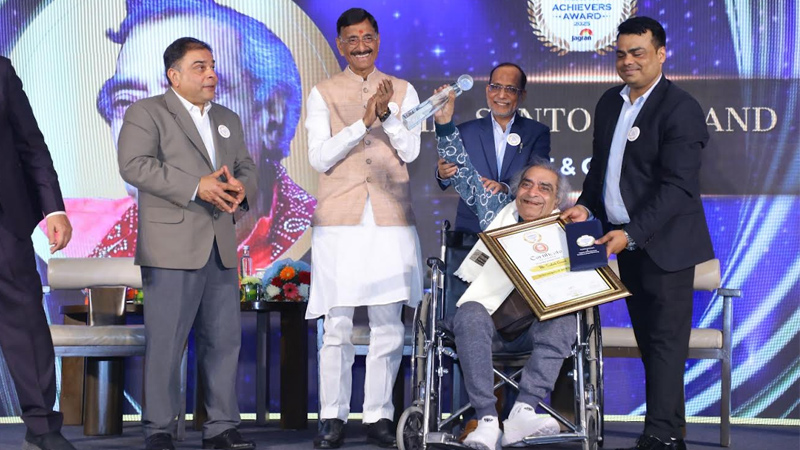
The cultural spotlight fell on veteran lyricist and poet Santosh Anand, whose songs have echoed across generations of Hindi cinema. At 97, Anand accepted the honour with characteristic humility, reflecting on a life shaped by perseverance and hope.
Healthcare honours spanned both modern and traditional systems. Manoj N. Nesari was recognised for strengthening Ayurveda’s place in national and global health frameworks. Padma shri Mohammed Abdul Waheed was honoured for his research-backed work in Unani medicine, while padma shri Mohsin Wali received recognition for his long-standing contribution to patient-centred care.
Education and social development also featured prominently. Padma shri Zahir Ishaq Kazi was honoured for decades of work in education, while former Meghalaya superintendent of Police T. C. Chacko was recognised for public service. Goonj founder Anshu Gupta received an award for his dignity-centred rural development initiatives, and the Hunar Shakti Foundation was honoured for empowering women and young girls through skill development.
The Lifetime Achievement Award went to former IAS officer Shailaja Chandra for her long career in public healthcare and governance, particularly in the traditional systems under Ayush.
Speaking at the event, Hamdard chairman Abdul Majeed said the awards were a tribute to those who combine excellence with empathy. “These awardees reflect Hakeem Sahib’s belief that healthcare, education and public service must ultimately serve humanity,” he said.
Minister Seth struck a forward-looking note, saying India’s young population gives the country a unique opportunity to become a global destination for learning, health and wellness by 2047.
The ceremony also featured the trailer launch of Unani Ki Kahaani, an upcoming documentary starring actor Jim Sarbh, set to premiere on Discovery on 11 February.
Instituted in memory of Unani scholar and educationist Hakeem Abdul Hameed, the awards have grown into a national platform that celebrates those building a more inclusive and resilient India. For one evening at least, the spotlight was not just on success, but on service with substance.