News Broadcasting
Do we need 24-hour news channels?


NEW DELHI: The news television industry has been getting a lot of negative publicity these days, the prime reason being the inflammatory content they are airing. Not just viewers, but several advertisers and marketers have also highlighted their discontent with the journalism these channels are doing and some brands have already started pulling out their ad monies. While most people put the blame for this on the rat race for TRP and viewer interests, Parle Products Pvt Ltd senior category head – marketing Krishnarao S Buddha voiced an intriguing thought – do we really need 24-hour news channels these days?
“I don’t think that the content degeneration on news channels happened recently. It’s been worsening for a few years now. I think the days when we had just Doordarshan, which had only three bulletins running, we had more semblance of propriety in the news content. I really want to understand whether there is a need for 24-hour news channels, from a programming perspective. If there is enough news happening across the globe that it requires multiple 24-hour news channels to cover,” he pointed out.
He added that this “mad requirement” of filling content slots for 24 hours has forced news channels to go overboard and serve content that is not only toxic but is also non-relevant.

Buddha was speaking at the recent brand safety webinar hosted by Indiantelevision.com in partnership with BBC World News and BBC.com. Other speakers on the panel – moderated by Indiantelevision.com founder, CEO, and editor-in-chief Anil Wanvari – were Wavemaker CEO – South Asia Ajay Gupte, Future Group CMO – FBB Prachi Mohapatra, BBC Global News MD India Rahul Sood, PolicyBazaar head of marketing Samir Sethi, Accenture MD supply chain, network, and sales operations Shekhar Tiwari and Initiative CEO Vaishali Verma.
Contrary to Buddha’s view, Gupte stated that he doesn’t feel that there is more supply than demand for news in the current scenario, and it makes complete sense from a business perspective to have multiple 24-hour news channels.
Said he, “At the end of everything, this is a marketplace, which functions on the basic objective of demanding profitability. To achieve that, there needs to be an equilibrium in demand and supply, so that the pricing remains fair. I believe that there is really not more supply than the demand in the market right now. This is only from the business perspective and how the market forces generally work.”
Buddha insisted that in that case, channels really need to work on their content strategies and come up with smart fillers based on investigative journalism.
“There is a stark need for creating differentiators within news channels based on content. If there is virtually the same telecast happening on each channel, then there is nothing much to differentiate them,” he interjected.
Gupte too agreed that news has a responsibility to serve and it defines the culture and thinking of any nation. “It is definitely important for networks to ensure that the content is right. It will create a better market too, in terms of delivery. People will then have the option to consume the content that suits them better. I would leave it to the channels to decide the content.”
Tiwari added that channels need to have the right strategy, the right talent, and the right investors to ensure great content. “There is a need for a good 24X7 independent news channel that covers current affairs, sports, entertainment, and everything else. Then we will have better content provided. It shouldn’t be working under the pressure of its investors or a government for that matter.”
The panel highlighted several important factors that are contributing to the erosion of faith in news channels by advertisers and marketers. Vaishali Verma also highlighted that three out of ten clients of her agency have already said no to advertising on news channels, and the industry is in dire need of a course correction.





News Broadcasting
CNN-News18 to host Fury in the Gulf conclave on West Asia crisis
Three-hour summit to unpack geopolitical fallout and impact on India
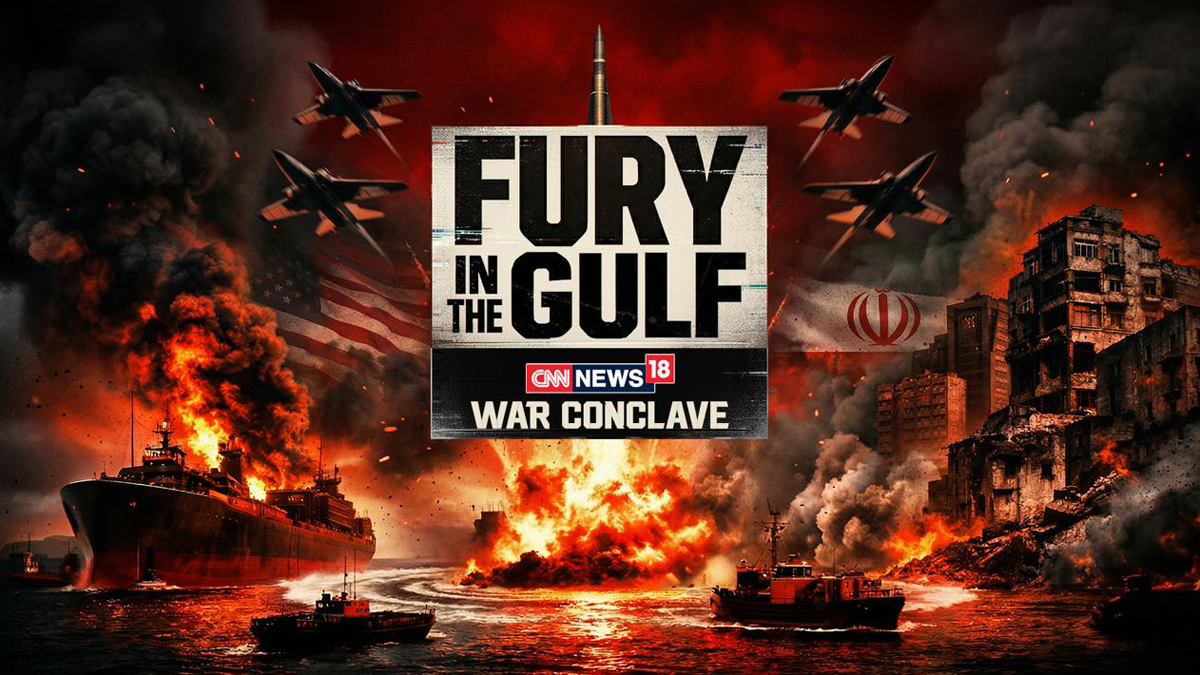
MUMBAI: CNN-News18 is set to host a special three-hour broadcast, Fury in the Gulf – War Conclave, on April 7, aiming to decode the escalating West Asia crisis and its far-reaching implications for India.
Scheduled from 4:00 PM to 7:00 PM, the conclave comes at a time when tensions between Iran and the United States are reshaping global geopolitics and triggering economic uncertainty. With India’s deep energy ties, trade links and large diaspora in the Gulf, the developments carry significant domestic relevance.
Built around the theme ‘Conflict, Consequences, and The Future,’ the programme will feature six curated sessions combining one-on-one interviews and panel discussions. The focus is to cut through the clutter and offer viewers a clearer understanding of the fast-evolving situation.
Key sessions include ‘Diplomacy in Times of War’ featuring Shashi Tharoor, and ‘World After the Iran Conflict’ with voices such as Ram Madhav, Reuven Azar, representatives from the European Union and the Iranian Deputy Envoy. Another session titled ‘Another Dunkirk?’ will bring together K. J. S. Dhillon and Jitin Prasada among others.
CNN-News18 editorial affairs director Rahul Shivshankar said, “In times of war, clarity becomes the most powerful tool. Fury in the Gulf – War Conclave brings together credible voices to address the questions and confusion that arise amid an overwhelming influx of information.”
He added that the initiative is aimed at delivering “facts, perspective, and insight” at a time when misinformation can easily cloud public understanding.
Echoing the sentiment, CNN-News18 CEO– English and business news Smriti Mehra said the conflict marks a defining global moment, with consequences that extend well beyond the region. She noted that the conclave seeks to present the crisis with “depth, nuance and responsibility” so audiences can better grasp its real-world impact.
As geopolitical tensions continue to dominate headlines, the conclave positions itself as an attempt to bring order to the noise, offering viewers a structured, insight-led look at a complex and rapidly shifting global situation.






