News Broadcasting
Disney Channel inks pan-European mobile deal with Orange


MUMBAI: The Disney Channel has announced that it has signed its first pan-European deal to provide content to mobile phones. Through an agreement with Orange, the service will be available to customers in the UK, Belgium, Switzerland, Portugal, Poland, Holland, Romania, Slovakia and, in time, France.
The service will consist of 65 to 120 minute programming loops featuring some Disney Channel’s most popular content, including full 22-minute episodes of live-action programming franchises That’s So Raven and The Suite Life of Zack & Cody and animated hits like Kim Possible and Disney’s Recess. In addition, consumers will be able to watch clips from Hannah Montana and a selection of Disney Channel Original Movies, informs an official release.
Disney Channels, EMEA executive vice president and managing director John Hardie said, “This is a break-through deal which we expect to be a huge hit with kids all over Europe. With parents’ consent and knowledge, it allows kids to watch their favourite Disney Channel programmes on the way home or wherever they are. It’s how today’s kids are growing up to watch TV – at a time and in a place they choose and it’s important that content providers are able to deliver that.”

In other agreements announced by the two companies, Buena Vista International Television (BVITV), Disney’s international TV distribution division, and France Telecom-Orange will extend their existing broadband VOD movie licensing agreement in France across other markets in Europe. With these agreements, Orange VOD subscribers in Spain and TPSA VOD subscribers in Poland will be the first to enjoy movies from Walt Disney Pictures, Touchstone Pictures and Miramax Films.
Titles include global box office hit Pirates of the Caribbean: Dead Man’s Chest, The Chronicles of Narnia: The Lion, The Witch and the Wardrobe and the forthcoming sequel The Chronicles of Narnia: Prince Caspian are also included in the agreements.
Orange currently boasts of more than 2.9 million mobile broadband customers. France Telecom Executive Vice President Patricia Langrand said, “The agreement for the mobile services illustrates our desire to develop dedicated formats and programs specifically adapted for our mobile services with prestigious partners. Our agreement with Disney for VOD will enrich the content offer for our on demand services across multiple territories and platforms.







News Broadcasting
Kamlesh Singh receives Haldi Ghati Award from MMCF
India Today Group editor honoured for three decades of journalism at Udaipur ceremony.
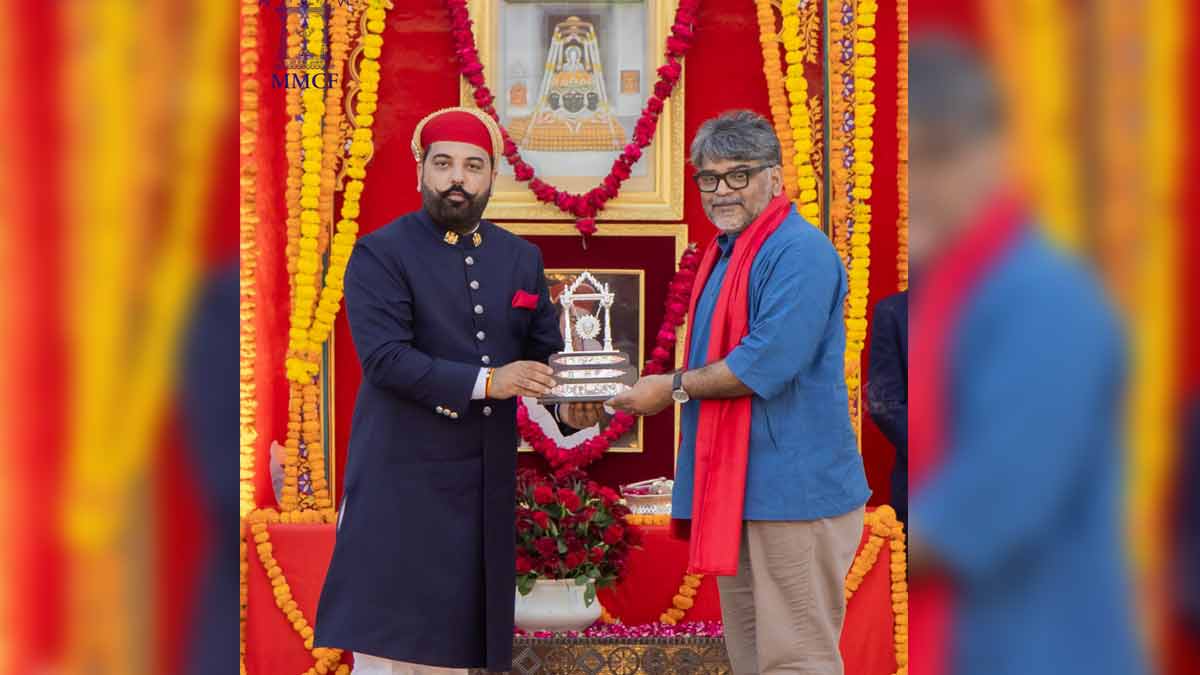
MUMBAI- Kamlesh Singh just turned a lifetime of sharp words into a shiny shield because when journalism wakes up a society, even the Maharana of Mewar wants to pin a medal on it.
The Maharana of Mewar Charitable Foundation (MMCF) conferred its prestigious Haldi Ghati Award on Kamlesh Singh, a senior editor at the India Today Group, during a ceremony in Udaipur on 15 March 2026. The national award, instituted in 1981-82, recognises “work of permanent value that initiates an awakening in society through the medium of journalism.”
Singh, who leads several editorial initiatives including Aaj Tak Radio, the Teen Taal community and The Lallantop, was presented the honour by Lakshyaraj Singh Mewar, Managing Trustee of MMCF. The citation highlighted his three decades of contributions to Indian media, innovations in digital journalism, mentoring young reporters, and his popular podcast persona “Tau” on Teen Taal, which fosters thoughtful public discourse.
The Haldi Ghati Award, named after the historic Battle of Haldighati symbolising valour and resilience, is one of four national awards given annually by MMCF. Past recipients include Tavleen Singh, Piyush Pandey and Raj Chengappa.
Other honourees this year included Padma Vibhushan Pt Hari Prasad Chaurasia, Vedamurti Devvrat Rekhe, Treeman of India Marimuthu Yoganathan, Vir Chakra Capt Rizwan Malik, and US-based researcher Molly Emma Aitken, who received the Colonel James Tod Award for contributions to understanding Mewar’s spirit and values.
In an era where headlines often shout louder than substance, the MMCF quietly reminded everyone that real journalism isn’t about noise, it’s about the quiet, persistent work that stirs society awake, one thoughtful story at a time.







