DTH
DishTV launches Kids Active in partnership with Shemaroo

MUMBAI: Value added services has been a focus area, a clear differentiator and an integral part of our offering. By not leaving any stone unturned in order to provide a wide range of content and services to its subscribers, DishTV Asia’s largest DTH brand has partnered with Shemaroo, one of India’s leading entertainment content houses that provides learning and entertainment to launch a new premium service called Kids Active and enhanced its bouquet of value added services to 10.
With the launch of Kids Active service, the DTH category’s most trusted brand has doubled their active services since last six months. Kids Active offers original content ranging from exciting stories, movies, songs, scientific experiment series and many more shows.
Kids Active is packaged 24X7, ad free infotainment service for kids in the age group of 6-12 years. With the activation of the service, subscribers get an opportunity to view Tales of Akbar & Birbal in English, animation songs, jungle tales, children’s movies and show promos, Grandpas treasure of wonderful stories and fun learning with scientific experiments.

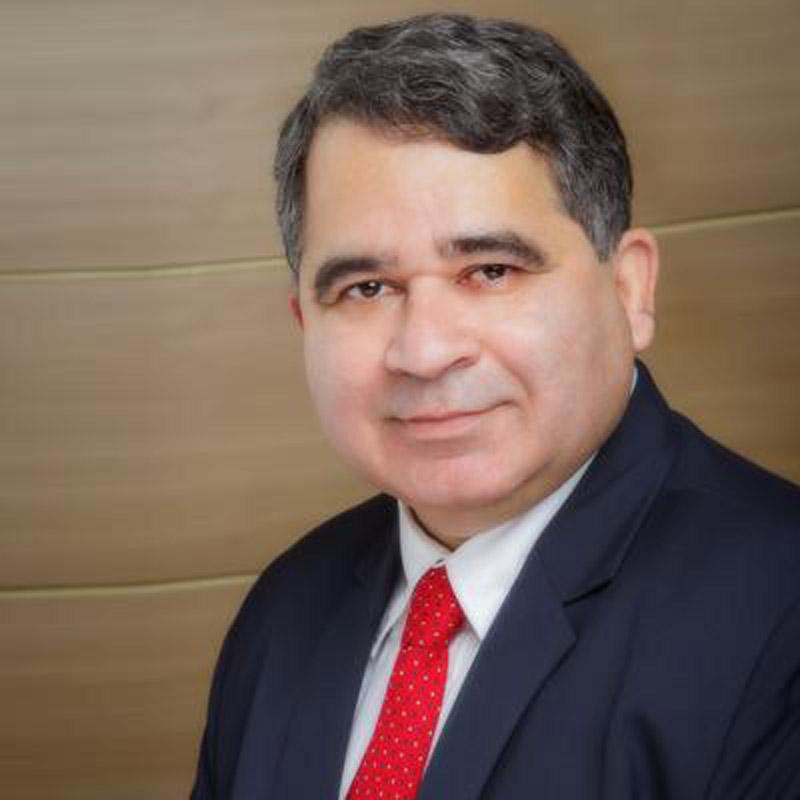
DishTV CEO said, “We are delighted to announce our specialty offering targeted at the youngest generation. Kids segment is an area which is constantly in focus for us. Launch of Kids Active service is yet another step for us to enhance our value added services portfolio and cater to a wider set of audience.”
Kids Active is a premium ad free subscription based service targeted at enhancing the TV viewing of DishTV’s young subscribers. This service will be available as a free preview till the 24 October, after which a nominal amount of Rs 25 per month will be charged. This Kids Active service will be available on channel number 514 on DishTV.
Dish TV is Asia Pacific’s largest direct-to-home (DTH) company and part of one of India’s biggest media conglomerate – the ‘Zee’ Group. Dish TV has on its platform more than 575 channels & services including 22 audio channels and over 55 HD channels & services. Dish TV uses the NSS-6 satellite platform which is unique in the Indian subcontinent owing to its automated power control and contoured beam which makes it suitable for use in ITU K and N rain zones ideally suited for India’s tropical climate. The company also has transponders on the Asiasat 5 platform and on the SES-8 platform which makes its total bandwidth capacity equal to 828 MHZ, the largest held by any DTH player in the country.





DTH
Prasar Bharati’s WAVES earns Rs 2.9 crore in first year
Platform scales content, users but monetisation gaps limit revenue growth.
MUMBAI: Big waves, small ripples at least for now. When Prasar Bharati launched its OTT platform WAVES at the 55th International Film Festival of India in November 2024, it pitched a bold vision: a homegrown rival to global and domestic streaming giants, blending video, audio, gaming and commerce into a single digital ecosystem. Five months into FY2024–25, however, the platform’s revenue stands at just Rs 2.90 crore, a figure that underscores the gap between ambition and monetisation.
On paper, WAVES looks anything but modest. The platform has ingested 13,608 titles, totalling 9,495 hours of content, with over 13,000 titles already live. It has streamed more than 575 live events from the Mahakumbh Amrit Snan and the 76th Republic Day parade to the Hockey India League, Kabaddi World Cup and Mann Ki Baat while offering 74 live TV channels and 12 radio channels. With over 10 lakh registered users and more than 200 content partners onboarded, the scale resembles that of a fully operational streaming service rather than a pilot project.
The architecture supporting this scale is equally robust. Built under Prasar Bharati’s Central Archives vertical, WAVES runs on a cloud-based infrastructure with DRM, encryption and an integrated analytics dashboard. It includes dedicated units for content ingestion, quality control, publishing, graphics, marketing and billing, and is distributed across platforms such as OTTplay, Tata Play and BSNL. The offering extends beyond video to include audio-on-demand, e-games and even e-commerce via ONDC integration.
Yet, the numbers reveal a core disconnect. Despite its scale, WAVES generated just Rs 2.90 crore in a market where India’s OTT industry crossed Rs 23,000 crore in 2024. A key bottleneck lies in monetisation infrastructure: subscriptions cannot currently be purchased within the app and must be completed via an external website. In a mobile-first country where over 95 per cent of OTT consumption happens on smartphones, this extra step creates friction that most users are unlikely to overcome.
Ironically, content is not the problem, it is the platform’s biggest strength. Prasar Bharati holds one of the world’s richest broadcast archives, including 45,154 hours of digitised Akashvani programming and 35,723 hours from Doordarshan. For WAVES alone, over 3,800 hours of archival content have been made OTT-ready, including classics such as Ramayan and Shaktimaan, alongside rare cultural recordings and historical broadcasts.
There are early signs that this library holds commercial potential. Revenue from archival content licensing rose sharply to Rs 3.38 crore in FY24, up from Rs 67 lakh the previous year. Meanwhile, free digital platforms continue to drive massive reach, the PB Archives Youtube channel clocked 119.78 million views and added 4,02,000 subscribers in FY2024–25, crossing 1.7 million in total, while DD News has over 5.84 million subscribers.
That, however, presents a strategic dilemma. While free distribution builds scale, it also conditions audiences to expect content at zero cost making it harder to transition to paid models. WAVES, designed as a hybrid AVOD-SVOD platform with advertising and subscription layers, is yet to fully crack this balance.
The broader challenge is not technological but strategic. In an ecosystem dominated by platforms offering seamless payments, aggressive pricing and high-budget originals, WAVES is still bridging the gap between being a content repository and a commercially viable product.
For now, the platform reflects both promise and paradox. It has the scale, the content and the infrastructure but until monetisation catches up, WAVES remains less a revenue engine and more a digital showcase of what India’s public broadcaster could become.






