DTH
Dish TV to introduce card-less set top boxes


MUMBAI: Dish TV India is looking at moving away from set top boxes requiring smart cards for subscribers to its satellite pay TV service. This is likely to take place over the next three or four months.
Last weekend, India’s largest DTH provider announced that it had selected Rambus’ Cryptomedia security platform for use in its pay TV satellite system. The platform, which includes a hardware root-of-trust embedded in the set-top box chipset, ensures secure distribution of premium content for cable and satellite operators while eliminating the need for a smart card and enhancing usability of the set-top box.
“As we look to grow our customer base from the current 13 million subscribers, the demand for cost-effective and robust content protection solutions becomes increasingly important for consumers seeking premium content,” said Dish TV India managing director Jawahar Goel. “By leveraging the embedded CryptoMedia core, we no longer need a smart card to provide secure access to premium content, significantly reducing the cost and improving the security of the set-top box.”

The CryptoMedia Content Protection Core, developed by Rambus Cryptography Research, is one of several new security elements to be integrated in Dish TV India’s latest set-top boxes. Together with the CryptoMedia operator services, the solution provides a flexible security foundation that allows Dish TV India to easily update and reconfigure software and hardware security throughout the lifecycle of the set-top box. Dish TV India will launch the new platform in broad commercial operation later this year.
“By using the CryptoMedia Content Protection Core, Dish TV India recognizes the value of enabling another level of protection in the set-top box chipset alongside security elements provided by CAS vendors,” said Martin Scott, senior vice president and general manager of the Security Division at Rambus. “Our CryptoMedia Security Platform provides Dish TV India with extra protection for the delivery of content, utilizing our expertise in both embedded security and ecosystem enablement.”
Formerly part of the CryptoFirewall family, the CryptoMedia Content Protection Core is designed to provide strong security and superior system design flexibility for premium content distribution. The solution minimizes the risk of security failure and helps simplify product development. The core is available in a broad range of set-top box and smart TV chipsets and is compatible with the leading CAS and DRM systems to prevent unauthorized access to content and services, including features like pay-per-view and service-tier upgrades.







DTH
DD Free Dish e-auction revenue dips to Rs 642 crore as slot sales fall
Revenue dips as revised norms reshape bidding in 94th round
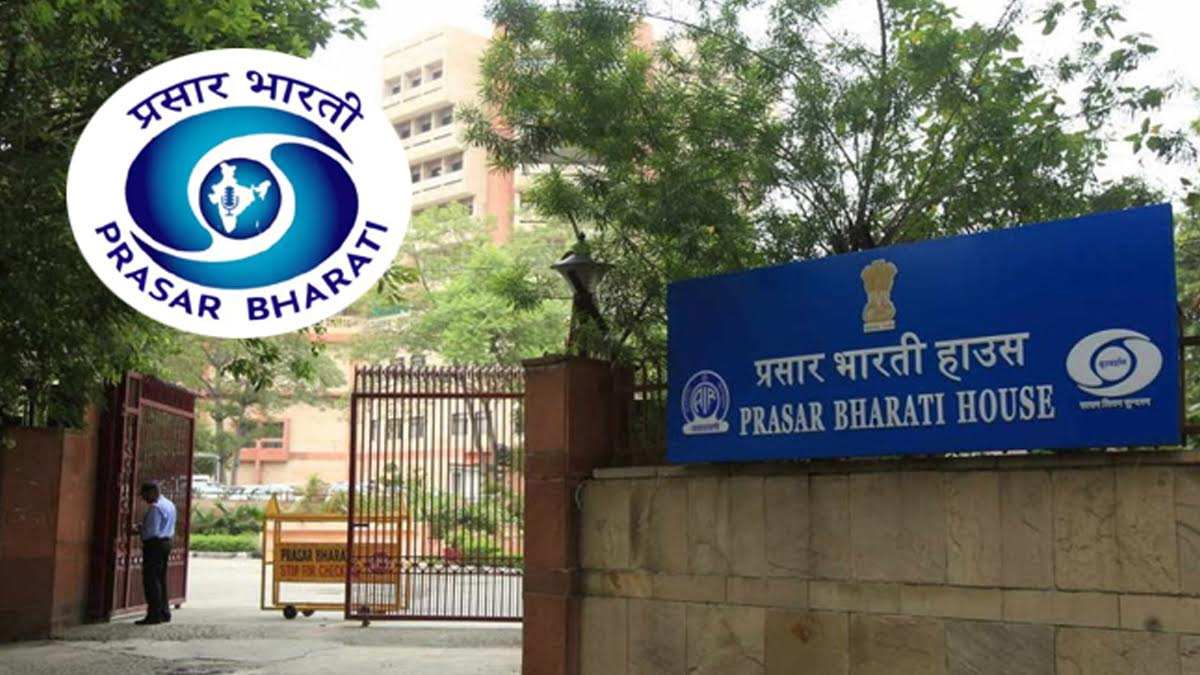
NEW DELHI: Prasar Bharati’s DD Free Dish has closed its 8th annual, and 94th overall, e-auction for MPEG-2 slots with total collections of Rs 642 crore for the period April 1, 2026 to March 31, 2027.
That is lower than last year’s Rs 780 crore haul, with 55 slots sold compared with 61 in FY25–26. The softer topline reflects both a slimmer inventory and a recalibrated auction framework.
This was the first auction conducted after amendments to the e-auction methodology, including tighter eligibility norms and a revised reserve price structure for MPEG-2 slots. The stated aim was greater transparency and more serious participation. The immediate outcome appears to be more measured bidding in certain categories.
Day one set the tone. Eight slots were sold, six in the premium Bucket A+ and two in Bucket A. The strong early action in A+, which typically houses Hindi GECs and movie channels, reaffirmed the enduring appeal of mass Hindi programming on the platform.
Among the broadcasters securing slots in the initial rounds were Zee Entertainment Enterprises, Sony Pictures Networks India, Viacom18’s Colors network, Sun Network and Shemaroo Entertainment. Their continued presence signals that, despite the pull of digital platforms, Free Dish remains a strategic must have for legacy networks chasing scale in price sensitive markets.
The final bouquet of 55 channels leans heavily towards Hindi news, movies, devotional fare, Bhojpuri and regional programming.
In Hindi news, familiar heavyweights such as Aaj Tak, ABP News, India TV, News18 India, Republic Bharat and Zee News made the cut. Entertainment and movie offerings include Colors Rishtey, Star Utsav, Dangal TV, Sony Pal, Shemaroo TV, Goldmines, B4U Movies and Zee Biskope. Devotional viewers will find Aastha, Sanskar and Sadhna Gold among the selected channels.
Regional representation includes Sun Marathi, Fakt Marathi, PTC Punjabi and GTC Punjabi.
Equally telling were the absences. Broadcasters such as Big Magic, Filamchi Bhojpuri, India News, Bharat Express, Movieplex Maithili, TV9 Marathi, Shemaroo Marathibana, Zee Chitra Mandir and Satsang did not participate. The pullback is particularly visible across Marathi, Bhojpuri, Maithili and spiritual programming. Industry observers point to the revised reserve prices, tighter eligibility norms and a reassessment of commercial viability as possible factors.
DD Free Dish continues to beam into over 40 million homes, largely in rural and semi urban India. For advertisers and broadcasters alike, it offers efficient access to Bharat markets where pay TV penetration remains uneven and OTT subscriptions are limited.
The moderation in revenue this year may be read as a pause rather than a retreat. Fewer slots, a reworked auction playbook and evolving broadcaster strategies have clearly shaped outcomes. Yet premium Hindi entertainment retains its pull, and the platform’s mass reach remains hard to ignore.
As the FY26–27 line-up settles in, the mix of winners and walkaways will define the private satellite channel landscape on DD Free Dish for the year ahead.