News Headline
Direct cable TV and online billing, India style

MUMBAI: In a day and age when just about everything is available ‘online’, can cable television be far behind? Starting March next year, digital cable consumers in the country will be able to make payments or recharge their pre-paid subscription package online.
Multi system operators (MSOs), particularly those who’ve just about got started on the road to retail consumer billing in Mumbai and Delhi, plan to make online payment options available to consumers by the next financial year.

 |
|---|
|
DEN is hopeful its online payment system will be active by next quarter or end of financial year
|
In the case of MSOs like DEN Networks, the first cycle of billing for the Delhi circle will be generated this month. “This is just the first step to inform consumers of the changed ecosystem in a digitised environment. But as we move along, we plan to give consumers as many touch points for submission of the billing amount,” informs an official from DEN on condition of anonymity.
DEN is hopeful its online payment system will be active by next quarter or end of the financial year but plans to go about it in a phased manner so as to not confuse consumers, the official points out.
So what’s in it for DEN consumers? They will be able to make direct payments to the MSO through payment gateways such as credit cards, cash cards, net banking, scratch cards through IVRs and pre-paid cards, among others. “It’s too immature to comment on payment modes yet but it would be like any other model of client transaction available for telecom and DTH subscribers,” the official informs.
InCable managing director Ravi Mansukhani, which has started direct billing in Delhi and Mumbai explains that retail (direct) consumer billing is the first step toward creating a transparent system. “Every MSO has to get into direct billing. In Delhi, our first bill cycle has been generated and handed over to the LCO (local cable operator) whereas the Mumbai bill cycle will be generated next month.”
According to Mansukhani, not all MSOs will start the online system together, and it will depend on how and when they want to activate it. However, he thinks most MSOs will concentrate on getting retail billing in place in Kolkata next. “Considering not all CAFs have been filled in Kolkata, we can hope that in October, the September bill will be generated,” he says.
DEN too plans to have a billing system in place for Kolkata. “We are also available in 24 of the 38 cities that have been digitised. So the billing system will also be in place for these 24 cities by the end of the calendar year,” the DEN official informs.
Mumbai-based MSO ABS 7 Star too is looking at debuting online payment and recharge options by the next financial year though it hasn’t started retail consumer billing till date.
“As per the High Court ruling, till the LCOs are paying entertainment tax, MSOs are not forced to do the billing for consumers. So we haven’t started direct billing as yet,” explains ABS 7 Star CMD Atul Saraf, quickly adding, “Still, effective next financial year, we will have both direct and online billing for consumers.”
Unlike other MSOs however, Orissa-based Ortel Communications has been owning its last mile for several years now and has resorted to direct billing right from then. “We are a last mile operator and thus, don the international model, where we are directly in touch with our consumers,” informs Ortel Communications CEO BP Rath.
Ortel’s five lakh customers pay Rs 250 plus five per cent entertainment tax and 12.5 per cent service tax. “This is the amount that even others have to pay, who have subscribed to other MSOs. Now, whether customers agree to pay more or reduce the number of channels they subscribe to will have to be seen,” he adds.
Speaking about whether the online model will somewhat change the existing dynamics where the LCO continues to be an interface between the MSO and the consumer, the DEN official says: “We will give subscribers options for recharge of vouchers, cash cards and online payment. But there is a road map behind this and we have started with LCOs as the collection channel for the time being.”
While the transition to online is seen as a positive step, glitches like payment of entertainment tax have to be smoothened out. “Currently, the LCO pays entertainment tax, which in Mumbai is Rs 45 and in Delhi is Rs 15,” says Mansukhani, adding, “There will be some amount of trouble and it will take at least two to three months for things to stabilise. However, by the second or third cycle, people will get used to the new system.”
But after all this, will consumers stand to benefit from the online model?
“Well, consumer perspective will not change much. The only difference is that if payments are not made for a given period, their STBs (set top boxes) will be switched off. Also, subscribers will have to pay tax directly on bills generated once we start billing them directly,” says the DEN official.
Mansukhani echoes similar sentiments: “Currently, consumers are paying the same as in the analog regime. If there are any extra charges, they are being absorbed by the MSO.”
Saraf however begs to differ. “Billing and digitisation will lead to an increase in ARPUs (average revenue per user) that haven’t gone up in the past 20 years. Consumers will have to pay 40 to 50 per cent more than what they are paying now. The scenario will be such that the cable operator will charge what the DTH (direct to home) operator is charging currently and the rates for DTH will go up further.”
For consumers, the writing is clear on the wall: it‘s time you started planning for what you really want to watch; otherwise get ready to be hit with a fat-fat bill. Capiche!





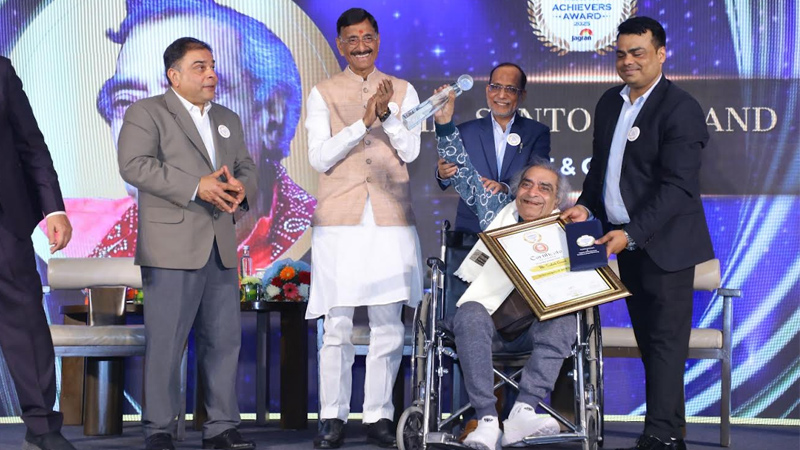
NEW DELHI: Hamdard Laboratories gathered a cross-section of India’s achievers in New Delhi on Friday, handing out the Hakeem Abdul Hameed Excellence Awards to figures who have left their mark across healthcare, education, sport, public service and the arts.
The ceremony, attended by minister of state for defence Sanjay Seth and senior officials from the ministry of Ayush, celebrated individuals whose work blends professional success with a sense of public purpose. It was as much a roll call of achievement as it was a reminder that influence is not measured only in profits or podiums, but in people reached and lives improved.
Among the headline awardees was Alakh Pandey, founder and chief executive of PhysicsWallah, recognised for turning affordable digital learning into a mass movement. On the sporting front, Arjuna Awardee and kabaddi player Sakshi Puniya was honoured for her contribution to the game and for pushing women’s participation onto bigger stages.
The cultural spotlight fell on veteran lyricist and poet Santosh Anand, whose songs have echoed across generations of Hindi cinema. At 97, Anand accepted the honour with characteristic humility, reflecting on a life shaped by perseverance and hope.
Healthcare honours spanned both modern and traditional systems. Manoj N. Nesari was recognised for strengthening Ayurveda’s place in national and global health frameworks. Padma shri Mohammed Abdul Waheed was honoured for his research-backed work in Unani medicine, while padma shri Mohsin Wali received recognition for his long-standing contribution to patient-centred care.
Education and social development also featured prominently. Padma shri Zahir Ishaq Kazi was honoured for decades of work in education, while former Meghalaya superintendent of Police T. C. Chacko was recognised for public service. Goonj founder Anshu Gupta received an award for his dignity-centred rural development initiatives, and the Hunar Shakti Foundation was honoured for empowering women and young girls through skill development.
The Lifetime Achievement Award went to former IAS officer Shailaja Chandra for her long career in public healthcare and governance, particularly in the traditional systems under Ayush.
Speaking at the event, Hamdard chairman Abdul Majeed said the awards were a tribute to those who combine excellence with empathy. “These awardees reflect Hakeem Sahib’s belief that healthcare, education and public service must ultimately serve humanity,” he said.
Minister Seth struck a forward-looking note, saying India’s young population gives the country a unique opportunity to become a global destination for learning, health and wellness by 2047.
The ceremony also featured the trailer launch of Unani Ki Kahaani, an upcoming documentary starring actor Jim Sarbh, set to premiere on Discovery on 11 February.
Instituted in memory of Unani scholar and educationist Hakeem Abdul Hameed, the awards have grown into a national platform that celebrates those building a more inclusive and resilient India. For one evening at least, the spotlight was not just on success, but on service with substance.







