News Headline
Digital Media India to discuss issues relating to challenges of digital technology to print media

NEW DELHI: Mediapersons from various parts of the world are converging on Chennai to attend the Digital Media India 2014 Conference next month.
The meet is being held on 5 and 6 February and has been organised by WAN-IFRA in Asia Pacific, Europe, Latin America and India.

It will address various issues relating to the growth of the internet ad, its impact on newspaper publishers, leveraging content and technology sharing experiences, social and mobile, digital revenues, models and metrics, content monetisation, audience engagement, and opportunities and threats: copyright issues, owning the data, digital brand protection.
The advent of internet has paved the way for newspaper publishers to develop into news publishers. The seismic shift brought in by the digital technology presented new opportunities.
Internet subscribers in India are expected to surpass 380 million by 2017. Though this is still a long-way to go to reach all 1.27 billion people but it is clear that the Indian Internet market is growing at a pace of 22 per cent year on year in unique visitor terms and is now at 80 million unique visitors as of the end of September 2013 (ComScore Media Metrix).
The total number of active wireless subscribers in India grew 5 per cent over the last year to reach 731.4 million in July 2013, while broadband subscription grew 4 per cent in the last one year to reach 15.24 million at the end of July 2013 (according to a Telecom Regulatory Authority of India report). Around 79 million mobile subscribers have access to the Internet on their mobile phone (as reported by IMRB I-Cube 2012 report).
If predictions are true that more digital advertising will be purchased through automated exchanges at a lower price point, then higher traffic volumes are required to maintain or increase online revenues. To increase traffic on websites, more content is required but with limited newsroom staff, who has to maintain the daily print rhythm too.
Indian language dailies are in the forefront to deliver a ‘digital-first strategy’ for building a digital business in the long term. Limited reach of the Internet, incompatibility with regional languages and fewer audiences that kept vernacular Indian dailies from making the most out of digital are now becoming a thing of the past.
Innovative use of technology, diversity and more pictorial in content, more tabloid in look and feel, breaking news, pushing up trending stories, add-on applications such as classifieds real estate, online shopping, travel etc., have given a greater emphasis of digital content. With page views in crores and unique visits in millions for the news sites of Indian language dailies, the success story has been marked.
‘Journalism in the age of digital surveillance’ is one of the discussions lined up for 5 February, and speakers will include Anant Goenka, head of New Media in the Indian Express Group; Hindustan Times Executive Rajesh Mahapatra, Adobe India Creative Consultant Rajesh Patil; America’s OPUBCO Communication Group (The Oklahoman) CIO and VP Audience Development Dan Barth, Norway’s Verdens Gang (VG) Chief of Staff Oyvind Naess, Israel’s RBG Media CEO Grig Davidovitz, and America’s Knight Foundation Journalism and Media Innovation Programme VP Michael Maness among others.
Naess will also present a case study on how they made use of the opportunities that came up in the digital revolution to their advantage and the challenges they are going to face in the future. Apart from the dramatic changes in readership, VG also sees the possibilities for non-linear TV and has made up plans to double the staff, video inventory, acquisition of programs, series and shows, to give a bigger push to live-TV. To get a closer focus on this development, they have established VG TV as a subsidiary company, effective from 1 January 2014.
Davidovitz will also address a workshop on content monetization strategies in a pre-meet on 4 February.
Mathrubhumi Deputy Editor N P Rajendran will present a case study on how Mathrubhumi ventured into online space and created a niche for itself. Rajendran is a journalist for the past 32 years and heads the online desk of Mathrubhumi since 2005.
Speakers from two other successful vernacular dailies from the North and East of India, Dainik Jagran and Anandabazar Patrika will share the stage with Rajendran thus providing a comprehensive picture on this topic.
There will be sessions on content monetization in a digital era; innovative uses of social media; creating blog communities; the use by Indian Express – which has received the Digital Media Award – of social media in news dissemination; Revenue models and tablet metrics; and whether advertising works best online, in print, or mobile or a combination.
Other participants will also include Times of India Group CIO Sachin Gupta, Jagran Prakashan MMI Online CEO Sukriti Gupta, India Today Digital CEO Salil Kumar, and ABP India IT and Technology Practice – Digital Head Amitabha Sinha.






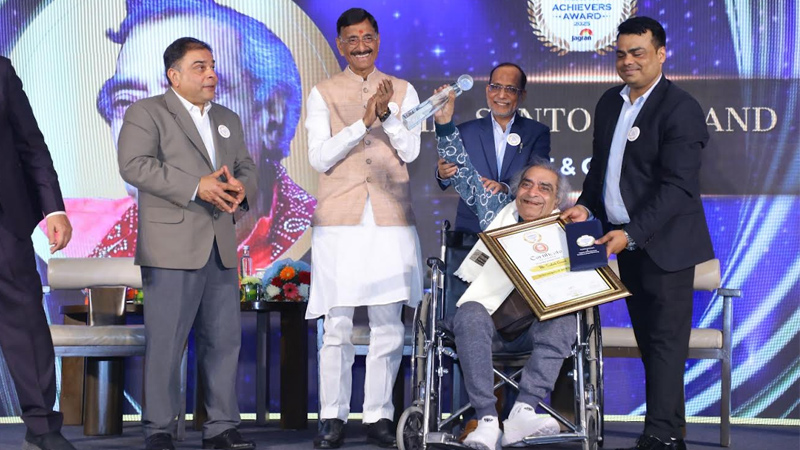
NEW DELHI: Hamdard Laboratories gathered a cross-section of India’s achievers in New Delhi on Friday, handing out the Hakeem Abdul Hameed Excellence Awards to figures who have left their mark across healthcare, education, sport, public service and the arts.
The ceremony, attended by minister of state for defence Sanjay Seth and senior officials from the ministry of Ayush, celebrated individuals whose work blends professional success with a sense of public purpose. It was as much a roll call of achievement as it was a reminder that influence is not measured only in profits or podiums, but in people reached and lives improved.
Among the headline awardees was Alakh Pandey, founder and chief executive of PhysicsWallah, recognised for turning affordable digital learning into a mass movement. On the sporting front, Arjuna Awardee and kabaddi player Sakshi Puniya was honoured for her contribution to the game and for pushing women’s participation onto bigger stages.
The cultural spotlight fell on veteran lyricist and poet Santosh Anand, whose songs have echoed across generations of Hindi cinema. At 97, Anand accepted the honour with characteristic humility, reflecting on a life shaped by perseverance and hope.
Healthcare honours spanned both modern and traditional systems. Manoj N. Nesari was recognised for strengthening Ayurveda’s place in national and global health frameworks. Padma shri Mohammed Abdul Waheed was honoured for his research-backed work in Unani medicine, while padma shri Mohsin Wali received recognition for his long-standing contribution to patient-centred care.
Education and social development also featured prominently. Padma shri Zahir Ishaq Kazi was honoured for decades of work in education, while former Meghalaya superintendent of Police T. C. Chacko was recognised for public service. Goonj founder Anshu Gupta received an award for his dignity-centred rural development initiatives, and the Hunar Shakti Foundation was honoured for empowering women and young girls through skill development.
The Lifetime Achievement Award went to former IAS officer Shailaja Chandra for her long career in public healthcare and governance, particularly in the traditional systems under Ayush.
Speaking at the event, Hamdard chairman Abdul Majeed said the awards were a tribute to those who combine excellence with empathy. “These awardees reflect Hakeem Sahib’s belief that healthcare, education and public service must ultimately serve humanity,” he said.
Minister Seth struck a forward-looking note, saying India’s young population gives the country a unique opportunity to become a global destination for learning, health and wellness by 2047.
The ceremony also featured the trailer launch of Unani Ki Kahaani, an upcoming documentary starring actor Jim Sarbh, set to premiere on Discovery on 11 February.
Instituted in memory of Unani scholar and educationist Hakeem Abdul Hameed, the awards have grown into a national platform that celebrates those building a more inclusive and resilient India. For one evening at least, the spotlight was not just on success, but on service with substance.