News Broadcasting
Digital convergence- Finally substance replaces hype: Report

MUMBAI: Despite a history of hype and limited actual success in the 1990s, digital convergence has now become a reality in several countries.
Deloitte’s Technology, Media and Telecommunications (TMT) industry practice has come out with a report.
The report states that companies who do not adapt to this trend face failure. The report is called Digital Convergence: The Trillion Dollar Challenge. It asserts that convergence will create new product categories and new markets. But, more importantly, in some cases it will change the structure of existing industries, shifting the balance of power and altering the basis of competition.

The report notes that convergence became a buzz word during the dot-com boom, but it didn’t deliver. The concept was based on future technologies, but with the expectation of immediate revenue, and companies didn’t stop to consider and understand what customers actually wanted and needed.
Now, the report says, a wealth of convergence products and services is emerging, from online music to Internet Protocol (IP) appliances. Each of these offerings satisfies a real customer need. And, most are already generating real revenue and earnings.
Some of the most significant converged services are expected to be from Voice over IP, with industry analysts forecasting $1 trillion in revenue by 2010. In addition, Internet Protocol (IP) appliances, which will include next-generation digital music players, home entertainment services, home video phones and enterprise collaboration services, will also generate sizeable revenue.
Other emerging products and services expected to generate substantial revenues by 2010 include enterprise collaboration software, IP television, mobile phone content, networked games and online music.Businesses that leverage digital convergence as a competitive advantage have the potential to benefit greatly.
However, convergence will also have the power to obliterate business models in a relatively short time frame, for example, the way increased bandwidth and advanced devices are challenging the long-term viability of wireline voice. The extent to which convergence adds or destroys value is a direct function of the extent to which a company anticipates, plans for and takes the lead in convergence.
Convergence is being driven by three underlying trends. The first is proliferation of digital data, which provides a common base for handling diverse types of information, numbers, words, music, pictures, video, and more, using the same devices, processing techniques, and media. The second is widespread connectivity, which helps bring diverse information together, and extends the value and capabilities of a device beyond its out-of-the-box functionality. The third is continuous advances in technology, from battery life to processor speed.






News Broadcasting
CNN-News18 to host Fury in the Gulf conclave on West Asia crisis
Three-hour summit to unpack geopolitical fallout and impact on India
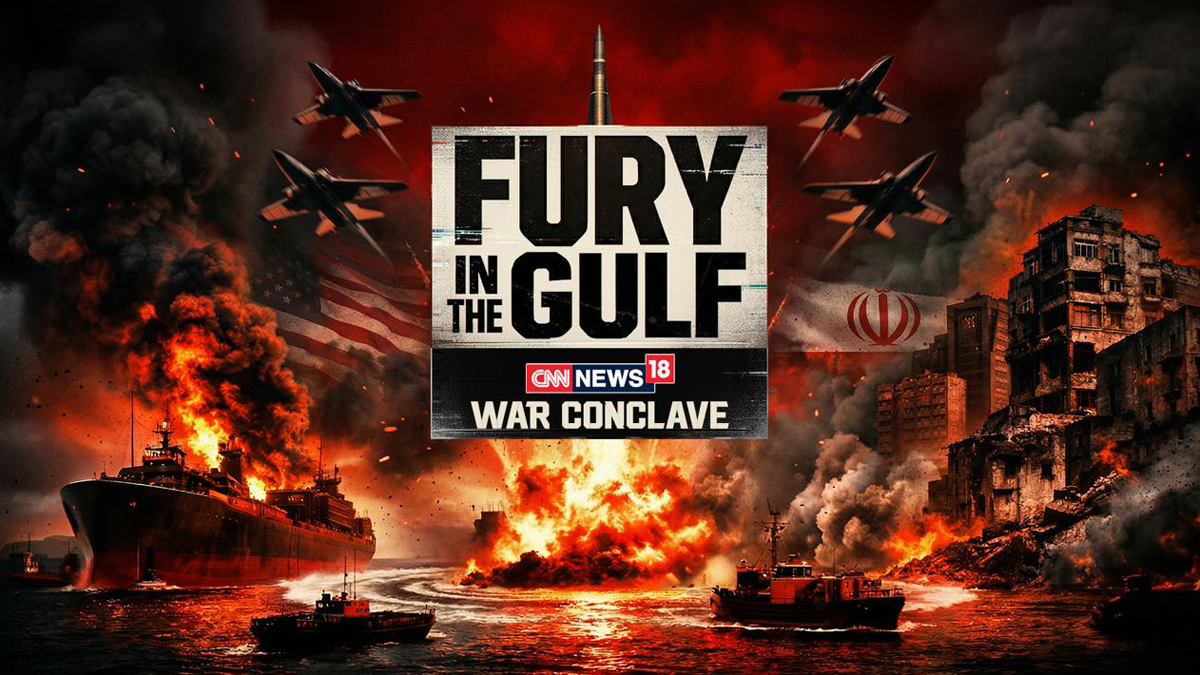
MUMBAI: CNN-News18 is set to host a special three-hour broadcast, Fury in the Gulf – War Conclave, on April 7, aiming to decode the escalating West Asia crisis and its far-reaching implications for India.
Scheduled from 4:00 PM to 7:00 PM, the conclave comes at a time when tensions between Iran and the United States are reshaping global geopolitics and triggering economic uncertainty. With India’s deep energy ties, trade links and large diaspora in the Gulf, the developments carry significant domestic relevance.
Built around the theme ‘Conflict, Consequences, and The Future,’ the programme will feature six curated sessions combining one-on-one interviews and panel discussions. The focus is to cut through the clutter and offer viewers a clearer understanding of the fast-evolving situation.
Key sessions include ‘Diplomacy in Times of War’ featuring Shashi Tharoor, and ‘World After the Iran Conflict’ with voices such as Ram Madhav, Reuven Azar, representatives from the European Union and the Iranian Deputy Envoy. Another session titled ‘Another Dunkirk?’ will bring together K. J. S. Dhillon and Jitin Prasada among others.
CNN-News18 editorial affairs director Rahul Shivshankar said, “In times of war, clarity becomes the most powerful tool. Fury in the Gulf – War Conclave brings together credible voices to address the questions and confusion that arise amid an overwhelming influx of information.”
He added that the initiative is aimed at delivering “facts, perspective, and insight” at a time when misinformation can easily cloud public understanding.
Echoing the sentiment, CNN-News18 CEO– English and business news Smriti Mehra said the conflict marks a defining global moment, with consequences that extend well beyond the region. She noted that the conclave seeks to present the crisis with “depth, nuance and responsibility” so audiences can better grasp its real-world impact.
As geopolitical tensions continue to dominate headlines, the conclave positions itself as an attempt to bring order to the noise, offering viewers a structured, insight-led look at a complex and rapidly shifting global situation.






