Hindi
Dharmendra passes away at 89: Hindi cinema loses its ever-smiling He-Man

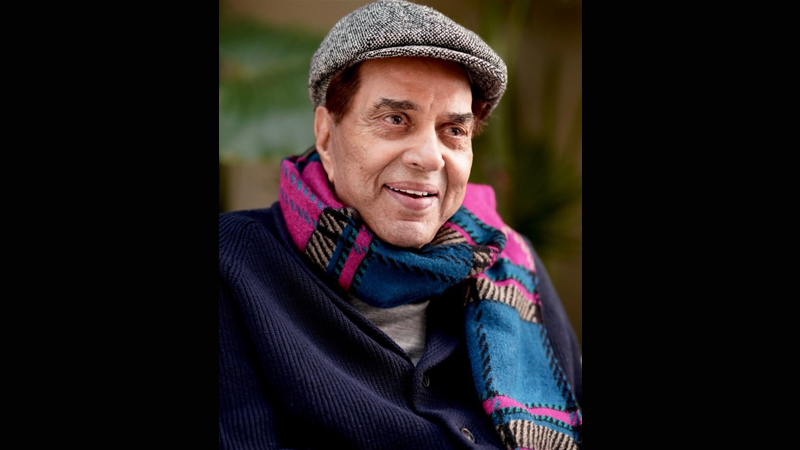
MUMBAI: Indian cinema today bid farewell to one of its most cherished icons as Dharmendra, the beloved “He-Man” of Hindi films and a star who defined an entire era of storytelling, passed away at 89. With his death, Hindi cinema loses not just a legendary actor but a symbol of unforced charm, gentleness and timeless stardom that spanned more than six decades.
Born Dharam Singh Deol in Punjab, Dharmendra rose from modest beginnings to become one of the biggest matinee idols of the 1960s and 70s. His journey was built not merely on his famously handsome screen presence, but on a disarming sincerity that made audiences believe every emotion he delivered — whether he played the romantic hero, the action star, the comic partner or the man of deep moral strength.
From Phool Aur Patthar and Anupama to the iconic Sholay, where his Veeru became one of the most enduring characters in the history of Indian cinema, Dharmendra’s work shaped generations of viewers. His pairing with Hema Malini created some of Hindi cinema’s most memorable moments, while his camaraderie with actors like Amitabh Bachchan redefined the commercial blockbuster.


But beyond the hits and the stardom, Dharmendra remained an industry favourite for one reason above all: his extraordinary warmth. Colleagues often spoke of his humility, his affection for unit hands, his ability to put newcomers at ease and his instinctive kindness that never dimmed despite his superstar status. He carried himself with an old-world grace that made him both larger than life and deeply relatable.
“Basanti, in kutton ke samne mat naachna”
became one of the most quoted dialogues in Hindi cinema history, capturing both Veeru’s protective passion and Dharmendra’s effortless screen command.
“Jo darr gaya, samjho marr gaya”
turned into a generational motto — a line still echoed in pop culture today.
In his later years, Dharmendra embraced the love of fans with the same open heart he brought to his roles, sharing memories, poetry and stories that offered glimpses into a life lived with passion and simplicity. His bond with his sons Sunny and Bobby Deol, and the pride he expressed in their journeys, became part of his public legacy.
As tributes pour in from across the country, the sense of loss is unmistakable. India has not just lost a film legend but a man who embodied the golden age of Hindi cinema — an era of sincerity, emotion and effortless heroism.

Dharmendra’s smile, his gentleness and his unmistakable screen magic will endure in the countless films he leaves behind. Today, as the curtains fall on a remarkable life, Hindi cinema bows its head to one of its brightest, kindest stars.







Hindi
Zee5 and Applause Entertainment team up for whodunnit ‘Everybody Loves Sohrab Handa’
Rajat Kapoor directs star-studded murder mystery streaming from 10 April.
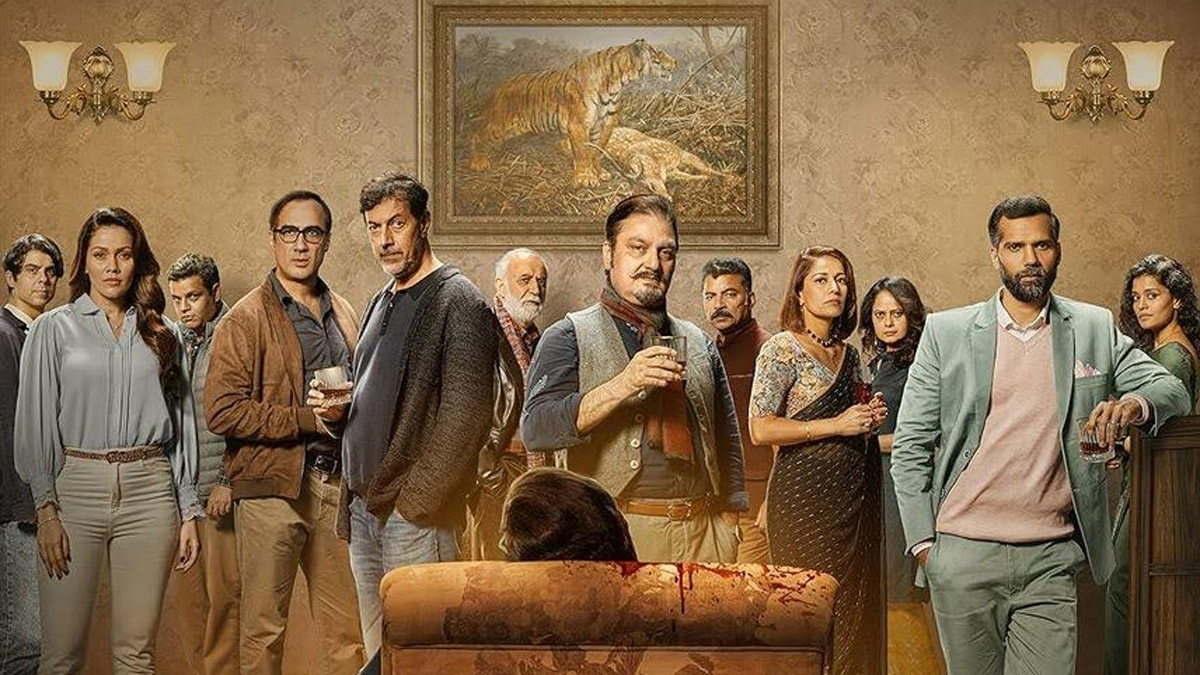
MUMBAI: Zee5 is serving up another killer collaboration and this time, the murder mystery comes with a generous side of dark humour and family dysfunction. The streaming platform has partnered with Applause Entertainment and Mithya Talkies to bring Everybody Loves Sohrab Handa, a fresh, twisted whodunnit written and directed by acclaimed filmmaker and actor Rajat Kapoor. The film will stream exclusively on Hindi Zee5 from 10 April.
The movie reimagines the classic murder mystery genre with a contemporary, darkly comic edge. It revolves around a group of friends and family who smile, drink, and celebrate together until the silence snaps and long-buried secrets spill out. The stellar ensemble cast includes Vinay Pathak, Ranvir Shorey, Waluscha De Sousa, Saurabh Shukla, Chandrachoor Rai, Neil Bhoopalam, Koel Purie, Palomi Ghosh, and Rajat Kapoor himself.
This latest offering continues the successful partnership between Zee5 and Applause Entertainment, which has previously delivered diverse hits such as Mithya, Bloody Brothers, and Jab Khuli Kitaab.
&TV Business Head of hindi Zee5 and chief channel officer Kaveri Das said, “Our collaboration with Applause Entertainment has consistently delivered distinct, high-impact storytelling. Everybody Loves Sohrab Handa is a natural progression, reinforcing our focus on genre-led content with a compelling whodunnit premise and a strong ensemble cast.”
Applause Entertainment business head for movies Sunil Chainani added, “This film adds yet another compelling layer to our slate with Rajat Kapoor’s unmistakable voice.”
Rajat Kapoor shared, “What interested me was not just the mechanics of a whodunnit, but the emotional violence that precedes physical violence. These are people who smile at each other, but there’s so much that is not said.”
The film promises razor-sharp writing, layered performances, and simmering tension, inviting viewers not just to solve the crime but to unravel the complex relationships at its heart.
If you love a good murder mystery served with wit and emotional depth, Everybody Loves Sohrab Handa looks set to be your next addictive watch. Mark your calendars, the whodunnit drops on Hindi Zee5 from 10 April.






