I&B Ministry
Delhi meet stresses need for stricter norms in cable industry

Requirement of new norms and standards for the cable industry and viewers was the main topic in a discussion on `The Cable Industry and the Viewers: Setting New Norms and Standards’ held in New Delhi on 30 April.
Organised by the Center for Advocacy and Research (CFAR), the meet aimed to highlight issues currently faced by cable TV viewers in India. Topics ranged from arbitrary increase and inconsistency in cable rates, dissatisfaction with the quality of transmission and the lack of transparency on the part of cable operators in providing information on matters related to cable operations.
I&B joint secretary Rakesh Mohan was present at the discussion where the cable industry was represented by Rakesh Dutta, Vikki Choudhary, Major Kohli, Roop Sharma and Anil Malhotra from INcable.

Mohan said the government had chosen an opportune moment to intervene, as an addressable system like CAS as it would provide levels playing field for the broadcasters, cable operators and viewers. He said the government would not inhibit the advancement of technological options like CAS as it has to take care of broadcasters, cable operators as well as viewers. He added that the subscriber would be kept informed in a transparent manner of the subscription rates for each individual “pay” channel.
He said that government would make CAS mandatory, and those who want to watch the free to air channels could do so through the old system but those who want to watch pay channels would have to buy the set top box.
The discussion was chaired by CFAR executive director Akhila Sivadas. Participants raised issues like citizens’ inability to get information from cable ops, the right to participate in the decision making process related to technological options and the need for regulation to ensure a level playing field to viewers vis-a-vis other stakeholders of the cable industry.
Malhotra, who represented INcable, said that it was the broadcastrs and not the cable operators who had increased the margins. Claiming that it was channels like Star that had increased its rates by 10,000 per cent in the past five years, he said that broadcasters were bundling many channels into the pay channel section, resulting in viewers being forced to pay for channels they don’t watch. He stressed on the formation of a regulatory body which was necessary to prevent vertical monopolization by broadcasters.
Rakesh Dutta, another cable operator, said that there was no regulatory body to monitor how much revenue was being generated by the channels, how advertisements were being paid and whether they were being made according to the RBI guidelines. Claiming that it was not the duty of the cable operators alone, he urged the print media to play a pro- active role in educating viewers. He maintained that CAS would enable genuine competition among broadcasters and provide viewers with better content and maximum retail price, reducing the number of pay channels and increasing the number of free to air channels, as revenues from advertisements would come down in pay channels.




I&B Ministry
Doordarshan, ICCR sign MoU to boost global reach of Indian culture
Pact taps TV, radio and digital platforms to take cultural content worldwide
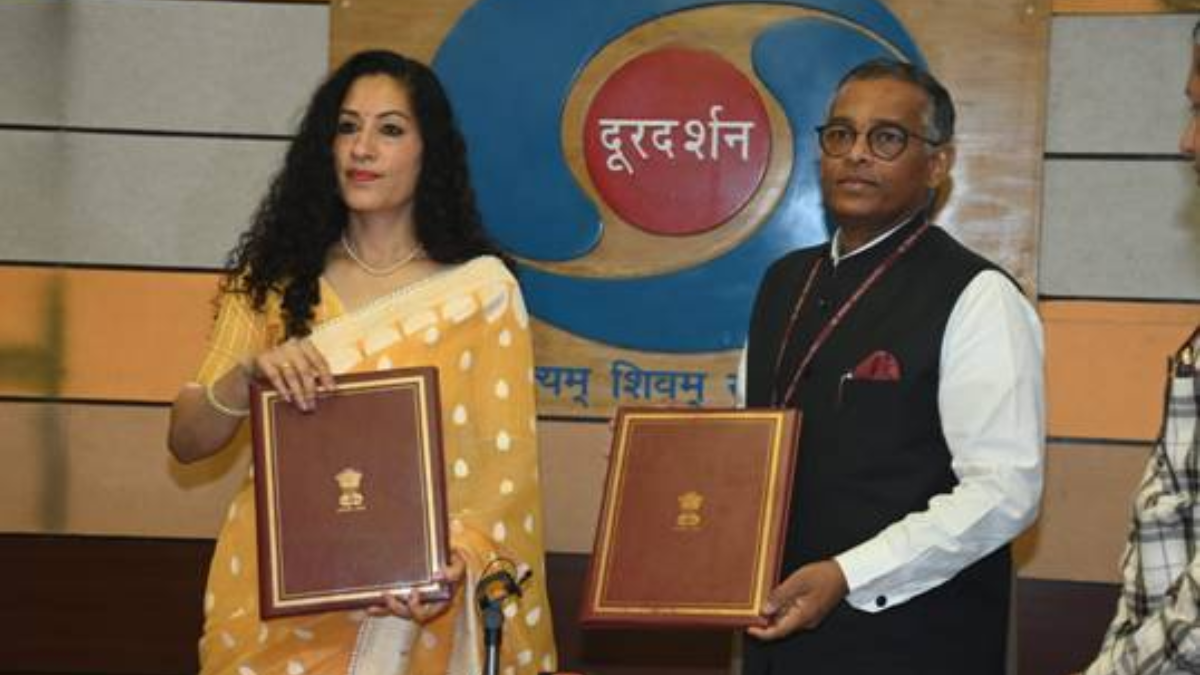
NEW DELHI: In a move aimed at taking India’s cultural story further across borders, Doordarshan under Prasar Bharati has signed a memorandum of understanding with the Indian Council for Cultural Relations to expand the global reach of Indian cultural content.
The agreement, signed on April 7 at Doordarshan Bhawan, brings together the content strength of ICCR and the wide broadcast network of Doordarshan, spanning television, radio and digital platforms.
Under the partnership, ICCR will provide a steady stream of cultural programming, including performances and events organised by Indian missions abroad such as embassies, consulates and cultural centres. Doordarshan will handle production, coverage and distribution, ensuring that these programmes find audiences not just in India but across the world.
The collaboration also opens the door for recorded cultural content from overseas missions to be aired across multiple platforms, including OTT and social media, making Indian art, music and heritage more accessible to global viewers.
A notable feature of the MoU is joint ownership of content rights in perpetuity, including digital rights. This allows both organisations to archive and reuse material over time, building a long-term cultural repository while maximising reach. Doordarshan will also support pre-event promotion and cross-platform visibility to drive engagement.
Speaking at the signing, Doordarshan director general K. Satish Nambudiripad and Indian Council for Cultural Relations director general K. Nandini Singla highlighted the potential of the partnership to strengthen India’s cultural diplomacy through modern media channels.
The agreement, initially valid for three years, also allows Doordarshan to explore monetisation opportunities from the content generated, adding a commercial layer to cultural broadcasting.
As India looks to blend tradition with technology, this partnership signals a clear intent to make its cultural voice not just heard, but seen and streamed across the globe.







