News Broadcasting
Delhi high court rules Republic TV cannot use ‘News Hour’

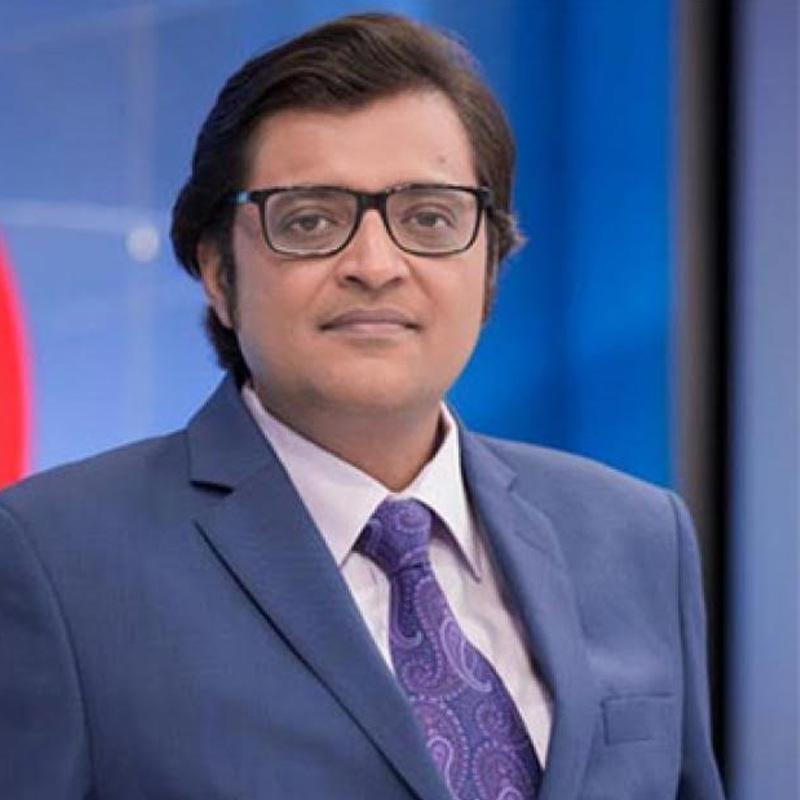
New Delhi: The fight for who holds the rights to the words ‘News Hour’ and ‘nation wants to know’ between Benett Coleman & Co’s Times Now and ARG Media Outlier’s Republic TV has been on for a very long time. Earlier, BCCL had moved the high court seeking a permanent injunction against Arnab Goswami's ARG Media Outlier from using the abovementioned branding or any other derivatives or combinations of the same.
On Friday, the case moved forward. The Delhi high court granted interim relief to Times Now while restraining Republic TV from using the trademark ‘News Hour’ or any other mark that may be deceptively similar to it.
The single-judge bench of justice Jayant Nath however did not grant any relief to Times Now regarding the use of the catchphrase ‘The nation wants to know’, informing the plaintiff that a detailed examination of the issue is required.

The court found no merit in the defendant's argument against distinctiveness of the2014 registered trademark ‘News Hour" which was prima facie in use since 2006.
As such, the defendant's use of prefix or suffix against the registered mark would also be viewed as being deceptively similar and the plaintiff would be entitled to relief in this regard. Observing the same, the court granted an interim injunction against the use of "News Hour" or anything deceptively similar to it.
The second trademark in dispute is not a registered mark and is a tagline that both parties stake claim to giving rise to the question of whether the defendant was indulging in passing off. While the plaintiff claimed proprietary right, the defendant said that the tagline was never associated with the plaintiff but always with Goswami.
The court, however, opined that this issue needs further examination of documents adduced by both sides and can be done when the parties lay their evidence. The court said, "The date of use of the tagline NWTK can only be decided appropriately after the parties have laid their evidence."
"In these facts and circumstances, prima facie it is not possible, at this stage without leading of evidence, to come to a conclusion that the defendants seek to mislead the consumers of the news channel or that the action of the defendants in using the said tagline would cause damage to the plaintiff as claimed," it added.
The dispute between the Times Group and Republic Media dates back to 2016 when Arnab Goswami (then anchor and editor) exited Times Now to set up his own venture ARG Outlier Media that owns Republic Network. Times Now started airing News Hour in 2006 and the show emerged as one of the flagship programs of the channel with Goswami leading it.
The trademark, according to reports, ‘News Hour’ was registered by the Times Group under Classes 16, 35 and 38 in 2014 and the mark itself has been in use since 2006. Therefore, the plaintiff claimed statutory right over this trademark.
As for the phrase 'nation wants to know', Times Group claimed that the tagline was a product of the efforts of the editorial and marketing team' during the creative efforts undertaken for and on their behalf.
The tagline was to be used during debates and discussions conducted during the primetime program News Hour, which was anchored by Arnab Goswami up until his acrimonious exit from Times Now.
The plaintiff has also alleged that Goswami took "undue advantage" of the popularity of the program he anchored at Times Now. Despite his employment agreement with Times Group vesting all rights to intellectual property exclusively with the plaintiff company, Goswami proceeded to use the disputed marks, the Times Group averred.
Republic countered the claim saying that viewers of the two news channels are “informed and literate” and cannot confuse the programmes aired on the two channels especially since the animosity between the two is a matter of public knowledge.
The defendant mentioned that the Times Group initiated the present proceedings "in the form of vendetta litigation" merely with the intention to "attempt to harass and arm twist."
Republic has argued that the words ‘News Hour’ are generic, widely used and as such Times Group cannot claim a proprietary right on the same. In fact, it has even questioned the granting of trademark in favour of plaintiff terming the same as erroneous on the grounds that the term lacks distinctiveness and ought not have been granted as a trademark.
After listening to both parties, the court granted partial relief, in the form of an interim injunction against the use of 'News Hour' while allowing Republic TV to keep using 'nation wants to know' pending further investigation of documents.





News Broadcasting
CNN-News18 to host Fury in the Gulf conclave on West Asia crisis
Three-hour summit to unpack geopolitical fallout and impact on India
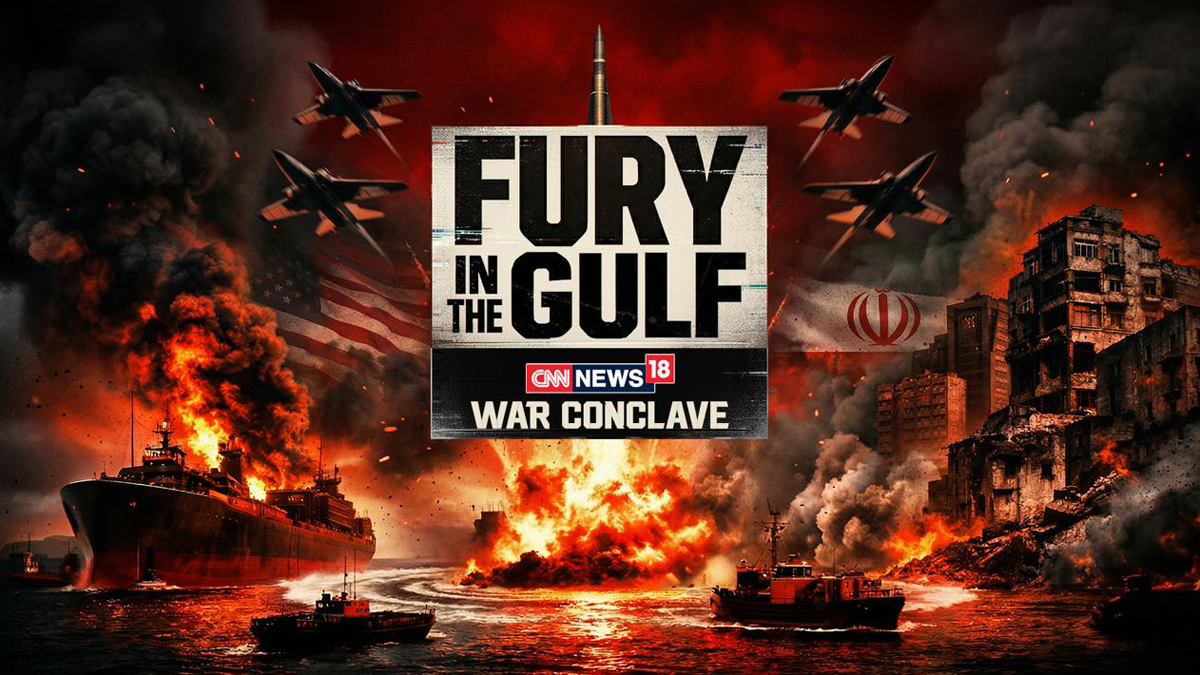
MUMBAI: CNN-News18 is set to host a special three-hour broadcast, Fury in the Gulf – War Conclave, on April 7, aiming to decode the escalating West Asia crisis and its far-reaching implications for India.
Scheduled from 4:00 PM to 7:00 PM, the conclave comes at a time when tensions between Iran and the United States are reshaping global geopolitics and triggering economic uncertainty. With India’s deep energy ties, trade links and large diaspora in the Gulf, the developments carry significant domestic relevance.
Built around the theme ‘Conflict, Consequences, and The Future,’ the programme will feature six curated sessions combining one-on-one interviews and panel discussions. The focus is to cut through the clutter and offer viewers a clearer understanding of the fast-evolving situation.
Key sessions include ‘Diplomacy in Times of War’ featuring Shashi Tharoor, and ‘World After the Iran Conflict’ with voices such as Ram Madhav, Reuven Azar, representatives from the European Union and the Iranian Deputy Envoy. Another session titled ‘Another Dunkirk?’ will bring together K. J. S. Dhillon and Jitin Prasada among others.
CNN-News18 editorial affairs director Rahul Shivshankar said, “In times of war, clarity becomes the most powerful tool. Fury in the Gulf – War Conclave brings together credible voices to address the questions and confusion that arise amid an overwhelming influx of information.”
He added that the initiative is aimed at delivering “facts, perspective, and insight” at a time when misinformation can easily cloud public understanding.
Echoing the sentiment, CNN-News18 CEO– English and business news Smriti Mehra said the conflict marks a defining global moment, with consequences that extend well beyond the region. She noted that the conclave seeks to present the crisis with “depth, nuance and responsibility” so audiences can better grasp its real-world impact.
As geopolitical tensions continue to dominate headlines, the conclave positions itself as an attempt to bring order to the noise, offering viewers a structured, insight-led look at a complex and rapidly shifting global situation.






