Hindi
Delhi can be a gateway to north India for filmmaking: Dr Kiran Walia

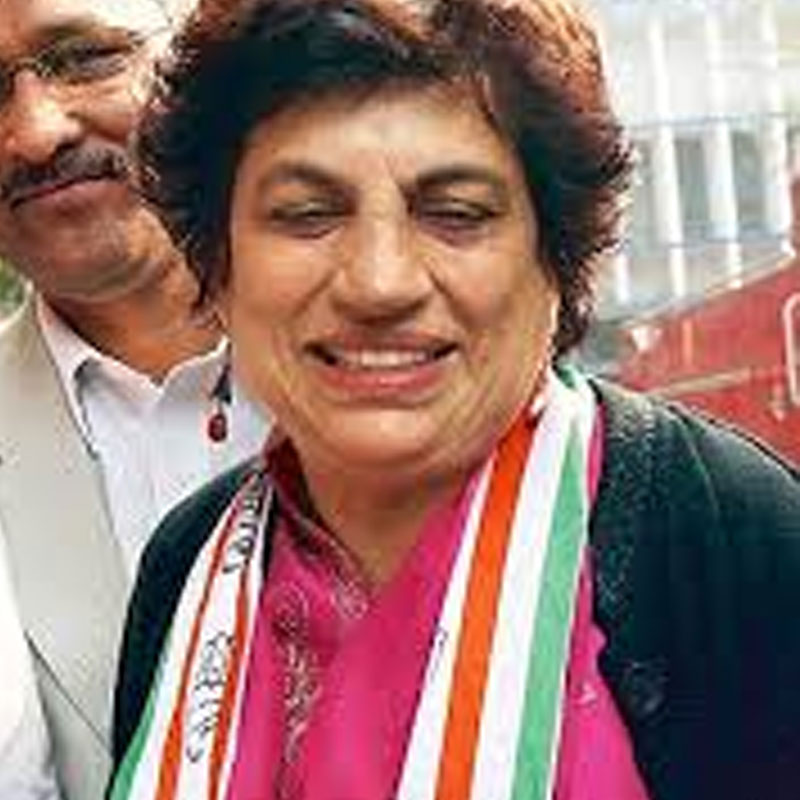
NEW DELHI: Delhi has the potential of becoming the film city for north and north-east India.
Delhi Women and Child Development and Languages Minister Dr Kiran Walia said the Delhi government had already worked to make Delhi the cultural hub of the country and would be eager to help in turning the city into a film hub if concrete suggestions were made by anyone.
Inaugurating a two-day meet on ‘Is India’s next film city?‘ as part of the 12th Osian’s Cinefan Festival for Asian and Arab Cinema, she said Delhi can become a film production centre as a gateway to north and north-east India.

She said that things could be worked out if any party came forward for this purpose, adding that Chief Minister Sheila Dikshit had asked her to convey this sentiment.
Delhi Tourism is also close to working out a policy whereby it will facilitate film shooting in the national capital territory region. Delhi Tourism and Transport Development Corporation Managing Director G G Saxena said a booklet would be issued soon about the facilities that can be offered to filmmakers.
Earlier, Osian’s chairman Neville Tuli announced that his group was setting up a museum which will house material relating to the arts, Osianama, in Delhi as its contribution towards helping Delhi grow as a major hub of cultural activities. He said cinema can play a complimentary role in this endeavour.
He said it was unfortunate that filmmakers never left the infrastructures they built for their films for others to use, otherwise Delhi would have had enough infrastructure by now.
He was categorical that it was wrong to depend on the government for everything as it had no role in a private endeavour. Even monuments where filmmakers decide to shoot their films should be given on payment.
Delhi can embrace cinema in a more systematic way, and there has to be a ‘jugalbandi’ (collaboration) between the government and the private sector.
Bobby Bedi said it was unfortunate that cinema’s role had never been seen as culture. He said this country is held together by cricket and cinema, apart from language – English or Hindi. Thus cinema plays a major national role.
There is, therefore, a strong case for establishing cinema in north India as a gateway to the north and the north-east.
He said it was a cakewalk to shoot films in Delhi as compared to Mumbai, and so it was for the Information and Broadcasting Ministry to approve this. And there were ample places available in the NCR outside the main city for developing a film city.
However, eminent filmmaker Shekhar Kapur did not feel that Delhi could be a film hub because all the decision makers were in Mumbai and all the talent moved out of Delhi to Mumbai. He said that there was need to open more institutions to train people in filmmaking if Delhi was to become a hub, adding that he regretted that the talent from the National School of Drama did not stay in the capital. He also said that most of the decision makers – the producers – were in Mumbai.
Creative people needed creative environments and could not flourish in a bureaucratic city.
Sudhir Tandon of Osian’s who is coordinating the two-day meet said the aim of Osian’s was to start a debate on the subject.
Meanwhile, the Government is close to drawing up a plan for single-window clearance system for those wanting to shoot in the country.
Eminent filmmaker Bobby Bedi said the Information and Broadcasting Ministry had been working on this for several months and was very close to finalising the details of the policy.




Hindi
Zee5 and Applause Entertainment team up for whodunnit ‘Everybody Loves Sohrab Handa’
Rajat Kapoor directs star-studded murder mystery streaming from 10 April.
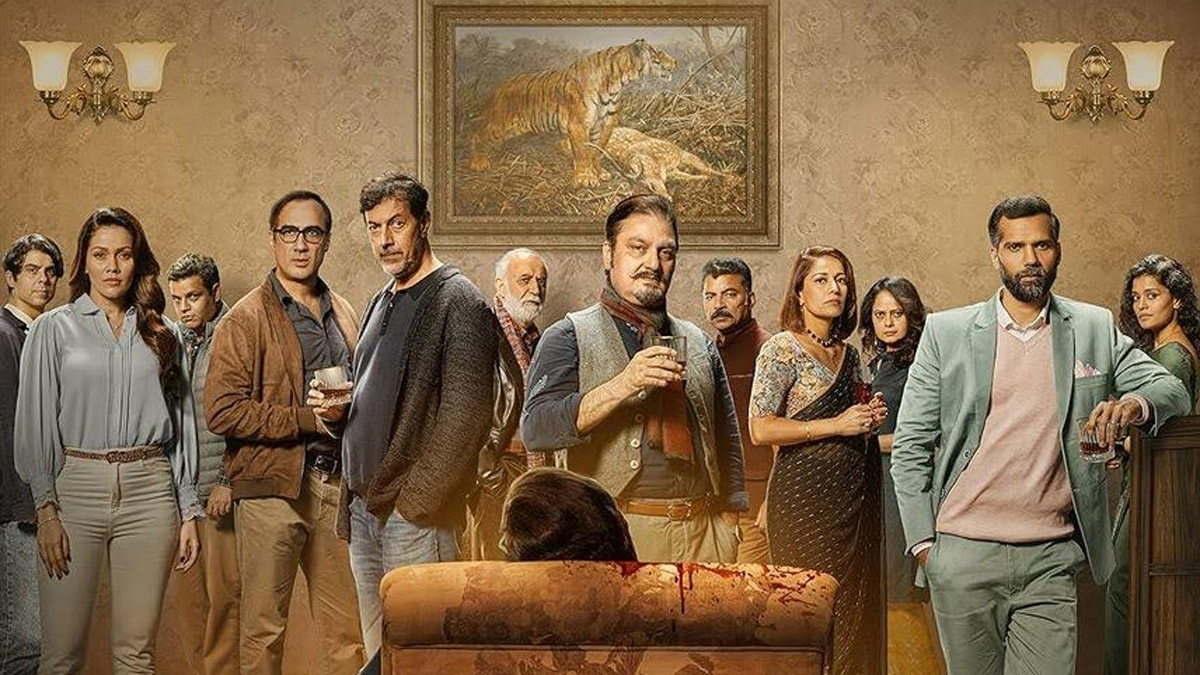
MUMBAI: Zee5 is serving up another killer collaboration and this time, the murder mystery comes with a generous side of dark humour and family dysfunction. The streaming platform has partnered with Applause Entertainment and Mithya Talkies to bring Everybody Loves Sohrab Handa, a fresh, twisted whodunnit written and directed by acclaimed filmmaker and actor Rajat Kapoor. The film will stream exclusively on Hindi Zee5 from 10 April.
The movie reimagines the classic murder mystery genre with a contemporary, darkly comic edge. It revolves around a group of friends and family who smile, drink, and celebrate together until the silence snaps and long-buried secrets spill out. The stellar ensemble cast includes Vinay Pathak, Ranvir Shorey, Waluscha De Sousa, Saurabh Shukla, Chandrachoor Rai, Neil Bhoopalam, Koel Purie, Palomi Ghosh, and Rajat Kapoor himself.
This latest offering continues the successful partnership between Zee5 and Applause Entertainment, which has previously delivered diverse hits such as Mithya, Bloody Brothers, and Jab Khuli Kitaab.
&TV Business Head of hindi Zee5 and chief channel officer Kaveri Das said, “Our collaboration with Applause Entertainment has consistently delivered distinct, high-impact storytelling. Everybody Loves Sohrab Handa is a natural progression, reinforcing our focus on genre-led content with a compelling whodunnit premise and a strong ensemble cast.”
Applause Entertainment business head for movies Sunil Chainani added, “This film adds yet another compelling layer to our slate with Rajat Kapoor’s unmistakable voice.”
Rajat Kapoor shared, “What interested me was not just the mechanics of a whodunnit, but the emotional violence that precedes physical violence. These are people who smile at each other, but there’s so much that is not said.”
The film promises razor-sharp writing, layered performances, and simmering tension, inviting viewers not just to solve the crime but to unravel the complex relationships at its heart.
If you love a good murder mystery served with wit and emotional depth, Everybody Loves Sohrab Handa looks set to be your next addictive watch. Mark your calendars, the whodunnit drops on Hindi Zee5 from 10 April.







