News Broadcasting
DD to upgrade digital broadcast infrastructure with Scopus

MUMBAI: Scopus Network Technologies which supplied digital platforms to FIFAs 2002 World Cup has announced that national broadcaster Doordarshan, has once again selected Scopus’ digital broadcast platforms to further upgrade its digital broadcast infrastructure.
An official release informs that Scopus digital broadcast platforms are being used to expand the existing nationwide terrestrial transmission system and will be used throughout the country for the re-distribution of TV signals from digital to analogue.
During the first half of the year, Scopus will supply over 1,000 professional Integrated Receiver Decoders (IRD-2800) to Doordarshan for operation at hundreds of reception sites throughout the country.

Doordarshans first order with Scopus and its strategic partner in India, Bharat Electronics Ltd. (BEL), a major manufacturer of professional and strategic electronic equipment under the Indian ministry of defence production, was in March 2002. Scopus and BEL are again working together to supply and integrate this new contract for Scopus professional IRDs.
The release states that Scopus digital platforms include special features to meet Doordarshans technical specifications. These include the integration of audio/video monitoring at the front panel and multiple satellite reception inputs. Doordarshans new platforms will be used for redistribution of television programmes on the nationwide terrestrial transmission network.
Scopus’ sales director Arie Vered was quoted as saying, “Doordarshans second contract with Scopus represents a milestone in our growth and shows that our strategic focus on India is correct. Scopus is proud that meeting their specific technical needs as well as their stringent delivery schedule was what set us apart from the competition. We are moving forward with our plans in India to provide top quality, cost-effective platforms.”
The release informs that Scopus Network Technologies provides MPEG-2 and DVB video distribution architecture that enable professional broadcasters to make a quick and smooth transition to the digital age. Based on over 20 years of extensive research and expertise in digital compression algorithm development, Scopus solutions provide superior flexibility at the highest quality and cost-performance.






News Broadcasting
WITT Summit 2026 concludes in New Delhi
Babar Azam’s comical diving attempt goes viral as league introduces anti-dew measures.
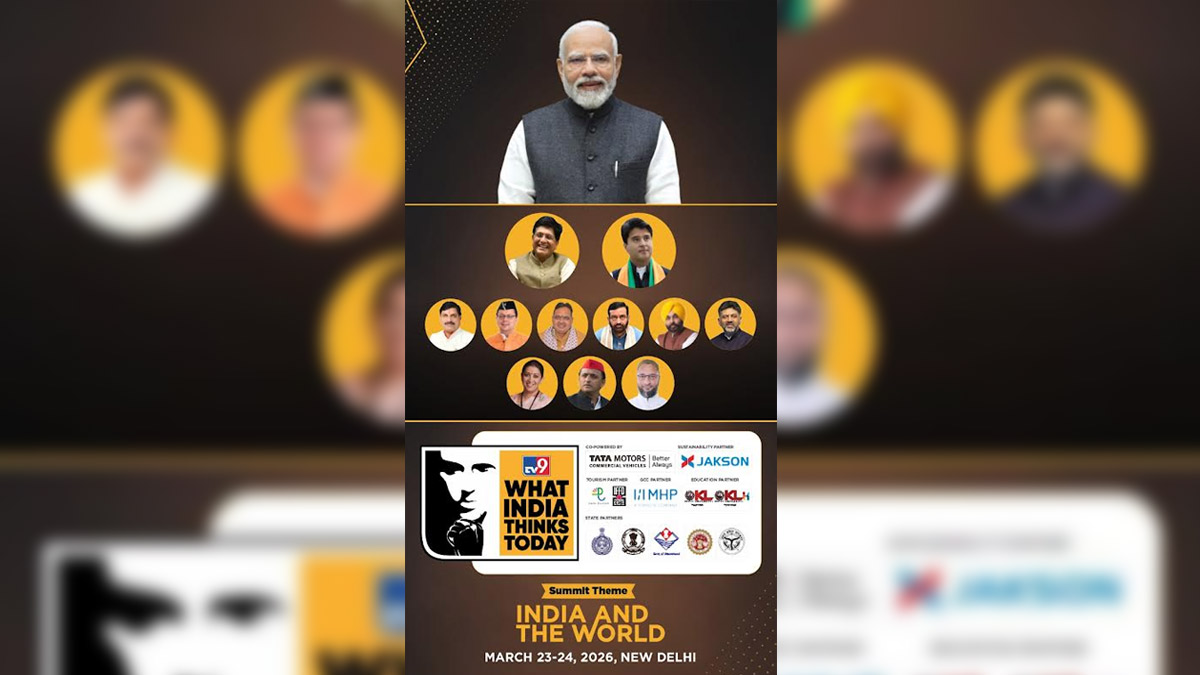
MUMBAI: The WITT Summit just wrapped up with enough big ideas to fill a policy playbook because when India’s leaders, thinkers and icons gather under one roof, even the conversations hit sixes. The eighth edition of TV9 Network’s flagship What India Thinks Today (WITT) Summit 2026 concluded on Saturday after two days of dynamic discussions at its New Delhi venue. India’s largest multi-domain public policy and culture summit brought together political leaders, policymakers, sports icons, artists and technology innovators to examine the forces shaping contemporary India and its global standing.
Prime minister Narendra Modi delivered the keynote address on the theme “India and the World” for the third consecutive year. In a wide-ranging speech, he addressed the ongoing conflict in West Asia, calling for restraint and compassion while highlighting India’s continued development trajectory despite global turmoil.
The summit featured candid conversations with state leaders. Telangana Chief Minister A. Revanth Reddy articulated a people-first governance model and contrasted it with other development approaches. Madhya Pradesh Chief Minister Mohan Yadav declared that Left-wing extremism had been effectively eliminated in his state and highlighted preparations for the upcoming Kumbh Mela. Punjab Chief Minister Bhagwant Mann defended his government’s record, citing the closure of 19 toll plazas and creation of the Sadak Suraksha Force. Karnataka Deputy Chief Minister D.K. Shivakumar expressed confidence in Congress prospects in Assam and addressed recent allegations against him.
On geopolitics and national security, Union Minister Jyotiraditya Scindia outlined India’s ambition to become a builder of trusted digital infrastructure for the world, citing the rapid 5G rollout and village-level 4G connectivity.
Cricket received significant attention. Former India captain Sourav Ganguly praised player freedom and trust as hallmarks of great leadership and named MS Dhoni as the greatest captain due to his World Cup successes. India women’s team bowling coach Aavishkar Salvi credited the BCCI and Women’s Premier League for building a pipeline of world-class talent behind the team’s recent ODI World Cup triumph.
The summit also hosted the inaugural AI² Awards 2026, celebrating the convergence of human creativity and machine intelligence in storytelling and content creation. Poet and kathavachak Kumar Vishwas delivered a nuanced take on India’s concept of Dharma and criticised the recent arrest of an 80-year-old Shankaracharya. Veteran lyricist Sameer Anjaan and storyteller Neelesh Misra reflected on changing music trends and artistic responsibility in the wake of a recent controversy involving Nora Fatehi.
In a country where conversations often run as deep as the Ganges, the WITT Summit proved once again that when leaders, thinkers and storytellers come together, the real winner is public discourse lively, layered and refreshingly unafraid to tackle the big questions shaping India’s tomorrow.








