News Broadcasting
DD to offer TV service in cars

NEW DELHI: Do you want to watch a cricket match on television while stretched out on the backseat of your car and receive live news and entertainment programmes as well? If national broadcaster Doordarshan has its way, the days that you would watch television while on the move are not far away.
DD is in talks with a host of Japanese companies to bring to India a technology that would help receive television signals on automobiles. The present systems in use does not allow reception of signals on moving vehicles.
“The move by Doordarshan to start the direct to home (DTH) and digital terrestrial transmission (DTT) has helped to start this service. We are looking at starting this service in the metros,” director general of Doordarshan SY Qureshi said, while addressing a news conference here today.

A consumer willing to avail this service needs to invest about Rs 10, 000 to buy a receiver and an antenna, which would help him to receive digital signals. The antenna would be used to receive the signal, while the receiver or set top box would decode the signal and transmit it to television sets installed in the automobiles.
“We have come to know that some Japanese companies have the technology for this. We are starting negotiations with them to bring such a receiver to India,” Qureshi said.
When asked about the market for such a service, he said, “We know that there is a niche market for such a service. But it would be an additional service that we would be able to provide them.”
DD would be targeting car owners, bus services companies and railways as possible targets for such a service.
Qureshi also said that DD is finalising its business plan for the DTH service it has announced recently. “The final plans of the Rs 5-billion DTH service is under preparation. We want to cover the entire country with this service,” he said.
Qureshi also said that Doordarshan is finalising its business plan for the DTH service it has announce recently. “The final plans of the Rs 500-crore (Rs 5 billion) DTH service is under preparation. We want to cover the entire country with this service,” he said. According to him, the DTH service by DD would have about 20 channels, 10 Doordarshan and 10 free to air private channels in its bouquet to begin with. “But we intend to expand this to 40 channels in the long run,” he said, adding that one of the reasons to opt for the DTH service was to free its distribution from cable operators.




News Broadcasting
CNN-News18 to host Fury in the Gulf conclave on West Asia crisis
Three-hour summit to unpack geopolitical fallout and impact on India
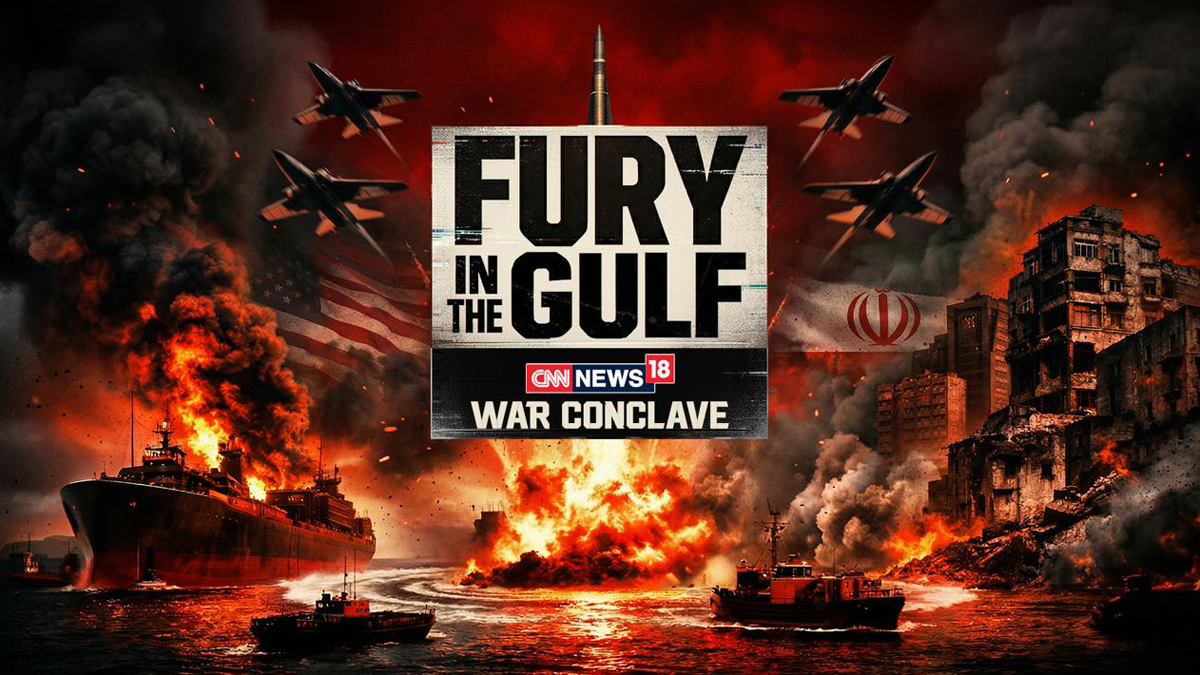
MUMBAI: CNN-News18 is set to host a special three-hour broadcast, Fury in the Gulf – War Conclave, on April 7, aiming to decode the escalating West Asia crisis and its far-reaching implications for India.
Scheduled from 4:00 PM to 7:00 PM, the conclave comes at a time when tensions between Iran and the United States are reshaping global geopolitics and triggering economic uncertainty. With India’s deep energy ties, trade links and large diaspora in the Gulf, the developments carry significant domestic relevance.
Built around the theme ‘Conflict, Consequences, and The Future,’ the programme will feature six curated sessions combining one-on-one interviews and panel discussions. The focus is to cut through the clutter and offer viewers a clearer understanding of the fast-evolving situation.
Key sessions include ‘Diplomacy in Times of War’ featuring Shashi Tharoor, and ‘World After the Iran Conflict’ with voices such as Ram Madhav, Reuven Azar, representatives from the European Union and the Iranian Deputy Envoy. Another session titled ‘Another Dunkirk?’ will bring together K. J. S. Dhillon and Jitin Prasada among others.
CNN-News18 editorial affairs director Rahul Shivshankar said, “In times of war, clarity becomes the most powerful tool. Fury in the Gulf – War Conclave brings together credible voices to address the questions and confusion that arise amid an overwhelming influx of information.”
He added that the initiative is aimed at delivering “facts, perspective, and insight” at a time when misinformation can easily cloud public understanding.
Echoing the sentiment, CNN-News18 CEO– English and business news Smriti Mehra said the conflict marks a defining global moment, with consequences that extend well beyond the region. She noted that the conclave seeks to present the crisis with “depth, nuance and responsibility” so audiences can better grasp its real-world impact.
As geopolitical tensions continue to dominate headlines, the conclave positions itself as an attempt to bring order to the noise, offering viewers a structured, insight-led look at a complex and rapidly shifting global situation.






