News Broadcasting
DD seeks I&B, IOA intervention in C’wealth Games telecast rights


NEW DELHI: Fazed by high cost of acquisition, the Indian pubcaster Doordarshan has written to the government and the Indian Olympics Association (IOA) seeking intervention, if needed, in a case relating to the telecast rights of the Commonwealth Games, 2006.
Confirming the development to Indiantelevision.com today, Prasar Bharati CEO KS Sarma said, “We have written to the sports and the information and broadcasting ministries and the IOA last week hoping some help would be forthcoming in the issue of Games telecast for which, too high a figure has been quoted.”
According to Sarma, though Prasar Bharati, which manages DD, is negotiating through the Asian Broadcasting Union (ABU), the management committee of the Commonwealth Games 2006, to be held in Australia, is “continuing to play tough.”

The issue also came up during a Board meeting of Prasar Bharati earlier this week where no solution could be offered.
The organisers of the 2006 C’wealth Games feel that since Delhi is hosting the Games in 2010, DD would fall in line. “It is this attitude of the Games’ organising committee that is irksome and we have refused to negotiate with an agent for this,” Sarma added.
Sarma is not only the chief executive of Prasar Bharati and the president of the Indian Broadcasting Foundation, but is also an important office-bearer of the multi-country apex body ABU, a powerful organisation of Asian broadcasters who wield considerable influence through their respective governments and fears of a blackout of the Commonwealth Games in Asia has been haunting the Games’ managers with ABU not willing to accept certain monetary terms.
It has been pointed out by Sarma that a financially beleaguered Prasar Bharati would find it difficult to cough up the demanded price – over $ 5,5000 – from the organisers of Melbourne 2006. Last time round, DD had paid $ 200,000 for the rights.
“We are a public service broadcaster, but on the other hand the government is threatening to slash financial aid too. Under such circumstances, we would need help from the government if we are to acquire the Games telecast rights for the Indian region,” Sarma counter-punched at criticism that DD ought to acquire the rights for the benefit of millions of Indians.
Sarma also feels that the potential of netting high advertising revenue seems remote in events like Commonwealth Games.
DD is the biggest broadcaster in India in terms of reach, covering over 90 per cent of the population through terrestrial and KU-band transmission, compared to 40-odd million of cable homes in the country.
TV viewership in rural areas, according to latest figures collated by DD’s in-house audience research, indicates was 69.9 per cent, while in urban areas it was 59 per cent. Amongst all TV channels in rural areas, the highest viewership was for DD National (44.1 per cent), followed by its regional services.
The Commonwealth Games has over a period of time unveiled new sponsors even as it confronts threats of a television blackout in Asia leading to a fall in revenue.
Games chairman Ron Walker has been quoted by international media as not being too concerned by suggestions that TV rights have shot up as much as 700 per cent than what was charged for the Manchester 2002 Games and which, could result in Indian and Asian broadcasters boycotting Melbourne 2006.
According to Walker, there was no rush to finalise negotiations. “We have put out a price and they’re all considering it, so they haven’t said no to us, they haven’t said yes to us,” ABC Radio in December had quoted Walker, who added, “Bear in mind that Delhi in India is hosting the 2010 Commonwealth Games and the transmission is vital to them.”
Melbourne 2006 has said that it would have no trouble selling broadcasting rights to Asia despite claims that the asking price was too high. Broadcasting rights have been negotiated so far with the Nine Network in Australia, and with companies in Canada and New Zealand.
The sponsors and partners that Melbourne 2006 has managed to rope in Include Telstra (Official Telecommunications Partner), Nestle Peters, national Visa, Australian airline Qantas, Konica Minolta, Hudson and Coates Hire.






News Broadcasting
CNN-News18 to host Fury in the Gulf conclave on West Asia crisis
Three-hour summit to unpack geopolitical fallout and impact on India
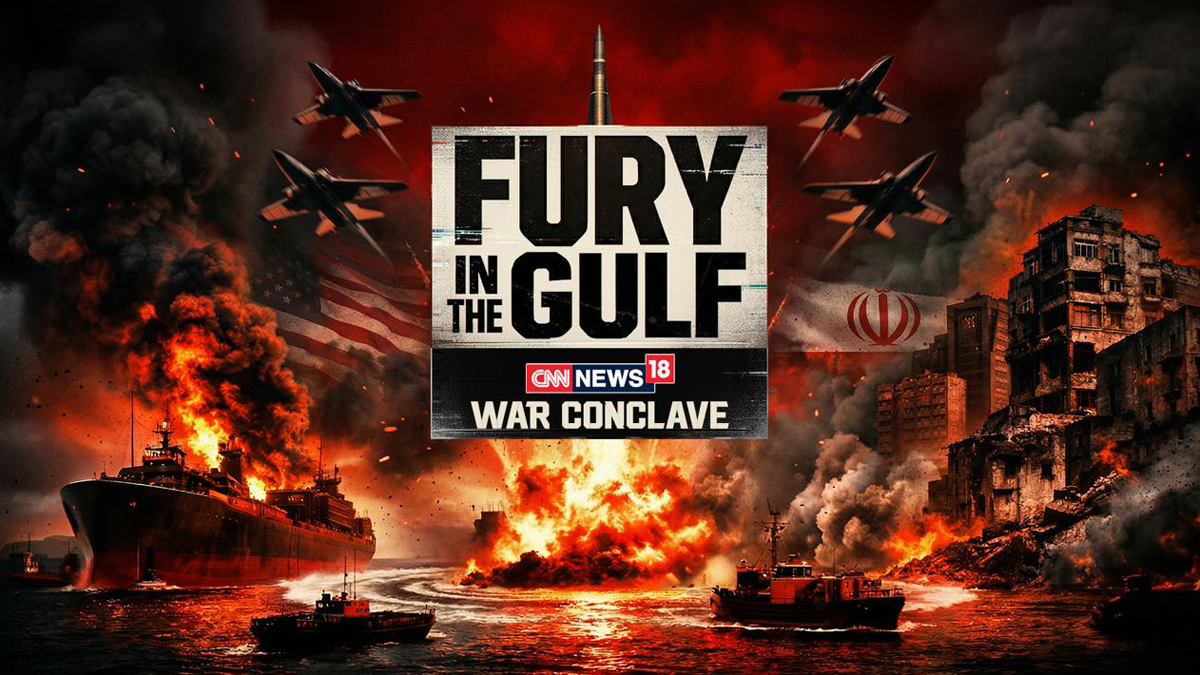
MUMBAI: CNN-News18 is set to host a special three-hour broadcast, Fury in the Gulf – War Conclave, on April 7, aiming to decode the escalating West Asia crisis and its far-reaching implications for India.
Scheduled from 4:00 PM to 7:00 PM, the conclave comes at a time when tensions between Iran and the United States are reshaping global geopolitics and triggering economic uncertainty. With India’s deep energy ties, trade links and large diaspora in the Gulf, the developments carry significant domestic relevance.
Built around the theme ‘Conflict, Consequences, and The Future,’ the programme will feature six curated sessions combining one-on-one interviews and panel discussions. The focus is to cut through the clutter and offer viewers a clearer understanding of the fast-evolving situation.
Key sessions include ‘Diplomacy in Times of War’ featuring Shashi Tharoor, and ‘World After the Iran Conflict’ with voices such as Ram Madhav, Reuven Azar, representatives from the European Union and the Iranian Deputy Envoy. Another session titled ‘Another Dunkirk?’ will bring together K. J. S. Dhillon and Jitin Prasada among others.
CNN-News18 editorial affairs director Rahul Shivshankar said, “In times of war, clarity becomes the most powerful tool. Fury in the Gulf – War Conclave brings together credible voices to address the questions and confusion that arise amid an overwhelming influx of information.”
He added that the initiative is aimed at delivering “facts, perspective, and insight” at a time when misinformation can easily cloud public understanding.
Echoing the sentiment, CNN-News18 CEO– English and business news Smriti Mehra said the conflict marks a defining global moment, with consequences that extend well beyond the region. She noted that the conclave seeks to present the crisis with “depth, nuance and responsibility” so audiences can better grasp its real-world impact.
As geopolitical tensions continue to dominate headlines, the conclave positions itself as an attempt to bring order to the noise, offering viewers a structured, insight-led look at a complex and rapidly shifting global situation.






