I&B Ministry
DD, AIR asked to focus on content than reach


NEW DELHI: The minister of state for information & broadcasting Rajyavardhan Rathore said that Doordarshan and AIR need to establish connect with the people not only geographically but also focus on the content and programmes.
Speaking at the 28th State Information Ministers Conference here today, he also touched upon the activities carried out by media units and training institutes under the ministry.
Rathore said gathering and dissemination of information was a continuous process and centre and states need to come together to create an ecosystem that enabled informed citizenry.

Rathore said collaboration between states and Centre was the bedrock for good governance, and there was a need for moving forward together as Team India in scripting the development of the nation. Information dissemination and the analysis of the feedback was a critical component in the whole gamut of communication landscape.
The minister urged the states to set up film facilitation units in states to ease out film shooting permissions as well as ensure seamless movement of their equipment. In this context, he said the ministry is in the process of setting up a central portal for all such related permissions and welcomed states to also collaborate in this platform as a part of ease of doing business initiative.






I&B Ministry
India tightens anti-piracy law, blocks sites and Telegram channels
New rules bring jail terms, fines and faster takedowns of illegal content
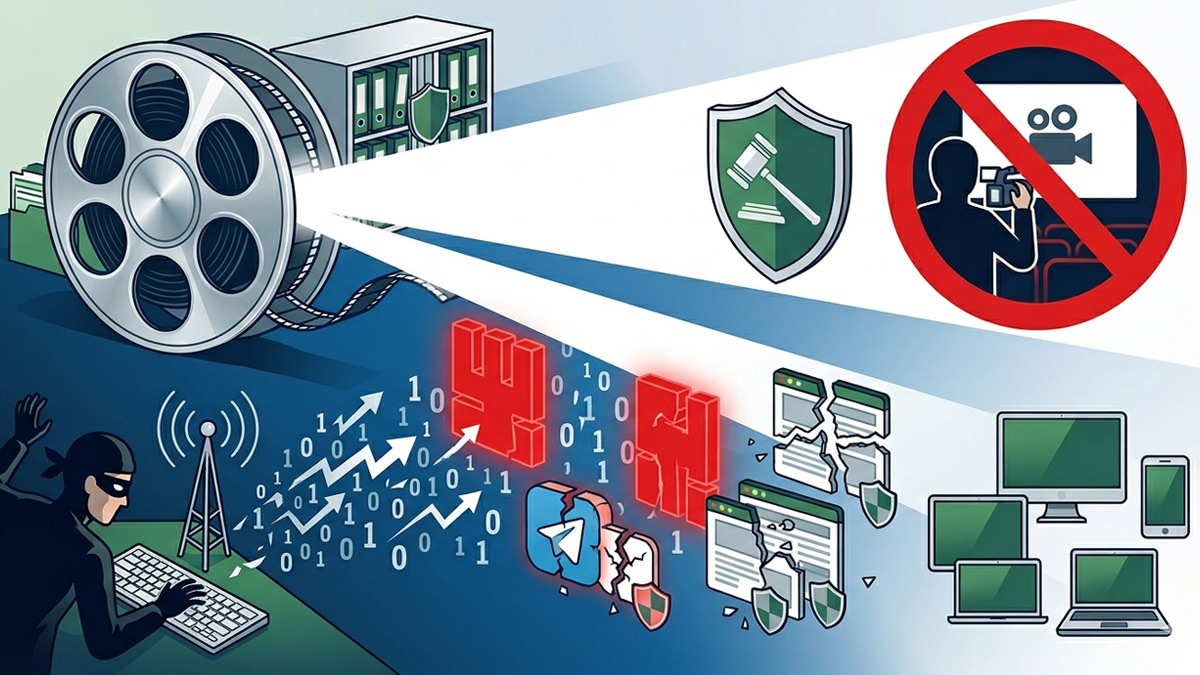
NEW DELHI: The Government of India has stepped up its fight against film piracy, invoking stricter provisions under the Cinematograph Amendment Act 2023 to crack down on unauthorised recording and distribution.
The law now imposes tougher penalties, including jail terms ranging from three months to three years and fines starting at Rs. 3 lakh, which can go up to 5 per cent of a film’s production cost. The provisions target both illegal recording in cinemas and unauthorised online transmission.
In a fresh enforcement push, authorities have notified the Telegram platform to act against piracy, leading to the identification of 3,142 channels allegedly distributing copyrighted content without permission. In parallel, access to around 800 piracy websites has been blocked through internet service providers.
The action has been taken under the Information Technology Act 2000, which empowers the government to direct intermediaries to remove unlawful content. The framework is further reinforced by the Information Technology Rules 2021, requiring platforms to act swiftly when notified of violations.
An institutional mechanism is also in place, allowing copyright holders and authorised representatives to file complaints through designated nodal officers. Once verified, these complaints trigger takedown notices to intermediaries for disabling access to infringing content.
The update was shared in Parliament by Government of India minister of state information and broadcasting l murugan in response to a query from Parimal Nathwani.
The government’s latest move signals a sharper, more coordinated approach to tackling piracy across both physical and digital channels. For the film industry, it is a step towards protecting revenues, while for viewers, it reinforces the shift towards legitimate content consumption.








