News Broadcasting
Day Three devoted to China

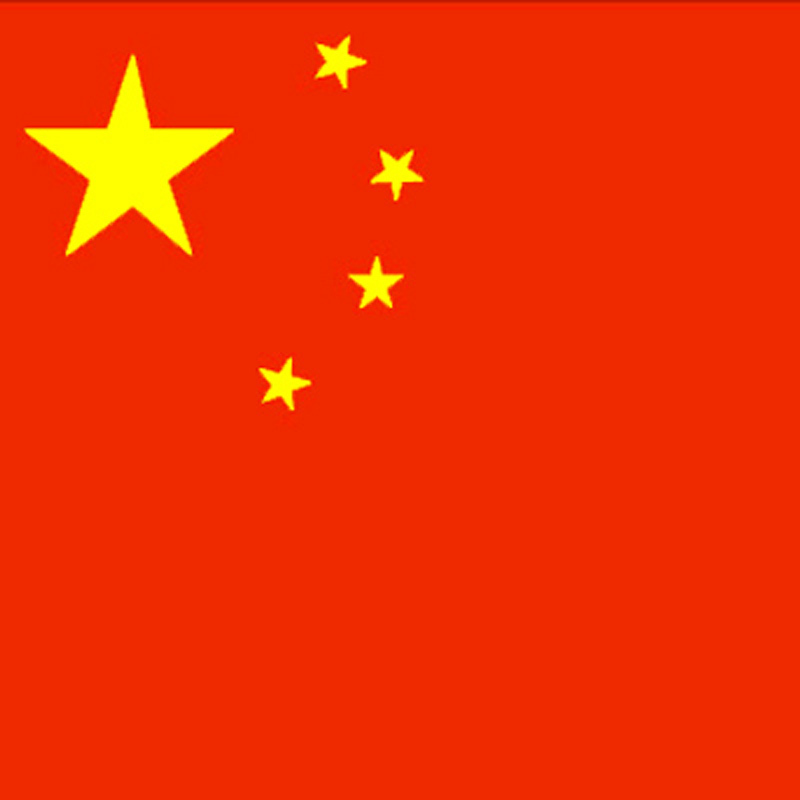
CANNES: The clouds lifted and the sun peeped out. But the drizzle continued for the first part of the day giving way to a good bright evening. The day labeled as China Day saw a couple of seminars around the worlds most populous nation. The first one was moderated by the dynamic Rowan Simmons, whose company CMM, is behind the huge Chinese presence at MipTV this year gave the audience a view to what the Chinese market is like. The Chinese delegation had some big names: the deputy director general of the foreign affairs department, SARFT Guizhen Zhou, the vice minister of Sarft Zhanfan Hu, and a host of businessman who head broadcasting and acquisition companies from the country.
The second one moderated by Variety China rep Arthur Jones, revealed a nation that is reluctant to allow media access, despite the pronouncements that it is keeping its mind open. MTV China boss LiYiFei, Encore Internationals Michelle Sie Whitten both discussed on how difficult it was. “But there are rewards for those willing to be patient,” said Sie Whitten. ‘There is no set strategy about what will work or not.” The panelists revealed how they have to go and apply for a fresh licence every year, how foreign satellite channels have to go through many clearances before being permitted to get through, how cable TV operators have to be constantly monitored.
Despite these difficulties on the ground, the Chinese put up an incredible display to all attending the market. A common Chinese pavilion had all the broadcasters and producers under one roof. Lunches, Chinese cultural performances – you had it all. China made its mark at MipTV. And the initiative was backed by the Chinese government.

As compared to China, India appears to be a much more advanced and developed television and film market. Yet its presence at MipTV was patchy to say the least. The few companies that took a stand were scattered all over, working like Lone Rangers. Be it a Eros or a Star TV or a Zee TV or a WEG. And the handful of Indian TV professionals and executives who went around did it almost solo.
Star India and Zee TV did at least one thing smart: both went for Indian themes for their booths with Zee TV taking up a much larger stand. The latter had Mehandi applications, a puppet show, Indian draperies and accoutremnets. The Star booth had a girl who made a necklace for visitors with the pendant having their name spelt out.
Many Indian participants insisted that coordinated activity would go a long way in Indian television making its impact on the television world. “But for this to happen, the Indian companies have to be confident about themselves and throw away their insecurities and presented an united front to the western world,” said one of the Indian participants.
The evening belonged to Afdesi the forum for Interactive TV producers. It held its second awards at the Hotel Majestic with the emerging as a big success in the words of Jean Dacie, an Afdesi representative. “More than 500 attendees from all around the world attended,” an Afdesi release said. Supported by MILIA, it received 90 programmes from 17 countries for the competition.
The winners are:
Best Concept: La TV card – l’innovation du marketing direct télévisuel – TV-Card (F)
Best creative ITV programme: Who Wants To Be A Millionaire iDTV quiz game – Sky/Celador (UK)
Best Information service: La Chaîne Météo – La Chaîne Météo (F)
Best Interactive Game or Entertainment service: Playin’Star
Visiware (F)
Best Enhanced TV service: Prise de pari par satellite (en hyperlien de la chaîne) Equidia) – TPS INTERACTIF (F)
Best Interactive Advertising service or campaign: Interactive Quiz Game – DIRECTV Latin America, (Latin America)
Best T-Commerce service: Rai Click / T-commerce – Rai Click (It)
Best Service by a network operator: A La Une – Canal Satellite (F)
Best Developer: Code de la Route – Visiware (F)
Best Publisher: Eurosport Interactive – Eurosport France (F)
Special Jury Award: TV-Card (F)
Selection Committee Special Prize: Spot the fish – Discovery Channel (UK)






News Broadcasting
WITT Summit 2026 concludes in New Delhi
Babar Azam’s comical diving attempt goes viral as league introduces anti-dew measures.
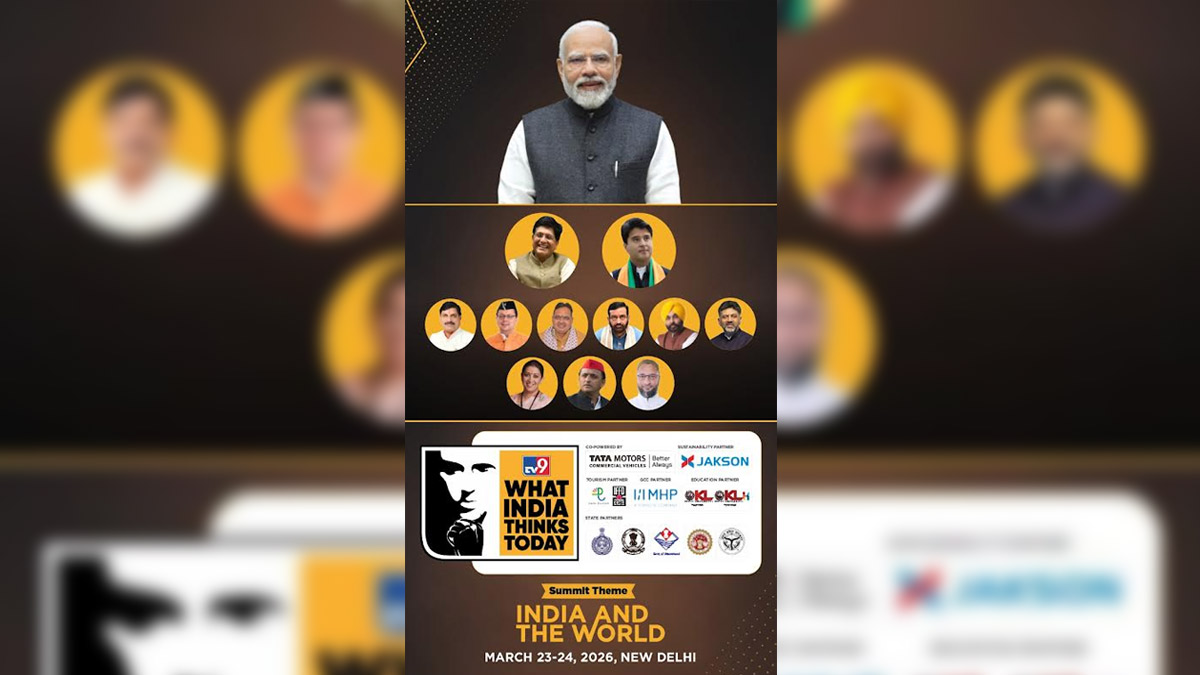
MUMBAI: The WITT Summit just wrapped up with enough big ideas to fill a policy playbook because when India’s leaders, thinkers and icons gather under one roof, even the conversations hit sixes. The eighth edition of TV9 Network’s flagship What India Thinks Today (WITT) Summit 2026 concluded on Saturday after two days of dynamic discussions at its New Delhi venue. India’s largest multi-domain public policy and culture summit brought together political leaders, policymakers, sports icons, artists and technology innovators to examine the forces shaping contemporary India and its global standing.
Prime minister Narendra Modi delivered the keynote address on the theme “India and the World” for the third consecutive year. In a wide-ranging speech, he addressed the ongoing conflict in West Asia, calling for restraint and compassion while highlighting India’s continued development trajectory despite global turmoil.
The summit featured candid conversations with state leaders. Telangana Chief Minister A. Revanth Reddy articulated a people-first governance model and contrasted it with other development approaches. Madhya Pradesh Chief Minister Mohan Yadav declared that Left-wing extremism had been effectively eliminated in his state and highlighted preparations for the upcoming Kumbh Mela. Punjab Chief Minister Bhagwant Mann defended his government’s record, citing the closure of 19 toll plazas and creation of the Sadak Suraksha Force. Karnataka Deputy Chief Minister D.K. Shivakumar expressed confidence in Congress prospects in Assam and addressed recent allegations against him.
On geopolitics and national security, Union Minister Jyotiraditya Scindia outlined India’s ambition to become a builder of trusted digital infrastructure for the world, citing the rapid 5G rollout and village-level 4G connectivity.
Cricket received significant attention. Former India captain Sourav Ganguly praised player freedom and trust as hallmarks of great leadership and named MS Dhoni as the greatest captain due to his World Cup successes. India women’s team bowling coach Aavishkar Salvi credited the BCCI and Women’s Premier League for building a pipeline of world-class talent behind the team’s recent ODI World Cup triumph.
The summit also hosted the inaugural AI² Awards 2026, celebrating the convergence of human creativity and machine intelligence in storytelling and content creation. Poet and kathavachak Kumar Vishwas delivered a nuanced take on India’s concept of Dharma and criticised the recent arrest of an 80-year-old Shankaracharya. Veteran lyricist Sameer Anjaan and storyteller Neelesh Misra reflected on changing music trends and artistic responsibility in the wake of a recent controversy involving Nora Fatehi.
In a country where conversations often run as deep as the Ganges, the WITT Summit proved once again that when leaders, thinkers and storytellers come together, the real winner is public discourse lively, layered and refreshingly unafraid to tackle the big questions shaping India’s tomorrow.