Applications
DAS extension pleas quashed in Karnataka and Gujarat


NEW DELHI/BENGALURU: The information & broadcasting ministry can heave a sigh of relief as the the high courts in Karnataka and Gujarat today dismissed petitions filed by cable operators seeking extension of digitisation.
The court orders mean that the government can go about systematically switching-off analogue signals in the cities that are covered in the Phase II of the rollout of cable TV digitisation in the two states.
The Karnataka high court today dismissed a petition filed by Karnataka State Cable TV Operators Association (KSCOA) seeking extension of deadline for implementing digital addressable system (DAS). The KSCOA petition was trashed as the HC found no merits in the case.

Similarly, the Gujarat high court also dismissed two petitions seeking postponement of digitisation in the four cities in the state. The court also vacated the stay ordered on 28 March in the cities of Ahmedabad, Rajkot, Surat, and Vadodara.
The decision by the high courts paves the way for switch-off analogue signals in the cities that are covered in Phase II of DAS.
Expressing satisfaction, Information & Broadcasting ministry secretary Uday Kumar Varma told Indiantelevision.com that the judgements vindicated the government‘s stand that the advent of new technology could not be stopped. He also said that there was no truth in reports about the shortage of set top boxes (STBs).
KSCOA president Patrick Raju said that he and his legal team would look at a copy of the court order before commenting about further action that his association would take in the matter.
Among the contentions of the cable operators association in Karnataka was that a large number of cable homes in Bengaluru and Mysore would go dark if DAS is implemented since there isn’t enough supply of STBs.
The KSCOA and MCOA (Mysore Cable TV Operators Association) had filed separate petitions, which were later clubbed together, seeking relief in the digitisation deadline due to shortage of STBs and lack of clarity on box ownership and many other issues.
The Cable Operators Association of Gujarat (COAG) in its petition had contended that there was a shortage of STBs and no clarity on acquisition of these boxes. COAG president Pramod Pandya said STBs ordered from China had failed to arrive because of internal problems in that country and therefore the local cable operators could not be penalised for this.
Also read:
Gujarat HC dismisses petitions seeking DAS extension
Karnataka HC dismisses KSCOA petition, paves way for analogue cable switch-off







Applications
With 57 per cent single new users, Ashley Madison rebrands as discreet dating platform
Platform says majority of new members now identify as single
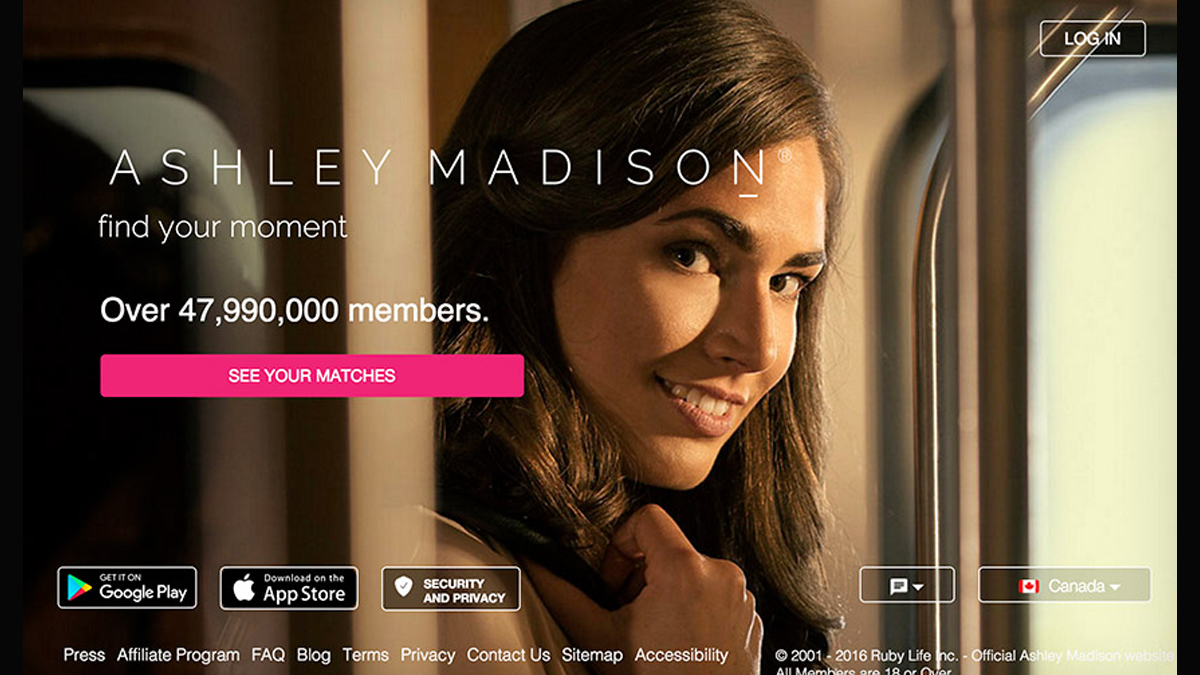
INDIA: Ashley Madison is shedding the “married-dating” label that defined it for two decades, repositioning itself as a platform for discreet dating in what it calls the post-social media age.
The rebrand, unveiled in India on 27 February, 2026, marks a structural shift in business model and identity. Once synonymous with married dating, the company now describes itself as the “premier destination for discreet dating” under a new tagline: Where Desire Meets Discretion.
The pivot is data-driven. Internal figures show that 57 per cent of global sign-ups between 1 January and 31 December, 2025 identified as single: a notable departure from the platform’s married core. The company argues that its community has already evolved beyond its original positioning.
“In an age where our lives have been constantly put on public display, privacy has become the new luxury,” said Ashley Madison chief strategy officer Paul Keable. He framed the platform’s offering as “ethical discretion” for singles, separated, divorced and non-monogamous users seeking private connections.
The shift also taps into wider digital fatigue. A global survey conducted by YouGov for Ashley Madison, covering 13,071 adults across Australia, Brazil, Canada, Germany, India, Italy, Mexico, Spain, Switzerland, the UK and the US, found mounting discomfort with hyper-public online lives.
Among dating app users, 30 per cent cited constant swiping and messaging as a source of fatigue, while 24 per cent pointed to pressure to curate public-facing profiles and early personal disclosure. Some 27 per cent said fears of screenshots or information being shared contributed to exhaustion; an equal share cited unwanted attention.
The retreat from oversharing appears broader. According to the survey, 46 per cent of adults actively try to keep most aspects of their life private online. Only 8 per cent feel comfortable sharing most aspects publicly, while 35 per cent say they are becoming more selective about what they disclose.
Ashley Madison is betting that this cultural recalibration towards controlled visibility can be monetised. By doubling down on privacy infrastructure and reframing itself around discretion rather than infidelity, the company is attempting to convert reputational baggage into a premium proposition.








