Fiction
Curation brands the need of the hour in digital: Kranti Gada

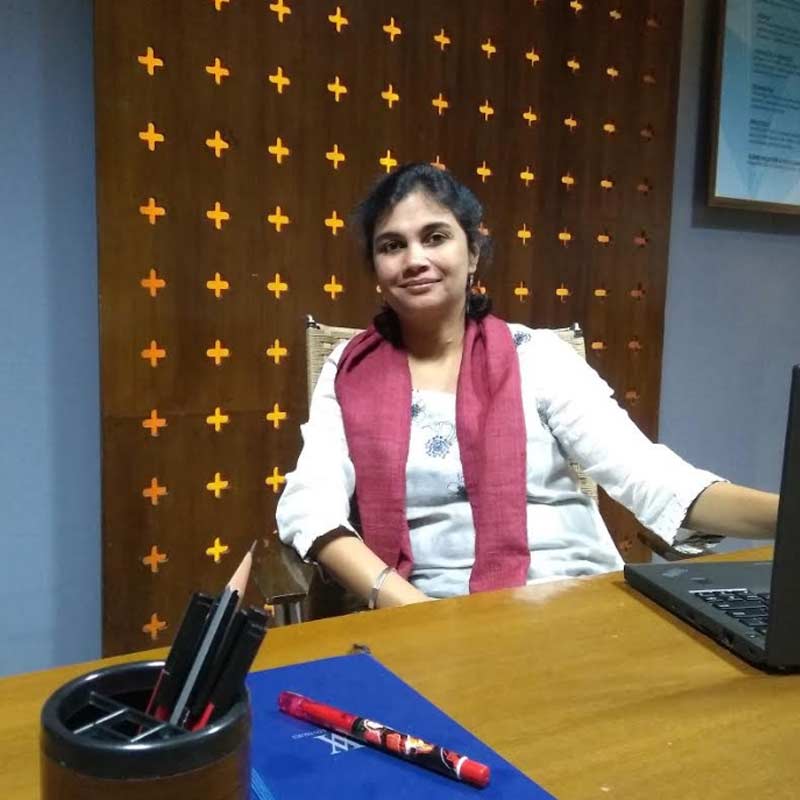
MUMBAI: From starting her career at an FMCG company to mastering the entertainment business, the journey of Shemaroo Entertainment Ltd’s (Shemaroo) chief operating officer, Kranti Gada, in the world of business is quite intriguing. One of the youngest COOs in the industry, Gada was elevated to the position in March this year after witnessing many a change within the company and the industry. She has been championing the ‘Go Digital’ initiative right from its nascent stage at the company.
The beginning
Gada started working with PepsiCo after finishing her course in marketing at NMIMS in 2004. She set her sights on working for an FMCG company and only applied to such companies during campus placement. It is at PepsiCo—while moving from shop to shop selling packets to travelling in unreserved compartments of trains and conducting various surveys—that she got to know customers’ mindset innately. The lessons learnt during these two years with the company have served her well.

She believes that staying connected with customers is critical for any company, whether it is B2B or B2C. “If you are B2C, you have to be in contact with these customers. But if you are B2B2C like us, while our content may be sold to a network that is B2B, the ultimate group that the stakeholders are servicing are consumers. So, knowing what he likes or dislikes is really important,” Gada said in an interaction with indiantelevision.com.
A new innings
In 2006, due to unavoidable reasons, Gada returned to Mumbai. Even as she was returning, she got an offer from a leading FMCG company that she turned down 12 days prior to joining. The very same year, she joined Shemaroo, an unlikely move for a person “who was not a heavy consumer of entertainment content”. She got into the company at a time when it was in the midst of evaluating new areas to enter. Out of those new initiatives, the digital piece was the one on which Gada focused on since the beginning. Another area on which she kept a keen eye on was gaming, a very forward-looking initiative at that point.
Unbeknownst to many, Shemaroo dabbled in the gaming sector for 1.5 to 2 years after one year of Gada’s joining. The initiative, however, did not take off as well as they thought. “We had a development studio. India had not come up with its own IPs still. We wanted to create IPs around our brands,” she said. Despite creating learnings for the future, success was elusive for the company in gaming.
The digital push
Being early in the digital piece, however, really paid off for Shemaroo. From early 2000, the company started buying digital rights in a bid to create a library. When it decided to go ahead with the mobile division, it already had a library of content to offer. While the company was largely associated with home videos in the 1990s, after the change in focus, Shemaroo reoriented its offerings by repurposing content for digital.
At present, YouTube is a monetised platform for the company. It has teams actively curating content for more than 50 YouTube channels under the umbrella. The eternal appeal of classic Hindi songs helps FilmiGaane, one of its flagship channels, to add a million subscribers every 45 days.
With the digital revolution, the Indian media landscape has changed dramatically in the last two years. While many content companies and broadcasters are coming up with OTT platforms, content curation remains a big challenge. While some of the OTT platforms have really niche content, several platforms are vying to become a “mini-YouTube”. Along with explosion of content creation, Gada feels that there is a real need for curation brands that understand consumers well.
OTT plans
“I would say that at Shemaroo we absolutely should do the curation piece for sure. But I would say that having your own OTT platform is little beyond just curation. There is the technology piece and the customer acquisition piece, which is very critical,” she commented when asked if Shemaroo had plans to get into the space.
“We will definitely have our own technology platform; we will invest in it and build out a platform. It’s the consumer strategy that we are still figuring out,” Gada added. For a brand like Shemaroo, which has been in the content business for a long time, it would be relatively easy to leverage that customer understanding after years of tracking the market one would imagine.
Areas of focus
While digital is going to remain a focus area in the next few years, few other areas such as multi-genre and multi-language strategies in content will remain critical. The company has also been building up its devotional content in a big way. In the pursuit of creating a new offering, the company has created several documentaries in the form of travelogues. Moreover, to make consumers aware about its new initiatives, Shemaroo has new marketing strategies up its sleeve.
After 12 years into her journey with the company and being an inseparable part of Shemaroo’s digital strategy, Gada, as the new COO, has come to terms with the demands of her position. Despite being young in age and experience, she is thankful to Shemaroo’s management for keeping the faith in her.
Also Read:
Shemaroo Entertainment announces two new appointments
Shemaroo Entertainment Strengthens its Live Darshan Offerings





Fiction
Banijay merges with All3Media in $6.65 billion deal
Marco Bassetti will lead the combined company as CEO
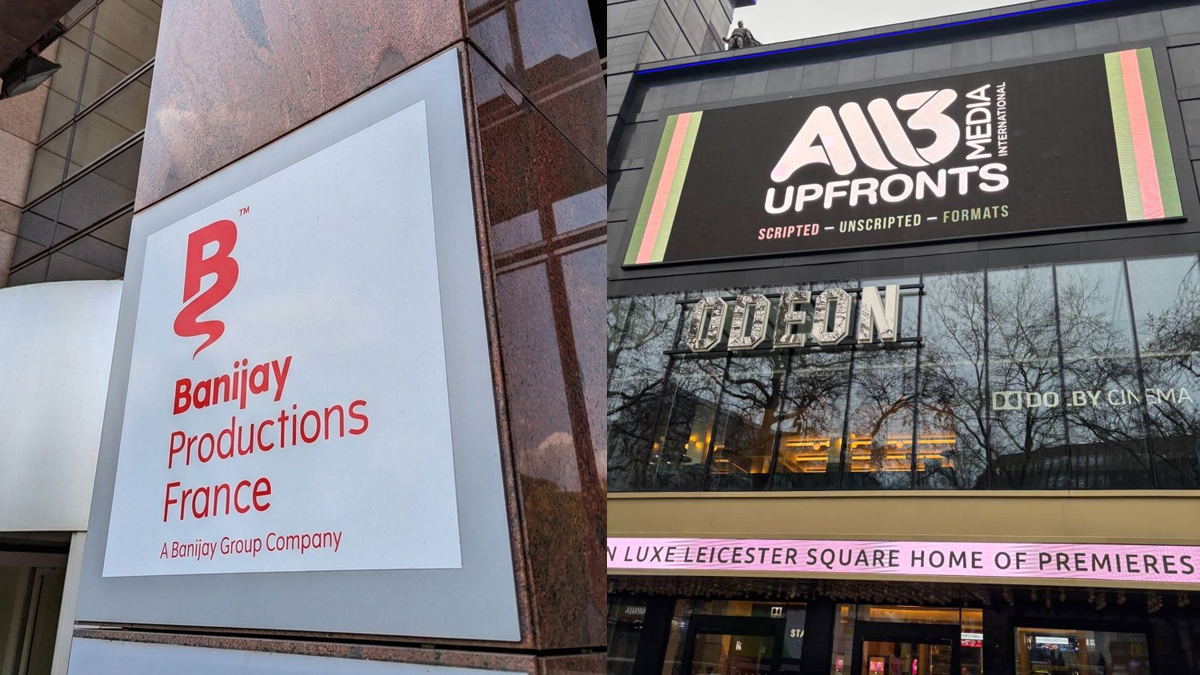
PARIS: Six years after acquiring Endemol Shine at the height of the pandemic, Banijay has struck again. The European production heavyweight is merging with All3Media in a deal that will create a television titan with $6.65 billion in revenue and redraw the contours of a fast-consolidating market.
The combined company will trade under the Banijay name and be owned 50 per cent each by Banijay Group and RedBird IMI, which acquired All3Media in 2024. The transaction is expected to close by autumn, subject to regulatory approvals.
Banijay Entertainment CEO Marco Bassetti, will take the top job at the enlarged group. All3Media CEO Jane Turton becomes deputy CEO. RedBird IMI CEO Jeff Zucker will serve as chairman.
The logic is scale. Broadcasters are commissioning less, streamers are tightening budgets and global buyers are fewer but bigger. Against that backdrop, heft matters. The merged entity will generate roughly $6.65 billion in revenues based on 2024 figures, giving it sharper elbows in rights negotiations and deeper pockets for franchise-building.
“Entrepreneurialism, ambition and creativity” remain core to Banijay’s DNA, Bassetti said, flagging plans to invest more heavily in new intellectual property, live events and emerging platforms. Turton struck a similarly bullish note, pointing to All3Media’s journey from a 2003 start-up to a global supplier of hit formats and high-end drama.
Between them, the two groups control a formidable slate. Banijay’s catalogue spans MasterChef, Big Brother, Survivor, Black Mirror, Peaky Blinders and Deal or No Deal. All3Media’s labels include Studio Lambert, producer of The Traitors and Squid Game: The Challenge; Two Brothers, behind The Tourist; and Neal Street, currently producing the forthcoming Beatles biopics directed by Sam Mendes for Sony.
The back catalogue is equally muscular. Banijay Rights holds some 220,000 hours, while All3Media International adds around 35,000 hours, forming one of the industry’s largest libraries.
Banijay, controlled by French entrepreneur Stéphane Courbit and listed in Amsterdam, counts more than 130 production companies across 25 territories. All3Media operates over 40 labels, with strong positions in the UK, US and Germany. The enlarged group will also lean into live entertainment, building on Banijay’s Balich Wonder Studio, which produced the opening ceremony of the Milan-Cortina Winter Olympics, and the Independents.
The deal marks a shift in tone. As recently as October, Bassetti suggested that mergers and acquisitions were not a priority. But the drumbeat of consolidation has grown louder. Mediawan has moved for Peter Chernin’s North Road. David Ellison’s Paramount has agreed to a $110 billion takeover of Warner Bros, with plans to combine HBO Max and Paramount plus. ITV has explored selling its media and entertainment arm to Comcast-owned Sky, though talks have reportedly slowed.






