News Broadcasting
Crest Animation’s US subsidiary to partner with ME & LGFE for movie


MUMBAI: Crest Animation Studios and its wholly owned US subsidiary RichCrest Animation are getting into an end-to-end production deal valued at around $2 million for an international 3D direct-to-video feature film.
RichCrest has partnered with Mainframe Entertainment (ME) and Lions Gate to create Arthur’s Missing Pal, a film based on the character created by best-selling author Marc Brown. The animation work will be done by Crest Animation Studios in India while RichCrest will be engaged in pre and post production activities.
“It is a very important project for us as we are involved in the end-to-end production process along with our subsidiary RichCrest. Though this is a work-for-hire project, it will be a step towards bigger film ventures. The deal is worth around $2 million,” Crest Animation chief financial officer Vinayak Purohit tells Indiantelevision.com.

Mainframe Entertainment will co-produce the film. It has also acquired international distribution rights for the all-new CG animated direct-to-video film.
IDT Entertainment Sales (IDTeS) will sell international distribution rights for the film on behalf of Mainframe.
RichCrest Animation will produce the film with Mainframe, along with Marc Brown Studios and WGBH Boston. The film will mark the first time that the beloved aardvark will come to life in 3D CG animation. IDTeS will handle international distribution for Mainframe and will launch the property at Mipcom. Lions Gate Family Entertainment will handle US distribution, with a scheduled delivery of spring 2006.
“The opportunity to be working with such high profile names from the mainstream entertainment Industry is a privilege. This falls perfectly in line with Crest’s laid down objective of associating with the best names in the global entertainment industry while moving up the value chain from delivering to television series to Direct to Home Feature, Gaming and Features,” said Crest Animation Studios chief executive officer A K Madhavan.



News Broadcasting
CNN-News18 to host Fury in the Gulf conclave on West Asia crisis
Three-hour summit to unpack geopolitical fallout and impact on India
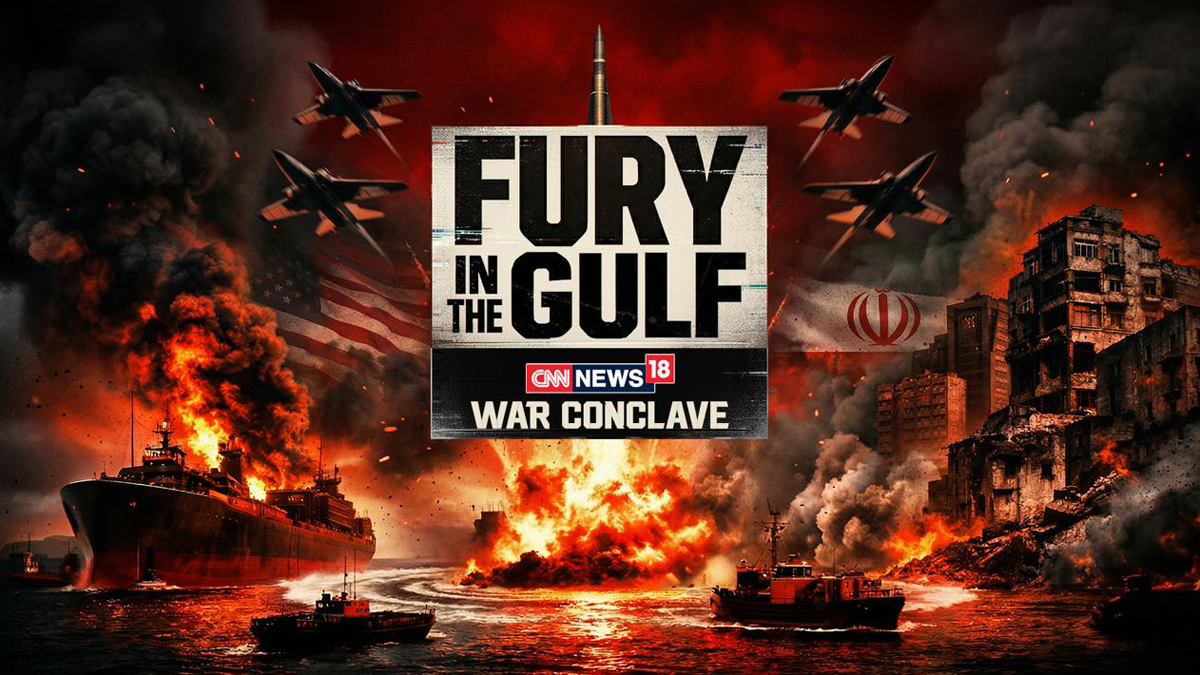
MUMBAI: CNN-News18 is set to host a special three-hour broadcast, Fury in the Gulf – War Conclave, on April 7, aiming to decode the escalating West Asia crisis and its far-reaching implications for India.
Scheduled from 4:00 PM to 7:00 PM, the conclave comes at a time when tensions between Iran and the United States are reshaping global geopolitics and triggering economic uncertainty. With India’s deep energy ties, trade links and large diaspora in the Gulf, the developments carry significant domestic relevance.
Built around the theme ‘Conflict, Consequences, and The Future,’ the programme will feature six curated sessions combining one-on-one interviews and panel discussions. The focus is to cut through the clutter and offer viewers a clearer understanding of the fast-evolving situation.
Key sessions include ‘Diplomacy in Times of War’ featuring Shashi Tharoor, and ‘World After the Iran Conflict’ with voices such as Ram Madhav, Reuven Azar, representatives from the European Union and the Iranian Deputy Envoy. Another session titled ‘Another Dunkirk?’ will bring together K. J. S. Dhillon and Jitin Prasada among others.
CNN-News18 editorial affairs director Rahul Shivshankar said, “In times of war, clarity becomes the most powerful tool. Fury in the Gulf – War Conclave brings together credible voices to address the questions and confusion that arise amid an overwhelming influx of information.”
He added that the initiative is aimed at delivering “facts, perspective, and insight” at a time when misinformation can easily cloud public understanding.
Echoing the sentiment, CNN-News18 CEO– English and business news Smriti Mehra said the conflict marks a defining global moment, with consequences that extend well beyond the region. She noted that the conclave seeks to present the crisis with “depth, nuance and responsibility” so audiences can better grasp its real-world impact.
As geopolitical tensions continue to dominate headlines, the conclave positions itself as an attempt to bring order to the noise, offering viewers a structured, insight-led look at a complex and rapidly shifting global situation.






