News Broadcasting
Creevey joins CNBC Asia Pac as sr VP


MUMBAI: CNBC Asia Pacific has appointed Gregg Creevey as its senior vice president, distribution and channel strategy, effective 19 July 2004.
A television industry veteran with extensive experience in the Asia Pacific region, Creevey will oversee subscription-based sales of CNBC Asia Pacific networks for distribution within the territory, and establish mobile (it is not just the Star Group that is gung-ho about the potential of wireless telephony) and syndication strategies.
Creevey will also be responsible for expanding network and programming distribution to terrestrial broadcasters, commercial establishments, financial institutions, hotels and airlines across the region. Additionally, Creevey will be working closely with CNBC’s strategic partners to improve the brand’s presence in all of the markets that the channel serves. He will also oversee CNBC’s distribution of the MGM channel in the region.

Creevey has over 16 years of experience in the Asia Pacific broadcast industry, and was previously one of the longest standing and most experienced executives at Turner International. Most recently the senior vice president, network distribution and content sales, for Turner International Asia Pacific, Creevey spearheaded several successful initiatives, including the implementation of a dedicated CNN service in Japan, negotiating for CNN to be the first licensed foreign retransmission cable channel in Korea, and identifying the first mobile content deals for Cartoon Network in Asia.
A pertinent aside to Creevey’s move to CNBC is that the outflow of key personnel that Turner has been witnessing in the recent past is not just restricted to India. Turner India’s executive director, strategic marketing Nikhil Mirchandani and research director Pradeep Hejmadi have moved to National Geographic and Nickelodeon respectively.
“Gregg Creevey’s experience is second to none in terms of developing and executing fee-based strategies for well known television brands in Asia,” said Alexander Brown, president & CEO of CNBC Asia Pacific. “His charter will be to execute an aggressive network distribution strategy to further penetrate the Asia Pacific markets, particularly in regions such as China, Japan and Korea. With his in-depth understanding of the industry and the region, Gregg will be a tremendous addition to CNBC Asia Pacific’s senior management team. We are confident that his leadership will further strengthen CNBC Asia Pacific’s position as the region’s leading business news broadcaster.”







News Broadcasting
CNN-News18 to host Fury in the Gulf conclave on West Asia crisis
Three-hour summit to unpack geopolitical fallout and impact on India
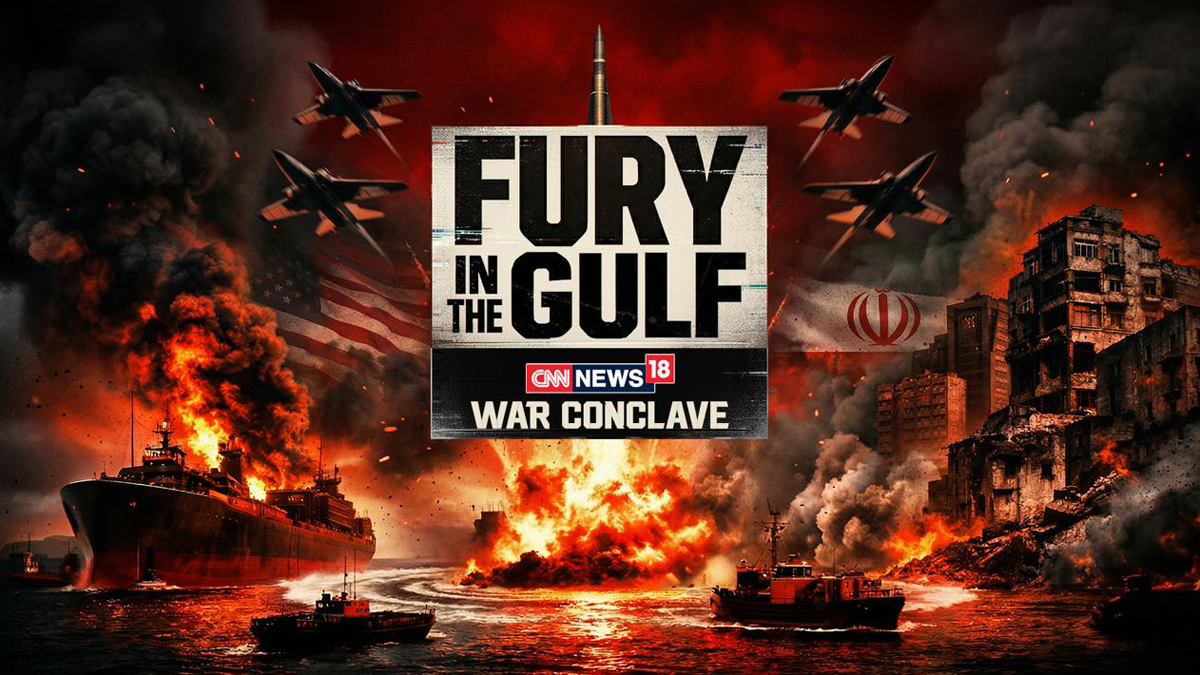
MUMBAI: CNN-News18 is set to host a special three-hour broadcast, Fury in the Gulf – War Conclave, on April 7, aiming to decode the escalating West Asia crisis and its far-reaching implications for India.
Scheduled from 4:00 PM to 7:00 PM, the conclave comes at a time when tensions between Iran and the United States are reshaping global geopolitics and triggering economic uncertainty. With India’s deep energy ties, trade links and large diaspora in the Gulf, the developments carry significant domestic relevance.
Built around the theme ‘Conflict, Consequences, and The Future,’ the programme will feature six curated sessions combining one-on-one interviews and panel discussions. The focus is to cut through the clutter and offer viewers a clearer understanding of the fast-evolving situation.
Key sessions include ‘Diplomacy in Times of War’ featuring Shashi Tharoor, and ‘World After the Iran Conflict’ with voices such as Ram Madhav, Reuven Azar, representatives from the European Union and the Iranian Deputy Envoy. Another session titled ‘Another Dunkirk?’ will bring together K. J. S. Dhillon and Jitin Prasada among others.
CNN-News18 editorial affairs director Rahul Shivshankar said, “In times of war, clarity becomes the most powerful tool. Fury in the Gulf – War Conclave brings together credible voices to address the questions and confusion that arise amid an overwhelming influx of information.”
He added that the initiative is aimed at delivering “facts, perspective, and insight” at a time when misinformation can easily cloud public understanding.
Echoing the sentiment, CNN-News18 CEO– English and business news Smriti Mehra said the conflict marks a defining global moment, with consequences that extend well beyond the region. She noted that the conclave seeks to present the crisis with “depth, nuance and responsibility” so audiences can better grasp its real-world impact.
As geopolitical tensions continue to dominate headlines, the conclave positions itself as an attempt to bring order to the noise, offering viewers a structured, insight-led look at a complex and rapidly shifting global situation.






