iWorld
Creators of Habit IIGC marks 2 December as India’s first World Influencer Day

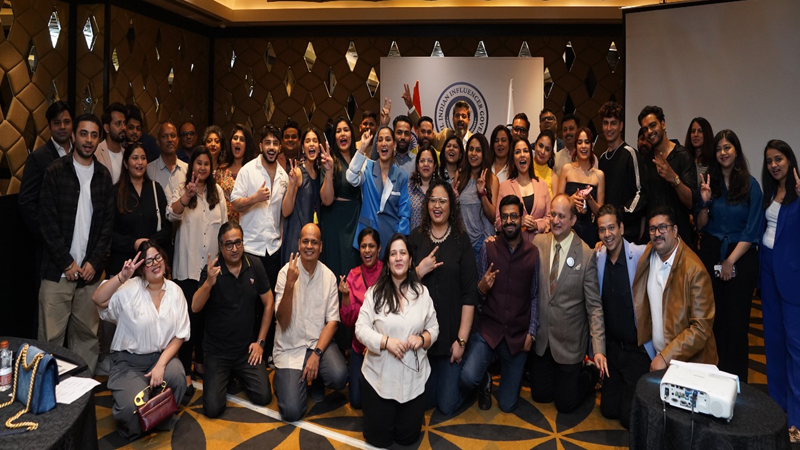
MUMBAI: Influence clearly has its day and now, thanks to the Indian Influencer Governing Council (IIGC), it finally has its own date on the calendar too. In a first-of-its-kind move, the Council has declared 2 December as World Influencer Day, giving India’s vast creator community the kind of collective spotlight usually reserved for blockbuster stars and policy-makers.
And in true influencer fashion, the celebration isn’t a quiet affair. It arrives with stories, sessions, hashtags, and an industry-first certification, all aimed at giving creators not a pedestal, but a platform that finally matches their cultural impact.
In the run-up to the big day, IIGC invited creators to share the turning points that shaped their journeys, the flukes, flops, breakthroughs and breakdowns that led them to where they are. Hundreds responded, sending in videos that span language, region, content style and personality. The sheer diversity of the submissions, showcased in IIGC’s Creator Stories highlight reel, doubles up as a portrait of India’s digital culture in all its messy, inventive glory.

The centrepiece of the festivities, however, is a step towards something more structural, the IIGC Certified Influencer Program, promoted as India’s first formal certification for creators. Designed to equip them with guidelines on content responsibility, ecosystem standards, and professional best practices, the programme aims to create a generation of creators who are not just popular, but prepared. Graduates will carry an official “IIGC Certified” tag, a badge the Council says will offer credibility with brands and platforms navigating an often chaotic space.
IIGC chairman Sahil Chopra framed the day as a declaration of intent, not a ceremonial nod. “World Influencer Day belongs to every creator whose voice sparks change, every brand that trusts digital storytelling, and every consumer inspired by authentic content,” he said. “With the launch of the IIGC Certified Influencer Program, we’re not just celebrating creators, we’re building meaningful pathways for education, structure, and long-term success.”
Beyond celebrations, the Council turned the spotlight inward with World Influencer Day Spotlight Sessions, a special edition of IIGC Talks. The conversations paired well-known creators with senior marketers, digging into what actually drives partnerships, how the creator–brand relationship is evolving, and what authenticity looks like in a data-led ecosystem.
The lineup reads like a crash course in today’s marketing power map creators Harpreeth Suri, Shirin Sewani and Shashank Srivastava in conversation with heavyweights including K. Ganapathy Subramaniam (CMO, LT Foods), Pooja Baid (CMO, Versuni), Manasi Karmarkar (head of digital marketing, W for Woman), Shailja Joshi (senior director, marketing, Pepsico), Suneet Singh (senior vice president, marketing, Whiteland Corporation) and Barun Prabhakar (CMO, GRM Overseas).
Many of them didn’t hold back when talking about the influence of, well, influencers. “Creators have transformed how brands connect with people,” said LT Foods’ K. Ganapathy Subramaniam. “They bring authenticity, speed and real emotional resonance into modern marketing.”
Creators echoed that sentiment with an edge. Fashion and lifestyle creator Harpreeth Suri said the celebration finally validates the role creators play, regardless of whether they boast a million followers or a few thousand highly engaged ones. “What matters is the contribution,” she said. “IIGC celebrating World Influencer Day gives creators the respect they deserve.”
On Instagram, the mood has already turned festive. Hundreds of creators have posted gratitude messages, sharing what the journey has meant to them, the late nights, the algorithm anxieties, the learning curves, and the unexpected communities built along the way. Many credited IIGC for offering a sense of belonging in an industry that often feels like a solo sport.
With hashtags like #WorldInfluencerDay and #ThankYouInfluencers already gaining traction, and with creators signing up for the certification programme in sizeable numbers, IIGC seems intent on transforming the celebration into a yearly moment of both reflection and reform.
In a landscape where trends shift faster than a reel can load, World Influencer Day arrives as a rare pause, a moment that both applauds the creator economy and attempts to anchor it. And if the Council’s plans are anything to go by, this may be the start of a more accountable, more skilled, and more empowered era of Indian influence.






iWorld
JioHotstar enters micro-drama space with 100 shows under Tadka banner
Short-form push targets 300M users as content meets commerce in new format
MUMBAI: JioStar has made a bold play in India’s fast-growing micro-drama space, rolling out over 100 short-form shows under its new Tadka banner on JioHotstar, timed with the massive viewership surge of the Indian Premier League 2026.
The scale of the launch signals clear intent. Rather than testing the waters, the company has dived in headfirst, releasing a wide slate of content on day one. Each show is designed for quick consumption, with episodes running 60 to 90 seconds in a vertical format tailored for mobile-first audiences.
The move comes as India’s micro-drama market, currently valued at around $300 million, is projected to grow tenfold to over $3 billion by 2030. Globally, the format has already proven its mettle, with China’s micro-drama sector recording explosive growth in recent years.
What sets this rollout apart is its built-in monetisation strategy. The shows are free to watch and ad-supported, with brand integrations woven directly into storylines from the outset. It reflects a broader shift where content and commerce are increasingly intertwined, rather than operating in silos.
The timing is equally strategic. With more than 300 million users already tuning in for IPL action, JioHotstar is effectively turning cricket’s biggest stage into a discovery engine for its new format.
The company is not entering an empty arena. Early movers like Kuku TV, MX Player and platforms backed by Zee Entertainment Enterprises have already laid the groundwork, building audiences and validating demand for snackable storytelling.
Now, with scale, distribution and advertiser interest aligning, the big players are stepping in. For JioStar, Tadka may well serve as a proving ground for the next evolution of digital entertainment, where every minute counts and every second sells.
If the bet pays off, India’s next big content wave might just arrive in under 90 seconds.






