iWorld
Create campaigns to increase engagement and attract customers:Disney+ Hotstar’s EVP & CMO S Shakdher

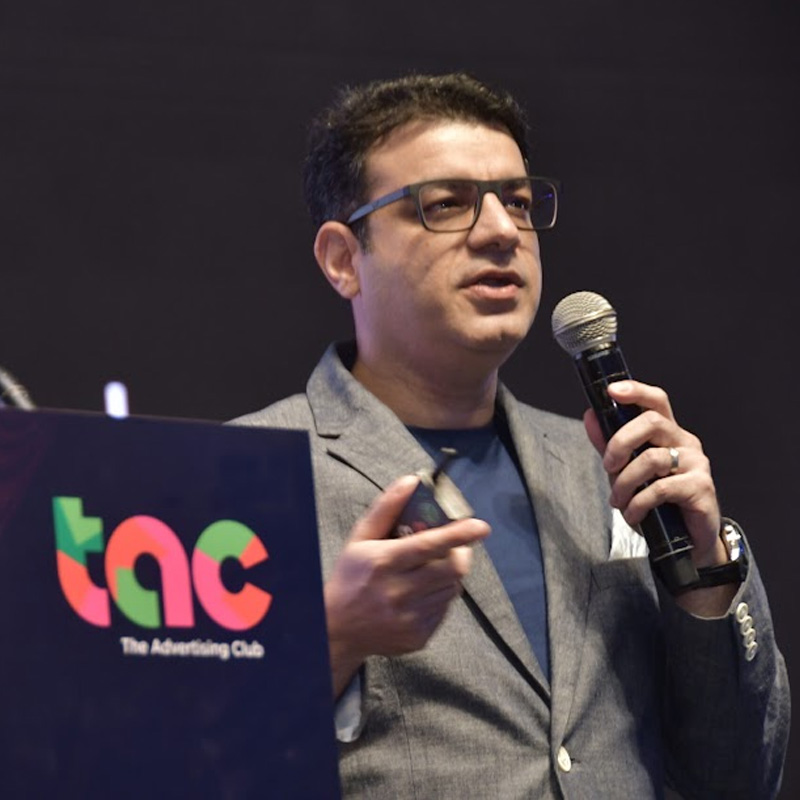
Mumbai: In today’s world, creating the best marketing campaign means the company not only aims to attract consumers towards ads but engage them too, expressed Disney+ Hotstar executive VP and CMO Sidharth Shakdher. He was speaking at The Advertising Club’s third edition of D-CODE, held in Mumbai recently.
He discussed the effectiveness of funnel marketing for Disney+ Hotstar, which led to the conversion of 95 million engaged viewers from an overall spike of 140 million viewers. In 2019, the viewership increased to 112 million.
Shakdher further explained that in funnel marketing, a potential consumer goes from becoming aware of your brand to purchasing the goods or services.

“While building a funnel, two things were important to us: to have a better experience and to maximise the spike. We wanted to reverse the narrative that digital drives people,” he said. “We created this funnel as there was a spike happening and the challenge was to convert them into engaged consumers.”
“And every time a person got converted, they would negate, and then iterate the recommendations again and show him another set of recommendations so that he could convert from spiked to engaged,” he added.
Sidharth further advised that in all marketing campaigns, advertisers have to be able to pivot the right objectives, so, if they’re looking at a conversion-based campaign then it is requisite that advertisers have an action-based campaign in place.
“Your conversion could be a purchase, but your action could be an add to cart, reading a product retail page, or anything. Always know what works best for you in terms of conversion is concern,” he added further.
Mentioning about the creative ads on Disney+ Hotstar, he highlighted the local superheroes advertisements that have Indian middle-class power. The professional campaign titled “Superheroes” was published in India in October 2020. Disney + Hotstar had built the creative where “superheroes” were shown as common people, and they were using superpowers to stop their friends from going out and watching a match with them. An interesting campaign indeed!
He discussed further on ‘moment marketing’- a strategy for advertising that concentrates on reaching potential customers and where an advertiser takes advantage of ongoing events by delivering relevant and relatable content. Disney+ Hotstar reaped potential benefits matching it up during the IPL matches- an important cricket event. The broadcaster picked those moments on the controllable prioritisation matrix. The broadcaster prioritized its promotional technique based on trending things happening during the event and used social media to create connections and marketing opportunities.
Shakdher mentioned that Disney+ Hotstar has built a prioritisation matrix and established 15 rules, which led to the incorporation of 15,000 dynamic creatives. In order to produce effective results, dynamic creatives optimise a variety of ad components (such as pictures, videos, titles, descriptions, and CTAs).
There are instances, where a batsman is nearing a half-century of run, the other was a batsman’s strike rate went up above 150 percent , and there were two wickets falling in a row. In all the cases, ads used to appear automatically & matched with the situation when wickets were down, or batsmen were playing well & hitting sixes, which led consumers to click & engage with ads while watching matches.
“We were able to serve up in real-time while the match was going on,” claimed Sidharth. “That led to a 200 per cent improvement in cost per click (CPC), and we were able to reach 80 million viewers.”
Dynamic creative optimization (DCO), a real-time display advertising technology, was used by Disney+ Hotstar to personalise ads based on viewer information at the time of ad serving. Every time something similar occurs in a match, it appears on visual display, in static campaigns, performance marketing campaigns, or programmatic campaigns.
“Always have practical objectives for the campaign. If your message is that a particular product serves a particular need, then we also have sub-segments like pricing, convenience, etc., so run these smaller campaigns within the larger campaign and find out the segments that gave the best result,” he concluded.







iWorld
Bill Ackman makes a $64bn bid for Universal Music Group
The hedge fund boss wants to list the world’s biggest record label in New York and thinks he knows exactly what ails it
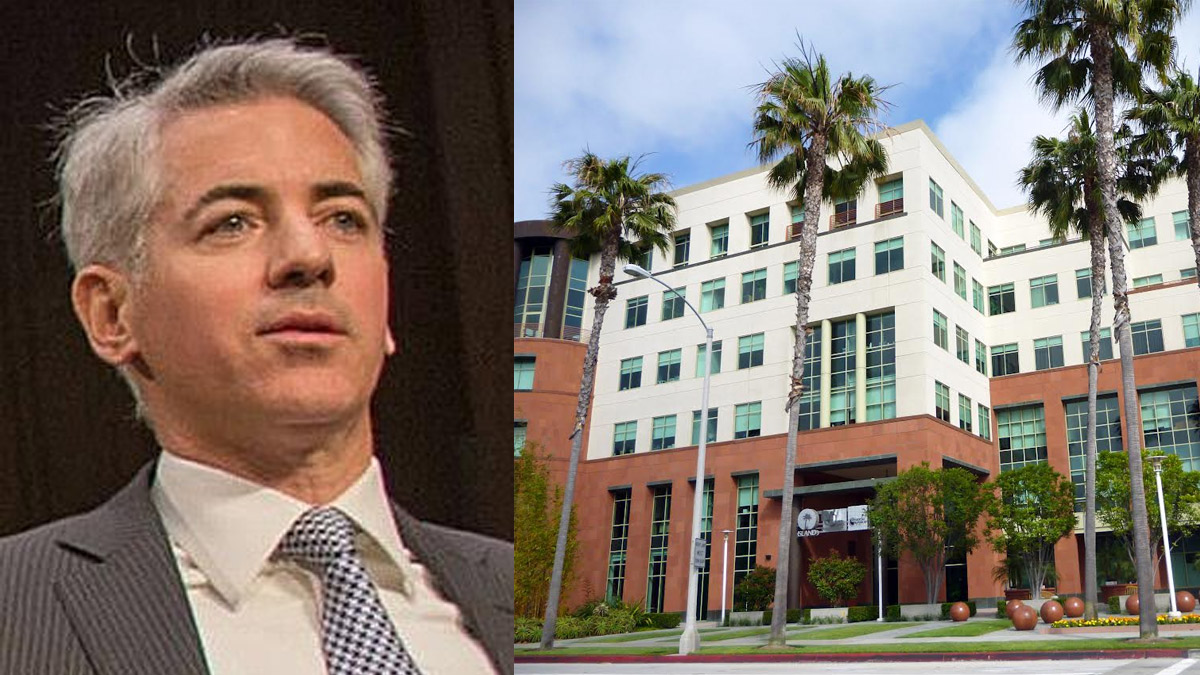
NEW YORK: Bill Ackman wants to buy the world’s biggest record label. Pershing Square Capital Management, the hedge fund run by the billionaire investor, submitted a non-binding proposal on Tuesday to acquire all outstanding shares of Universal Music Group in a business combination transaction worth roughly $64.4 billion (around 55.8 billion euros).
Under the terms of the offer, UMG shareholders would receive 9.4 billion euros in cash, equivalent to 5.05 euros per share, plus 0.77 shares of a newly created company, dubbed New UMG, for each share held. Pershing Square values the total package at 30.40 euros per share, a 78 per cent premium to UMG’s closing price on April 2.
The deal would see UMG merge with Pershing Square SPARC Holdings, with the combined entity incorporating as a Nevada corporation and listing on the New York Stock Exchange. New UMG would publish financial statements under US GAAP and become eligible for S&P 500 index inclusion. Pershing Square says the transaction is expected to close by year-end, with all equity financing backstopped by Ackman’s firm and its affiliates, and all debt financing committed at signing. The transaction would cancel 17 per cent of UMG’s outstanding shares, leaving New UMG with 1.541 billion shares outstanding.
Ackman has a long history with UMG. Pershing Square first bought approximately 10 per cent of the company from Vivendi in the summer of 2021 for around $4 billion, around the time of UMG’s listing on the Euronext Amsterdam exchange. He has since trimmed that position, raising around $1.4 billion from the sale of a 2.7 per cent stake in March 2025, and resigned from UMG’s board in May 2025, citing new executive and board obligations arising from recent investments.
His diagnosis of UMG’s troubles is blunt. The company’s stock has fallen around 33 per cent over the past twelve months on the Euronext Amsterdam exchange, and Ackman lays out six reasons why. These include uncertainty around the Bolloré Group’s 18 per cent stake in the company, the postponement of UMG’s US listing, the underutilisation of UMG’s balance sheet, the absence of a publicly disclosed capital allocation plan and earnings algorithm, a failure to reflect UMG’s 2.7 billion euro stake in Spotify in its valuation, and what Ackman calls suboptimal shareholder investor relations, communications and engagement.
The Bolloré stake has long cast a shadow over the company. Cyrille Bolloré stepped down from UMG’s board in July 2025 as the Bolloré Group battled the French financial markets regulator over its stake in Vivendi, which holds a further capital interest in UMG. UMG had confidentially filed a draft registration statement with the US Securities and Exchange Commission in July 2025 for a proposed secondary listing in America, but put those plans on hold in March 2026, citing market conditions.
Ackman has kind words for UMG’s management, at least. “Since UMG’s listing, Lucian Grainge and the company’s management have done an excellent job nurturing and continuing to build a world-class artist roster and generating strong business performance,” he said. But he made his diagnosis plain: “UMG’s stock price has languished due to a combination of issues that are unrelated to the performance of its music business and importantly, all of them can be addressed with this transaction.”
In other words, Ackman believes UMG is a great business trapped inside a broken structure. If the board agrees, he intends to fix that, loudly and in New York.






