News Headline
Covid learnings: Brands need to remain authentic & relevant to their customer base


MUMBAI: More and more, brands are focusing their energies on Bharat, which is poised on the cusp of vast prospects and explosive growth. Kannada is widely regarded as the country’s first success story from a regional language market standpoint. Many marketers have already switched to targeted, localised promotions instead of pan-India campaigns that blow out their budget. While it is apparent that the pay-off from regional and hyper-localised advertising is increasing, there still remains the question – which medium gives the best reach and dividends? The second session of the Tele-wise Kannada virtual summit had retail players and marketers, from national to Karnataka-focused brands, discuss the scope of content, advertising and distribution fronts in the Kannada market in the foreseeable future.
The event organised by the Indiantelevision.com, in association with Colors Kannada, was moderated by Eggfirst advertising & design COO Kunal Jamuar, and consisted of esteemed panelists including: N Ranga Rao & Sons (manufacturer of Cycle Pure Agarbathies) CEO, Arjun M Ranga, Max Fashion India SVP marketing Jiten Mahendra, Levista Coffee VP, S Shriram, MK Agro Tech (Sunpure oil) head – brand marketing Vijesh C Vijayan, Wavemaker India chief growth officer & office head – south Kishan Kumar Shyamalan and Lodestar Um executive VP Laya Menon.
The ripples caused by the pandemic are still affecting consumer behaviour and consequently, brand’s choices. Several hard and fast rules have gone out the window and new learnings have been gleaned.

Max Fashion’s Jiten Mahendra said they were shocked by the lockdown just when the brand’s new collection was about to be launched. But they recovered soon. “We have become more omni-channel now. Eight to nine per cent of the business is coming from e-commerce, where earlier it was just three per cent of our sales and 90 per cent came from retail. May onwards we were able to launch in more markets.”
Moreover, major operations have been shifted into the virtual realm from brick n mortar and many cross functions like home trial, video etc have been added to enhance customer experience.
Mahendra went on to add: “Pre-covid, each channel had a separate KPI and brands were trying to deliver that. Now, brands are not channel driven. They need to be authentic and relevant to the customer base.”
Ranga shared that as a consumer-focused brand they had to keep connected with their customer; to this end they organised online pujas across temples in Karnataka. “We also became more tactical. We moved out of big sponsorship and did smaller localised commercials,” he added.
One needed to be quick, sharp and adapt their media mixes given the circumstances. “We realised the benefit of print advertising and our online business has of course increased exponentially. But for us, 95 per cent is still TV, with GECs topping the genre.”
Levista Coffee’s Shriram said that after tasting unprecedented success during last year’s lockdown and the subsequent months, the brand further stepped up its visibility in the media. On television, they tied up with Chennai Super Kings as coffee partners for the IPL which helped establish their presence further.
“CSK is not a team, it’s an emotion, and IPL is entertainment. We created CSK ads and showed it in GECs and radio stations focusing on match scores. It was a measured risk which paid off,” he elaborated.
Ranga added, “Our brand takes the third umpire branding on IPL as much as we can get with the tagline ‘Everyone has a reason to pray’.”
On the other hand, Max Fashion took the conscious call not to associate with the previous season of the IPL. “Instead we went for Hotstar and targeted women-driven content. We had a far better engagement and affinity. Our core TG is women, the second TG is youth. We have done a lot of ground-level activations where it’s not just dependent on reach but engagement,” revealed Mahendra.
When it comes to viewership, Kunal underlined a curious dichotomy – while digital growth has been mainly driven by women audiences, TV saw a lot of joint or male driven increase in viewership, which has made it a truly mass viewership medium following the lockdown.
Talking about how brands are adapting to the medium’s gender dynamics, Sunpure’s Vijesh Vijayan detailed, “Two year ago, we decided to break the gender barrier. Today, our category isn’t dominated purely by one gender. The pandemic has shown us that everybody is a cook. So, our TG is not just women, but anyone who wants to cook or eat – basically anybody who loves food is our TG.”
Jamuar pointed out that while a metro like Bengaluru tends to overpower the rest of regions when it came to content programming and marketing, it is important to give regional markets their share of inputs. Hence, planning for both sections needs to be separated. When it comes to TV it remains the lowest cost per 1,000 and each regional channel in the state has its pockets of viewership, he noted.
Shriram felt the quality of content in the Kannada genre has improved tremendously with a lot of colourful fiction programs happening. “But as an advertiser, I would love a breakthrough in how our programming is planned in the GEC segment, which could be a game-changer.”
Laya Menon felt while regional TV has a “mass-ish sort of audience” there is “increasing alienation from youth, with the latter moving away to other mediums or screens like OTT/ digital.” So there’s a gap to ensure how to keep TV relevant – whether a national or regional channel – with content that will appeal equally or maybe even skewed to youth can reap dividends for advertisers , brands, broadcaster et al.
Wavemaker’s Kishan Kumar concluded that just like marketing, in TV content, too, people today look for honesty and emotions at the core, things closer to life. Hence the content needs to mirror that and reflect our society in a better way.





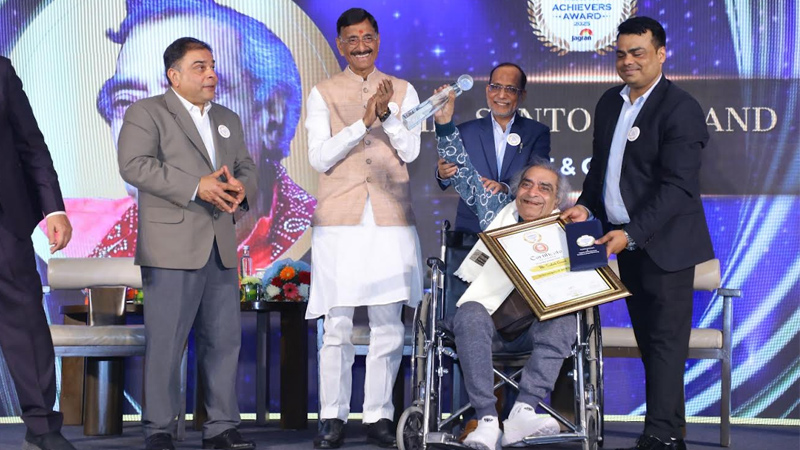
NEW DELHI: Hamdard Laboratories gathered a cross-section of India’s achievers in New Delhi on Friday, handing out the Hakeem Abdul Hameed Excellence Awards to figures who have left their mark across healthcare, education, sport, public service and the arts.
The ceremony, attended by minister of state for defence Sanjay Seth and senior officials from the ministry of Ayush, celebrated individuals whose work blends professional success with a sense of public purpose. It was as much a roll call of achievement as it was a reminder that influence is not measured only in profits or podiums, but in people reached and lives improved.
Among the headline awardees was Alakh Pandey, founder and chief executive of PhysicsWallah, recognised for turning affordable digital learning into a mass movement. On the sporting front, Arjuna Awardee and kabaddi player Sakshi Puniya was honoured for her contribution to the game and for pushing women’s participation onto bigger stages.
The cultural spotlight fell on veteran lyricist and poet Santosh Anand, whose songs have echoed across generations of Hindi cinema. At 97, Anand accepted the honour with characteristic humility, reflecting on a life shaped by perseverance and hope.
Healthcare honours spanned both modern and traditional systems. Manoj N. Nesari was recognised for strengthening Ayurveda’s place in national and global health frameworks. Padma shri Mohammed Abdul Waheed was honoured for his research-backed work in Unani medicine, while padma shri Mohsin Wali received recognition for his long-standing contribution to patient-centred care.
Education and social development also featured prominently. Padma shri Zahir Ishaq Kazi was honoured for decades of work in education, while former Meghalaya superintendent of Police T. C. Chacko was recognised for public service. Goonj founder Anshu Gupta received an award for his dignity-centred rural development initiatives, and the Hunar Shakti Foundation was honoured for empowering women and young girls through skill development.
The Lifetime Achievement Award went to former IAS officer Shailaja Chandra for her long career in public healthcare and governance, particularly in the traditional systems under Ayush.
Speaking at the event, Hamdard chairman Abdul Majeed said the awards were a tribute to those who combine excellence with empathy. “These awardees reflect Hakeem Sahib’s belief that healthcare, education and public service must ultimately serve humanity,” he said.
Minister Seth struck a forward-looking note, saying India’s young population gives the country a unique opportunity to become a global destination for learning, health and wellness by 2047.
The ceremony also featured the trailer launch of Unani Ki Kahaani, an upcoming documentary starring actor Jim Sarbh, set to premiere on Discovery on 11 February.
Instituted in memory of Unani scholar and educationist Hakeem Abdul Hameed, the awards have grown into a national platform that celebrates those building a more inclusive and resilient India. For one evening at least, the spotlight was not just on success, but on service with substance.






